 Add to Chrome
 Add to Firefox
 Add to Edge
Harmonizing AI Safety Thresholds
Jul 17, 2026
Frontier AI companies have published capability thresholds that differ substantially, making it difficult for third parties to verify whether a threshold has been crossed or to compare requirements across companies. Moreover, without common minimum thresholds, risk mitigation may be inconsistent, creating a potential race to the bottom in safety standards. We develop a methodology for deriving harmonized thresholds across three risk domains. For misuse risks (cyber and biological), we take expected harm as the key primitive and use an explicit risk-modeling approach that accounts for risk channels and model release conditions. For automated AI R&D, we base our proposed threshold on the observed rate of AI progress rather than expected harm. Our analysis expands upon prior work and highlights existing empirical gaps and limitations.

Closing the AI Trust Gap: The Case for Independent Certification for Trustworthy AI
Jul 17, 2026Over the past decade, responsible AI (RAI) has produced a substantial body of practice for identifying and mitigating the risks AI poses in high-stakes settings. Yet this work has not produced a market that rewards trustworthiness. Firms that invest seriously in safety, fairness, and oversight cannot consistently prove to consumers, regulators, and shareholders that their systems go beyond the bare minimum of compliance. What is missing is a way for society to recognize or compare the difference. The result is a trust gap: a structural condition in which responsible development efforts happen inside organizations but produce no external, independently recognized and verifiable signal of trustworthy outcomes. We argue this gap is sustained in part because of a focus on responsible AI (a matter of internal process) as opposed to trustworthy AI (a matter of independently verifiable real-world outcomes), and that it persists because of three compounding failures: (1) the market cannot distinguish trustworthy systems from their imitations; (2) evaluation targets models and outputs rather than deployed sociotechnical systems and their outcomes; (3) the measurement ecosystem is oriented toward avoiding harm rather than demonstrating benefit. Reviewing existing AI governance instruments and comparing them to certification regimes in healthcare, sustainability, and security, we show that none integrate a governance baseline, independently verified positive-outcome evidence, and market signaling in a single framework. We propose independent, outcome-oriented certification as the connective layer that can close the trust gap, complementing regulation and internal governance by making trustworthiness measurable, comparable, and commercially rewarded.
Designing escalation criteria for international AI incident response: criteria, triggers, and thresholds
Apr 25, 2026AI incident reporting requirements are emerging in regulation and policy, yet no operational criteria exist for determining when a detected AI incident warrants escalation beyond national handling to international coordination. This paper proposes an escalation framework to address this gap, intended as a common reference point across jurisdictions that enables aligned escalation while preserving flexibility in how actors respond within their own legal and policy contexts. We review SB 53, the EU AI Act, the GPAI Code of Practice, and incident frameworks from other industries to derive eight criteria for assessing whether an incident warrants escalation, translated into a sequential flowchart with gated decision points and threshold checks. For each criterion, we map how it interplays with these regulatory frameworks, identifying where their design choices support or undermine effective detection. We test the framework against ten documented AI incidents and structured variants to identify where criteria under-detect or misclassify incidents in practice. We find three design patterns that may lead to systematic under-detection in regimes where model developers are responsible for escalation: a. where escalation requires confirmed harm, events such as model weight exfiltration risk detection only after severe, irreversible harm has propagated; b. where incidents are assessed individually, systemic harms emerging from accumulation risk being under-detected; and c. where thresholds align with legal instruments rather than quantitatively testable terms, criteria risk being impractical to apply under time pressure. We also find that escalation rules are only one component of a broader framework: the underlying definitions against which thresholds are set, and the data available to the responsible actor, create interdependencies that can themselves drive under-detection.
Toward Automated Virtual Assembly for Prefabricated Construction: Construction Sequencing through Simulated BIM
Mar 14, 2020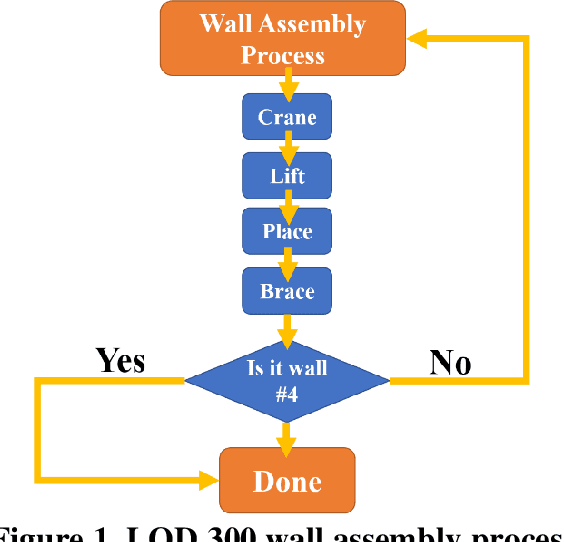
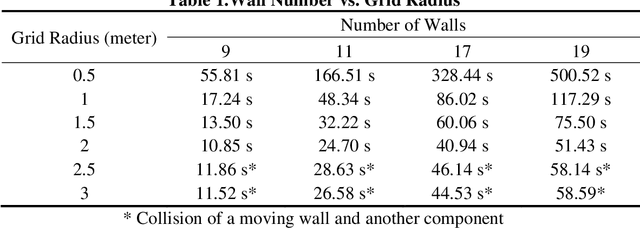
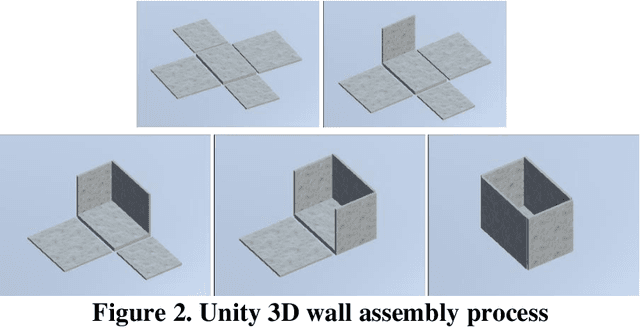
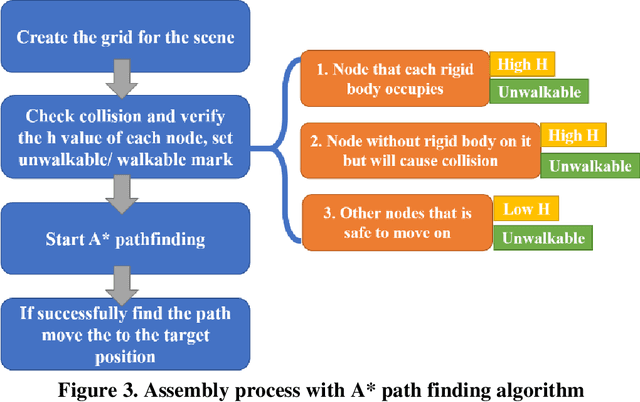
To adhere to the stringent time and budget requirements of construction projects, contractors are utilizing prefabricated construction methods to expedite the construction process. Prefabricated construction methods require an adequate schedule and understanding by the contractors and constructors to be successful. The specificity of prefabricated construction often leads to inefficient scheduling and costly rework time. The designer, contractor, and constructors must have a strong understanding of the assembly process to experience the full benefits of the method. At the root of understanding the assembly process is visualizing how the process is intended to be performed. Currently, a virtual construction model is used to explain and better visualize the construction process. However, creating a virtual construction model is currently time consuming and requires experienced personnel. The proposed simulation of the virtual assembly will increase the automation of virtual construction modeling by implementing the data available in a building information modeling (BIM) model. This paper presents various factors (i.e., formalization of construction sequence based on the level of development (LOD)) that needs to be addressed for the development of automated virtual assembly. Two case studies are presented to demonstrate these factors.