 Add to Chrome
 Add to Firefox
 Add to Edge
Impact of Hand Impairment and Occlusions on Hand Pose Estimation Accuracy in Augmented Reality Applications
Jun 16, 2026
Mixed reality applications can be designed for hand rehabilitation. Augmented reality (AR) head mounted displays (HMDs) specifically allow for ecologically valid tasks because individuals can see their real environment and interact with real objects while receiving additional cues on the HMD. While these applications rely on accurate hand pose estimation, there is a gap in investigating the influence of hand impairment or occlusion from real-object interactions on pose estimation accuracy. Further, comparisons between AR HMD predictions and state-of-the-art pose estimation methods have not been established. The current study assessed pose estimation accuracy of the HoloLens 2 HMD and state-of-the-art pose estimation algorithms (WiLoR, HaMeR, WildHands, and MediaPipe) while individuals with cervical spinal cord injury (cSCI; n = 13, Neurological Level of Injury: C3-C6; American Spinal Injury Association Impairment Scale: A-D) and 15 uninjured controls interacted with clear and opaque objects. Ground truth estimates of 3D joint positions were generated via triangulation from a multi-camera setup. Pose estimation accuracy did not differ between the cSCI and uninjured control groups suggesting that 3D joint predictions from the HoloLens 2 and pose estimation algorithms can generalize to populations with hand impairment. Further, clear objects provided a small accuracy advantage over opaque objects (0.1 mm) and predictions from both WiLoR and HaMeR were slightly more accurate than the HoloLens 2 (2 mm). Overall, these results suggest that the HoloLens 2 may be viable for hand rehabilitation applications and the dataset generated can be used to refine pose estimation methods for hand-impaired populations.

ResLearn: Transformer-based Residual Learning for Metaverse Network Traffic Prediction
Nov 07, 2024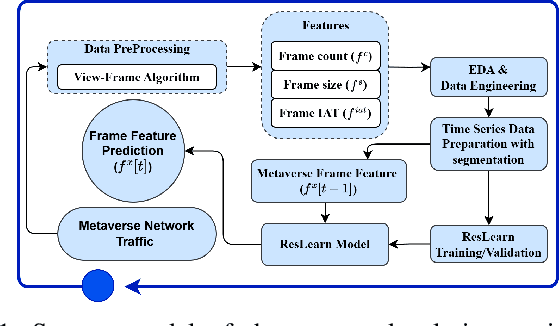
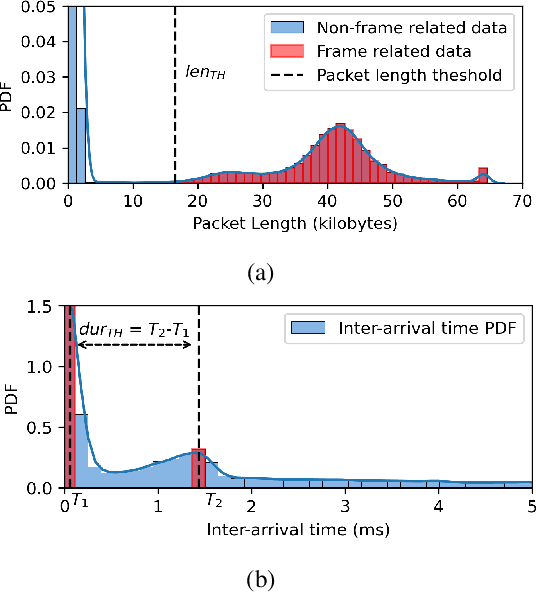
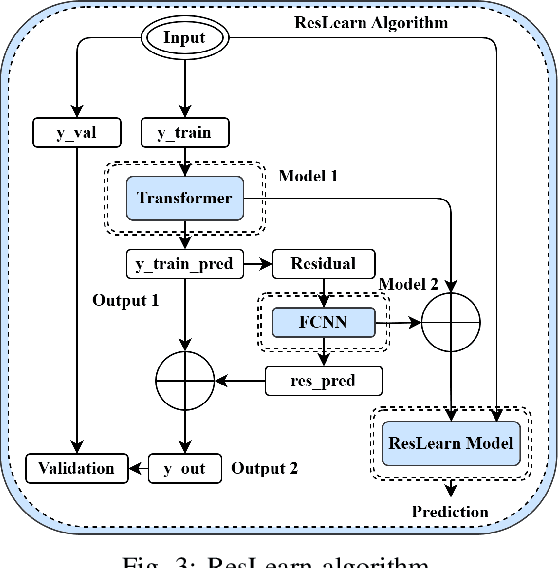
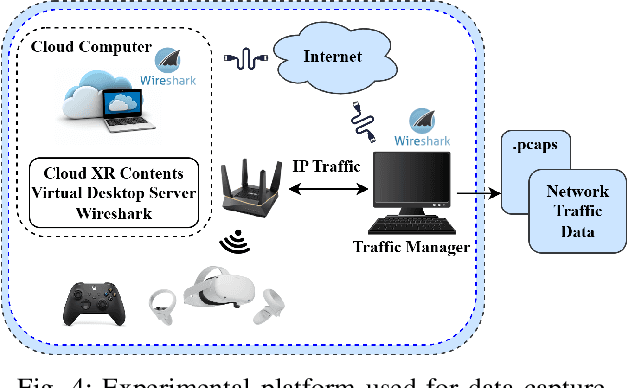
Our work proposes a comprehensive solution for predicting Metaverse network traffic, addressing the growing demand for intelligent resource management in eXtended Reality (XR) services. We first introduce a state-of-the-art testbed capturing a real-world dataset of virtual reality (VR), augmented reality (AR), and mixed reality (MR) traffic, made openly available for further research. To enhance prediction accuracy, we then propose a novel view-frame (VF) algorithm that accurately identifies video frames from traffic while ensuring privacy compliance, and we develop a Transformer-based progressive error-learning algorithm, referred to as ResLearn for Metaverse traffic prediction. ResLearn significantly improves time-series predictions by using fully connected neural networks to reduce errors, particularly during peak traffic, outperforming prior work by 99%. Our contributions offer Internet service providers (ISPs) robust tools for real-time network management to satisfy Quality of Service (QoS) and enhance user experience in the Metaverse.
Discern-XR: An Online Classifier for Metaverse Network Traffic
Nov 07, 2024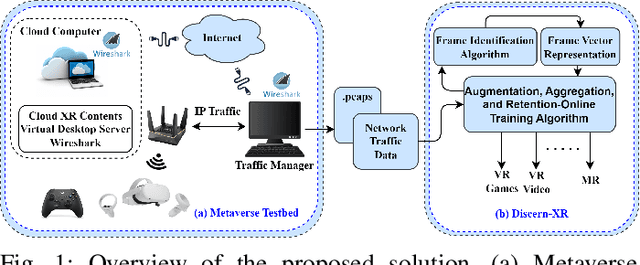
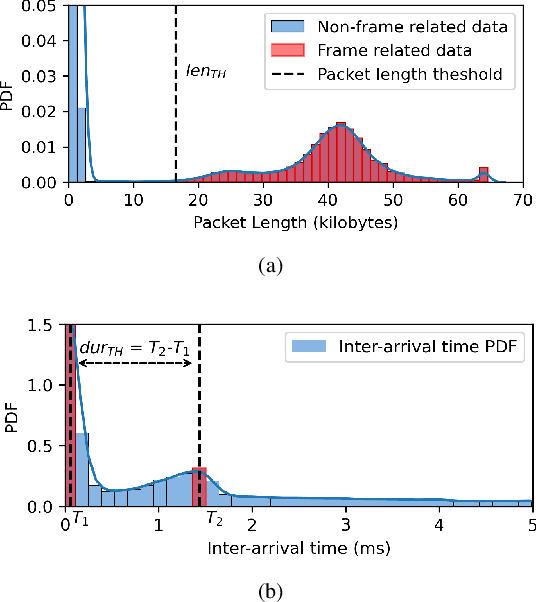
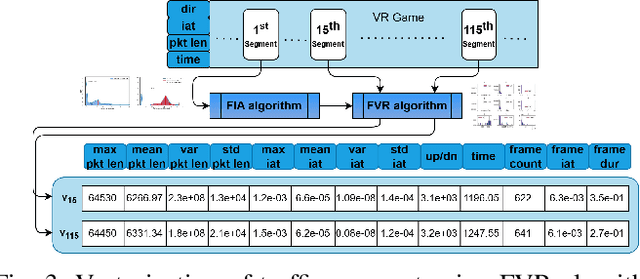

In this paper, we design an exclusive Metaverse network traffic classifier, named Discern-XR, to help Internet service providers (ISP) and router manufacturers enhance the quality of Metaverse services. Leveraging segmented learning, the Frame Vector Representation (FVR) algorithm and Frame Identification Algorithm (FIA) are proposed to extract critical frame-related statistics from raw network data having only four application-level features. A novel Augmentation, Aggregation, and Retention Online Training (A2R-OT) algorithm is proposed to find an accurate classification model through online training methodology. In addition, we contribute to the real-world Metaverse dataset comprising virtual reality (VR) games, VR video, VR chat, augmented reality (AR), and mixed reality (MR) traffic, providing a comprehensive benchmark. Discern-XR outperforms state-of-the-art classifiers by 7% while improving training efficiency and reducing false-negative rates. Our work advances Metaverse network traffic classification by standing as the state-of-the-art solution.