 Add to Chrome
 Add to Firefox
 Add to Edge
Accountability in Autonomous Drone-Based Firefighting: Insights From a Field Trial
Jun 16, 2026
There is a growing research field exploring how autonomous drones can enhance emergency response effectiveness. Integrating these (artificial) agents into existing emergency teams and workflows may significantly impact established accountability relationships. This paper examines how autonomous drones affect accountability attribution within complex socio-technical systems. Drawing on two real-life field trials in firefighting, the study reveals substantial uncertainty around accountability when drones are organizationally deployed. Using Bovens' accountability framework, two challenges are identified: (1) uncertainty about the role of drones within hierarchical structures, leading to confused accountability ascriptions; and (2) new forms of human-drone interactions introducing additional accountability-relevant issues. Based on these insights, the paper proposes actionable recommendations to support the responsible integration of autonomous drones into firefighting operations without undermining accountability. These findings offer practical guidance for policymakers and contribute to further research on accountability in autonomous systems.
* Accepted for Publication at International Conference on Information Systems (ICIS) 2025: https://aisel.aisnet.org/icis2025/ethical_is/ethical_is/10/

From Ad Hoc Pilots to Repeatable Patterns: Structuring Drone Collaboration in Emergency Services with DroneLets
Jun 16, 2026Drones hold promise for supporting emergency services, but their integration into workflows remains ad hoc and coordination-intensive. This paper addresses two research questions: how emergency teams want to collaborate with drones, and how to formalize these collaborations into repeatable processes. Based on four field trials and 95 interviews, we derive 44 interaction patterns grouped into 10 meta-patterns reflecting operational needs such as reconnaissance, communication, and logistical support. To structure these practices, we introduce DroneLets - a new class of design artifacts that extend Collaboration Engineering to embodied agents. DroneLets capture setup requirements, drone capabilities, environmental constraints, and coordinated actions across human and drone actors. They offer a modular framework for designing repeatable, scalable collaboration processes in emergency services, illustrated through patterns such as broadcasting to bystanders and post-fire monitoring. This work expands the scope of CE and provides a structured foundation for integrating autonomous drones into high-stakes field operations.
* Presented at International Conference on Information Systems (ICIS) 2025: https://aisel.aisnet.org/icis2025/is_transformwork/is_transformwork/19/
Learning with Digital Agents: An Analysis based on the Activity Theory
Aug 08, 2024Digital agents are considered a general-purpose technology. They spread quickly in private and organizational contexts, including education. Yet, research lacks a conceptual framing to describe interaction with such agents in a holistic manner. While focusing on the interaction with a pedagogical agent, i.e., a digital agent capable of natural-language interaction with a learner, we propose a model of learning activity based on activity theory. We use this model and a review of prior research on digital agents in education to analyze how various characteristics of the activity, including features of a pedagogical agent or learner, influence learning outcomes. The analysis leads to identification of IS research directions and guidance for developers of pedagogical agents and digital agents in general. We conclude by extending the activity theory-based model beyond the context of education and show how it helps designers and researchers ask the right questions when creating a digital agent.
* Authors manuscript accepted for publication in Journal of Management Information Systems
A Survey of AI Reliance
Jul 22, 2024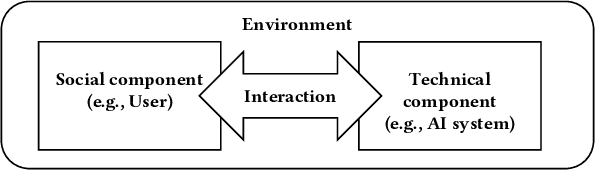
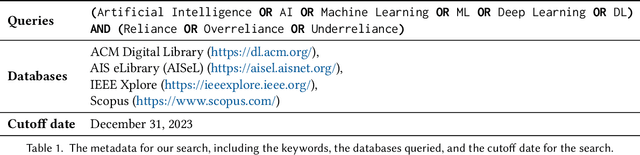

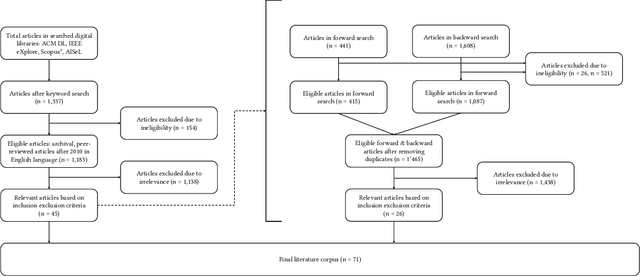
Artificial intelligence (AI) systems have become an indispensable component of modern technology. However, research on human behavioral responses is lagging behind, i.e., the research into human reliance on AI advice (AI reliance). Current shortcomings in the literature include the unclear influences on AI reliance, lack of external validity, conflicting approaches to measuring reliance, and disregard for a change in reliance over time. Promising avenues for future research include reliance on generative AI output and reliance in multi-user situations. In conclusion, we present a morphological box that serves as a guide for research on AI reliance.
When Generative AI Meets Workplace Learning: Creating A Realistic & Motivating Learning Experience With A Generative PCA
May 24, 2024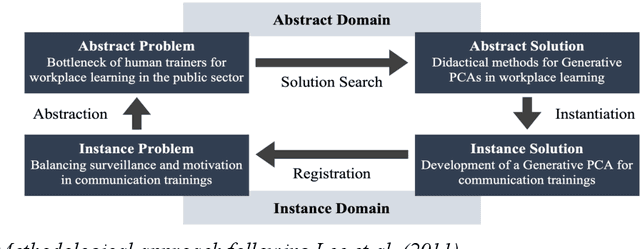
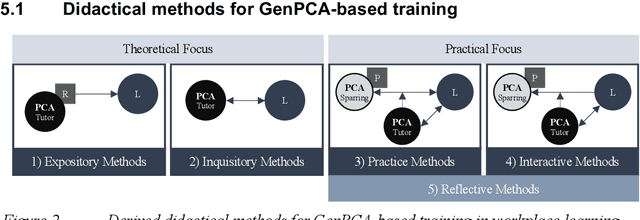
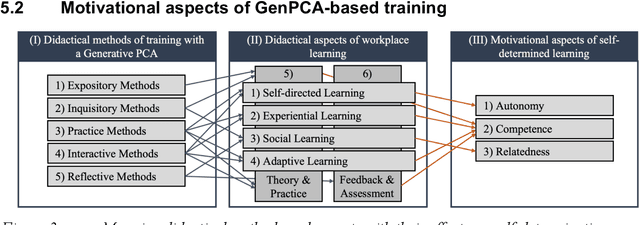
Workplace learning is used to train employees systematically, e.g., via e-learning or in 1:1 training. However, this is often deemed ineffective and costly. Whereas pure e-learning lacks the possibility of conversational exercise and personal contact, 1:1 training with human instructors involves a high level of personnel and organizational costs. Hence, pedagogical conversational agents (PCAs), based on generative AI, seem to compensate for the disadvantages of both forms. Following Action Design Research, this paper describes an organizational communication training with a Generative PCA (GenPCA). The evaluation shows promising results: the agent was perceived positively among employees and contributed to an improvement in self-determined learning. However, the integration of such agent comes not without limitations. We conclude with suggestions concerning the didactical methods, which are supported by a GenPCA, and possible improvements of such an agent for workplace learning.
PROMISE: A Framework for Model-Driven Stateful Prompt Orchestration
Dec 07, 2023
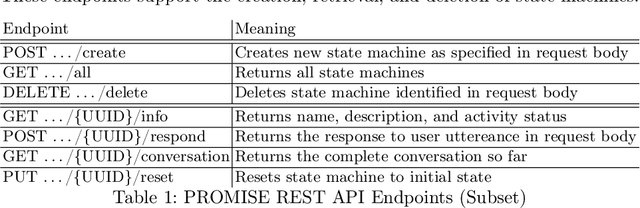


The advent of increasingly powerful language models has raised expectations for language-based interactions. However, controlling these models is a challenge, emphasizing the need to be able to investigate the feasibility and value of their application. We present PROMISE, a framework that facilitates the development of complex language-based interactions with information systems. Its use of state machine modeling concepts enables model-driven, dynamic prompt orchestration across hierarchically nested states and transitions. This improves the control of the behavior of language models and thus enables their effective and efficient use. We show the benefits of PROMISE in the context of application scenarios within health information systems and demonstrate its ability to handle complex interactions.
A Sociotechnical View of Algorithmic Fairness
Sep 27, 2021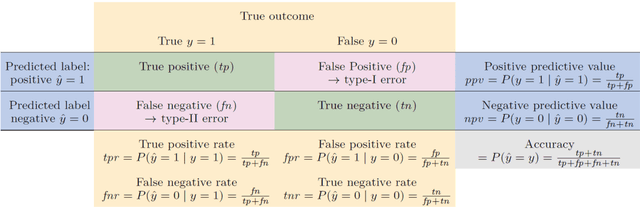
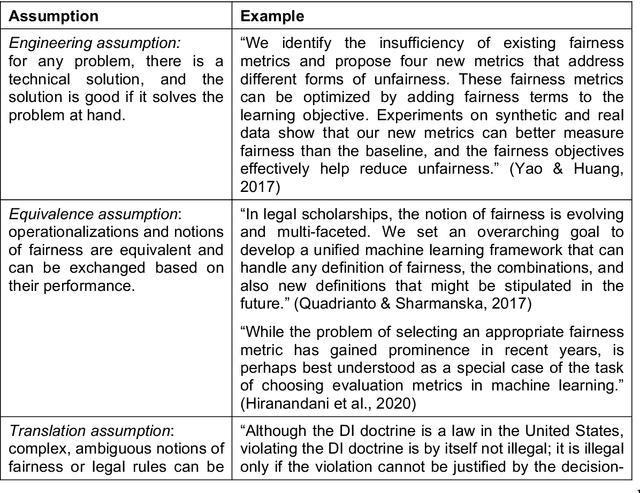
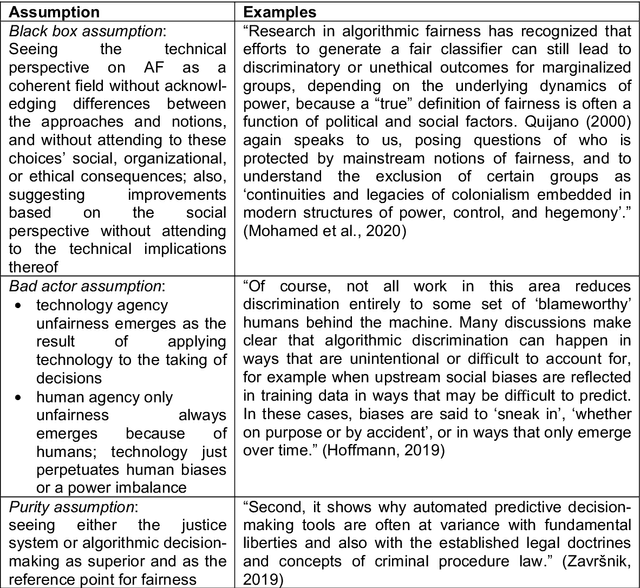
Algorithmic fairness has been framed as a newly emerging technology that mitigates systemic discrimination in automated decision-making, providing opportunities to improve fairness in information systems (IS). However, based on a state-of-the-art literature review, we argue that fairness is an inherently social concept and that technologies for algorithmic fairness should therefore be approached through a sociotechnical lens. We advance the discourse on algorithmic fairness as a sociotechnical phenomenon. Our research objective is to embed AF in the sociotechnical view of IS. Specifically, we elaborate on why outcomes of a system that uses algorithmic means to assure fairness depends on mutual influences between technical and social structures. This perspective can generate new insights that integrate knowledge from both technical fields and social studies. Further, it spurs new directions for IS debates. We contribute as follows: First, we problematize fundamental assumptions in the current discourse on algorithmic fairness based on a systematic analysis of 310 articles. Second, we respond to these assumptions by theorizing algorithmic fairness as a sociotechnical construct. Third, we propose directions for IS researchers to enhance their impacts by pursuing a unique understanding of sociotechnical algorithmic fairness. We call for and undertake a holistic approach to AF. A sociotechnical perspective on algorithmic fairness can yield holistic solutions to systemic biases and discrimination.