 Add to Chrome
 Add to Firefox
 Add to Edge
MirrorMark: A Distortion-Free Multi-Bit Watermark for Large Language Models
Jan 29, 2026
As large language models (LLMs) become integral to applications such as question answering and content creation, reliable content attribution has become increasingly important. Watermarking is a promising approach, but existing methods either provide only binary signals or distort the sampling distribution, degrading text quality; distortion-free approaches, in turn, often suffer from weak detectability or robustness. We propose MirrorMark, a multi-bit and distortion-free watermark for LLMs. By mirroring sampling randomness in a measure-preserving manner, MirrorMark embeds multi-bit messages without altering the token probability distribution, preserving text quality by design. To improve robustness, we introduce a context-based scheduler that balances token assignments across message positions while remaining resilient to insertions and deletions. We further provide a theoretical analysis of the equal error rate to interpret empirical performance. Experiments show that MirrorMark matches the text quality of non-watermarked generation while achieving substantially stronger detectability: with 54 bits embedded in 300 tokens, it improves bit accuracy by 8-12% and correctly identifies up to 11% more watermarked texts at 1% false positive rate.

StealthInk: A Multi-bit and Stealthy Watermark for Large Language Models
Jun 05, 2025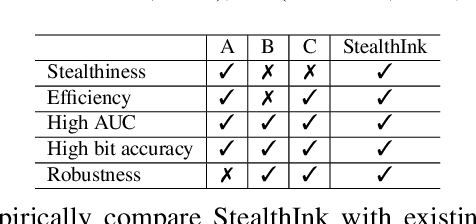
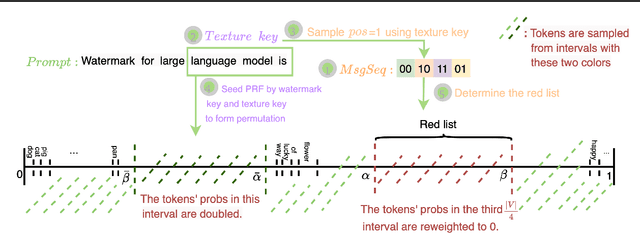
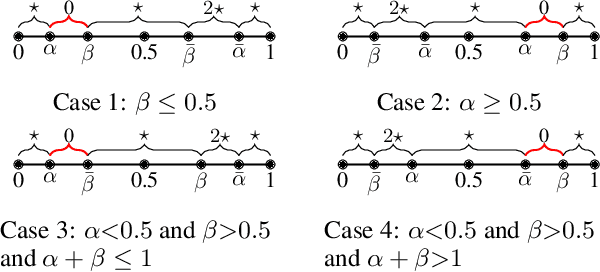
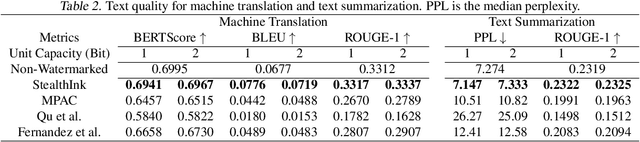
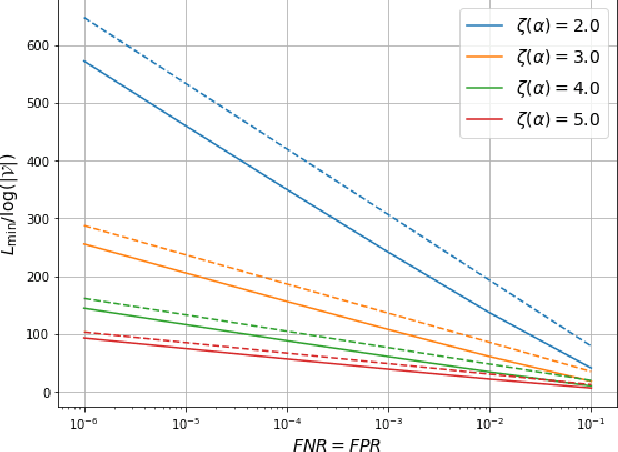
Watermarking for large language models (LLMs) offers a promising approach to identifying AI-generated text. Existing approaches, however, either compromise the distribution of original generated text by LLMs or are limited to embedding zero-bit information that only allows for watermark detection but ignores identification. We present StealthInk, a stealthy multi-bit watermarking scheme that preserves the original text distribution while enabling the embedding of provenance data, such as userID, TimeStamp, and modelID, within LLM-generated text. This enhances fast traceability without requiring access to the language model's API or prompts. We derive a lower bound on the number of tokens necessary for watermark detection at a fixed equal error rate, which provides insights on how to enhance the capacity. Comprehensive empirical evaluations across diverse tasks highlight the stealthiness, detectability, and resilience of StealthInk, establishing it as an effective solution for LLM watermarking applications.
Multi-Bit Distortion-Free Watermarking for Large Language Models
Feb 26, 2024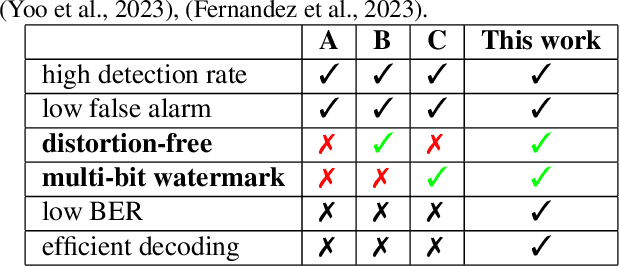
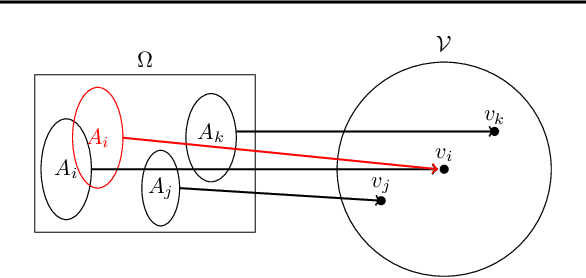
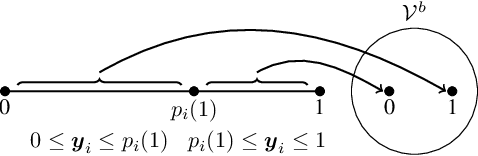
Methods for watermarking large language models have been proposed that distinguish AI-generated text from human-generated text by slightly altering the model output distribution, but they also distort the quality of the text, exposing the watermark to adversarial detection. More recently, distortion-free watermarking methods were proposed that require a secret key to detect the watermark. The prior methods generally embed zero-bit watermarks that do not provide additional information beyond tagging a text as being AI-generated. We extend an existing zero-bit distortion-free watermarking method by embedding multiple bits of meta-information as part of the watermark. We also develop a computationally efficient decoder that extracts the embedded information from the watermark with low bit error rate.