 Add to Chrome
 Add to Firefox
 Add to Edge
Nonreversible Gauge Fields in Fokker--Planck Dynamics: Supersymmetric Hamiltonians and Learned Finite Forces
Jun 04, 2026
We formulate stationary-density-preserving nonreversible perturbations of Fokker--Planck dynamics as gauge fields that deform relaxation spectra while leaving the invariant state fixed. When detailed balance holds, a similarity transformation maps the reversible Fokker--Planck operator to a Witten-Laplacian-type supersymmetric Hamiltonian; nonreversible gauges then appear as non-Hermitian perturbations that preserve the zero mode but modify the excited spectrum. This operator viewpoint gives a common language for relaxation gaps, circulating probability currents, hypocoercive acceleration, and finite control costs. We represent admissible gauge currents by antisymmetric tensor fields and identify the detailed-balance-violating Ohzeki--Ichiki force as a constant symplectic example whose infinite-strength limit is Hamiltonian dynamics. The continuous-time spectral gap alone does not select a finite gauge strength, so we introduce a finite-time regularized objective and an actor--critic procedure for learning the gauge. An exactly solvable anisotropic Gaussian Ornstein--Uhlenbeck benchmark separates the spectral transition from the finite-time optimum and shows that the learned gauge recovers the Lyapunov-equation optimum. A double-well benchmark then illustrates the same constrained selection in a nonconvex metastable landscape. Stochastic gradient methods enter this framework as physically relevant Fokker--Planck systems: mini-batch noise acts as an effective diffusion tensor, and adaptive methods such as Adam correspond to metric choices with possible nonequilibrium currents.

Population Annealing as a Discrete-Time Schrödinger Bridge
Mar 17, 2026We present a theoretical framework that reinterprets Population Annealing (PA) through the lens of the discrete-time Schrödinger Bridge (SB) problem. We demonstrate that the heuristic reweighting step in PA is derived by analytically solving the Schrödinger system without iterative computation via instantaneous projection. In addition, we identify the thermodynamic work as the optimal control potential that solves the global variational problem on path space. This perspective unifies non-equilibrium thermodynamics with the geometric framework of optimal transport, interpreting the Jarzynski equality as a consistency condition within the Donsker-Varadhan variational principle, and elucidates the thermodynamic optimality of PA.
Kernel Learning for Regression via Quantum Annealing Based Spectral Sampling
Jan 13, 2026While quantum annealing (QA) has been developed for combinatorial optimization, practical QA devices operate at finite temperature and under noise, and their outputs can be regarded as stochastic samples close to a Gibbs--Boltzmann distribution. In this study, we propose a QA-in-the-loop kernel learning framework that integrates QA not merely as a substitute for Markov-chain Monte Carlo sampling but as a component that directly determines the learned kernel for regression. Based on Bochner's theorem, a shift-invariant kernel is represented as an expectation over a spectral distribution, and random Fourier features (RFF) approximate the kernel by sampling frequencies. We model the spectral distribution with a (multi-layer) restricted Boltzmann machine (RBM), generate discrete RBM samples using QA, and map them to continuous frequencies via a Gaussian--Bernoulli transformation. Using the resulting RFF, we construct a data-adaptive kernel and perform Nadaraya--Watson (NW) regression. Because the RFF approximation based on $\cos(\bmω^{\top}Δ\bm{x})$ can yield small negative values and cancellation across neighbors, the Nadaraya--Watson denominator $\sum_j k_{ij}$ may become close to zero. We therefore employ nonnegative squared-kernel weights $w_{ij}=k(\bm{x}_i,\bm{x}_j)^2$, which also enhances the contrast of kernel weights. The kernel parameters are trained by minimizing the leave-one-out NW mean squared error, and we additionally evaluate local linear regression with the same squared-kernel weights at inference. Experiments on multiple benchmark regression datasets demonstrate a decrease in training loss, accompanied by structural changes in the kernel matrix, and show that the learned kernel tends to improve $R^2$ and RMSE over the baseline Gaussian-kernel NW. Increasing the number of random features at inference further enhances accuracy.
Quantum generative model on bicycle-sharing system and an application
Oct 06, 2025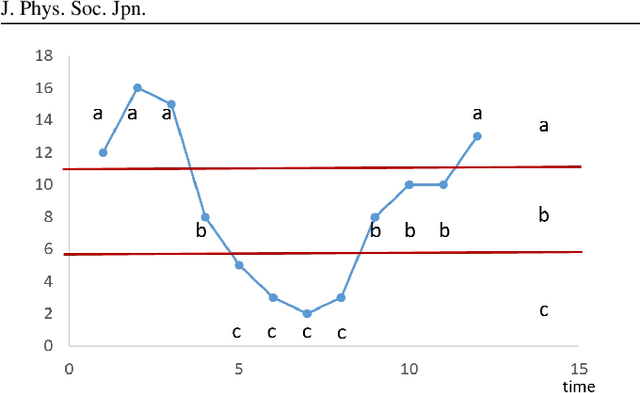
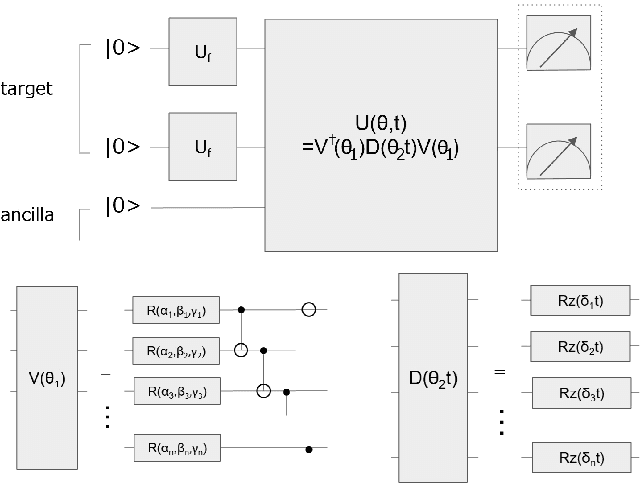
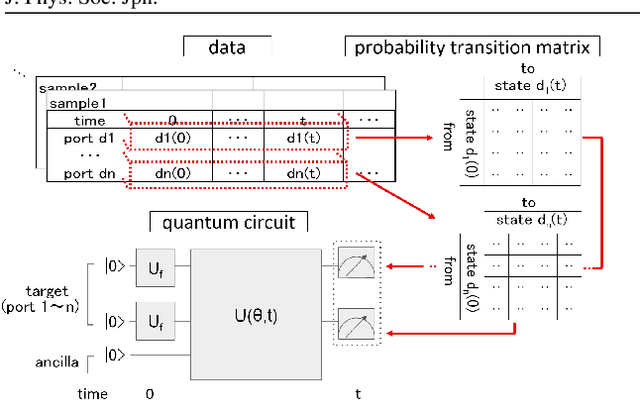
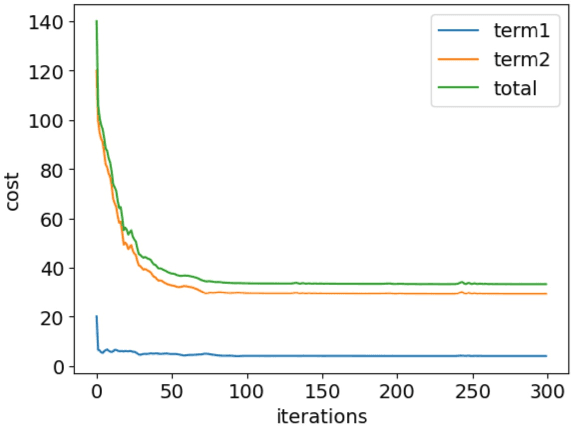
Recently, bicycle-sharing systems have been implemented in numerous cities, becoming integral to daily life. However, a prevalent issue arises when intensive commuting demand leads to bicycle shortages in specific areas and at particular times. To address this challenge, we employ a novel quantum machine learning model that analyzes time series data by fitting quantum time evolution to observed sequences. This model enables us to capture actual trends in bicycle counts at individual ports and identify correlations between different ports. Utilizing the trained model, we simulate the impact of proactively adding bicycles to high-demand ports on the overall rental number across the system. Given that the core of this method lies in a Monte Carlo simulation, it is anticipated to have a wide range of industrial applications.
Black-box optimization and quantum annealing for filtering out mislabeled training instances
Jan 12, 2025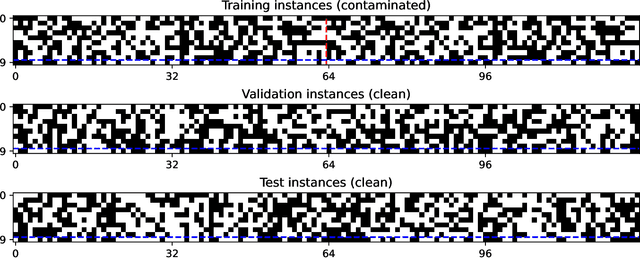
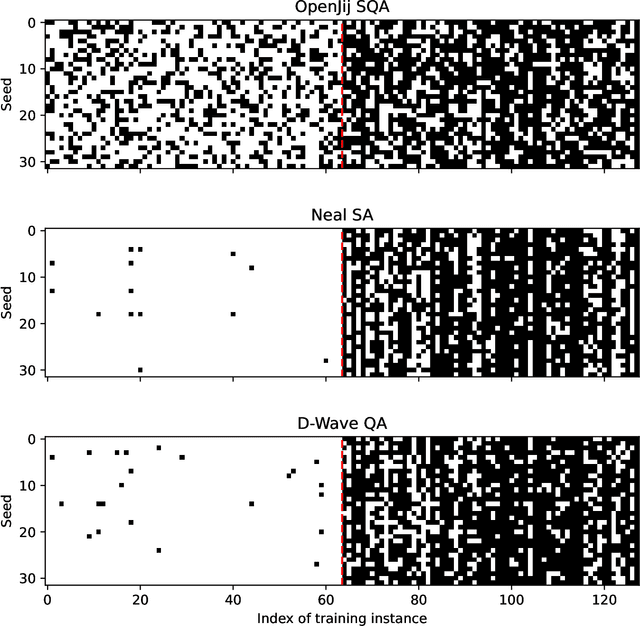
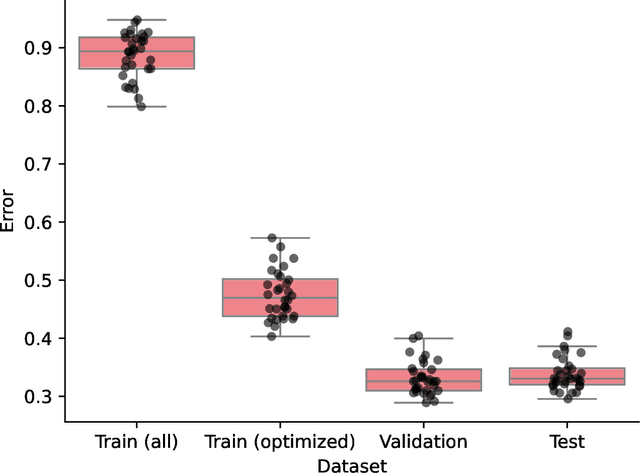
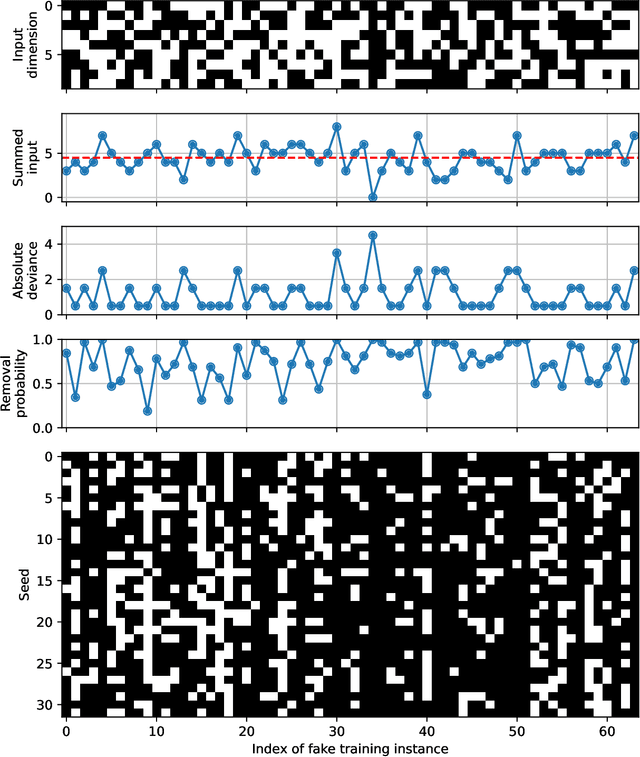
This study proposes an approach for removing mislabeled instances from contaminated training datasets by combining surrogate model-based black-box optimization (BBO) with postprocessing and quantum annealing. Mislabeled training instances, a common issue in real-world datasets, often degrade model generalization, necessitating robust and efficient noise-removal strategies. The proposed method evaluates filtered training subsets based on validation loss, iteratively refines loss estimates through surrogate model-based BBO with postprocessing, and leverages quantum annealing to efficiently sample diverse training subsets with low validation error. Experiments on a noisy majority bit task demonstrate the method's ability to prioritize the removal of high-risk mislabeled instances. Integrating D-Wave's clique sampler running on a physical quantum annealer achieves faster optimization and higher-quality training subsets compared to OpenJij's simulated quantum annealing sampler or Neal's simulated annealing sampler, offering a scalable framework for enhancing dataset quality. This work highlights the effectiveness of the proposed method for supervised learning tasks, with future directions including its application to unsupervised learning, real-world datasets, and large-scale implementations.
Relaxation-assisted reverse annealing on nonnegative/binary matrix factorization
Jan 03, 2025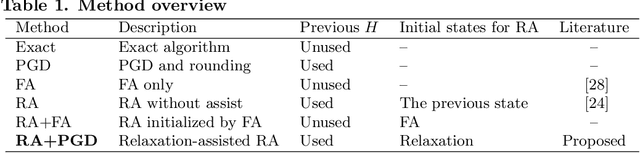
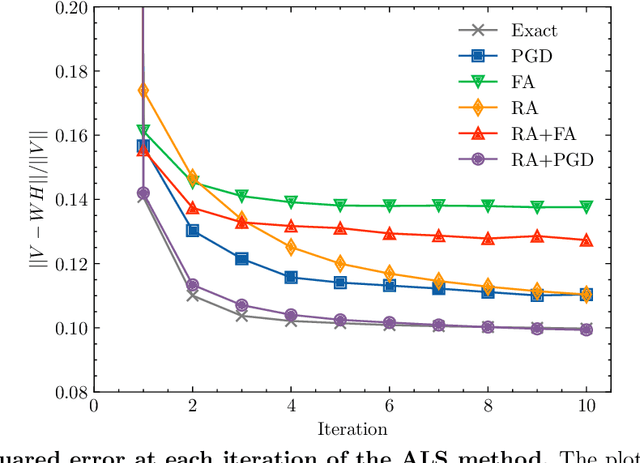

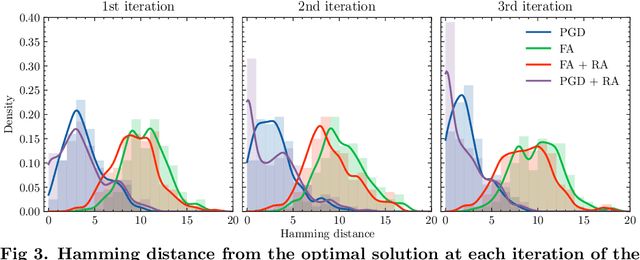
Quantum annealing has garnered significant attention as meta-heuristics inspired by quantum physics for combinatorial optimization problems. Among its many applications, nonnegative/binary matrix factorization stands out for its complexity and relevance in unsupervised machine learning. The use of reverse annealing, a derivative procedure of quantum annealing to prioritize the search in a vicinity under a given initial state, helps improve its optimization performance in matrix factorization. This study proposes an improved strategy that integrates reverse annealing with a linear programming relaxation technique. Using relaxed solutions as the initial configuration for reverse annealing, we demonstrate improvements in optimization performance comparable to the exact optimization methods. Our experiments on facial image datasets show that our method provides better convergence than known reverse annealing methods. Furthermore, we investigate the effectiveness of relaxation-based initialization methods on randomized datasets, demonstrating a relationship between the relaxed solution and the optimal solution. This research underscores the potential of combining reverse annealing and classical optimization strategies to enhance optimization performance.
Schödinger Bridge Type Diffusion Models as an Extension of Variational Autoencoders
Dec 24, 2024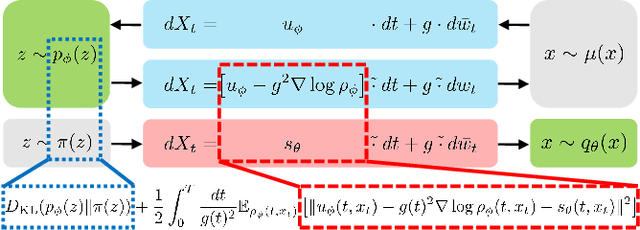
Generative diffusion models use time-forward and backward stochastic differential equations to connect the data and prior distributions. While conventional diffusion models (e.g., score-based models) only learn the backward process, more flexible frameworks have been proposed to also learn the forward process by employing the Schr\"odinger bridge (SB). However, due to the complexity of the mathematical structure behind SB-type models, we can not easily give an intuitive understanding of their objective function. In this work, we propose a unified framework to construct diffusion models by reinterpreting the SB-type models as an extension of variational autoencoders. In this context, the data processing inequality plays a crucial role. As a result, we find that the objective function consists of the prior loss and drift matching parts.
Routing and Scheduling Optimization for Urban Air Mobility Fleet Management using Quantum Annealing
Oct 15, 2024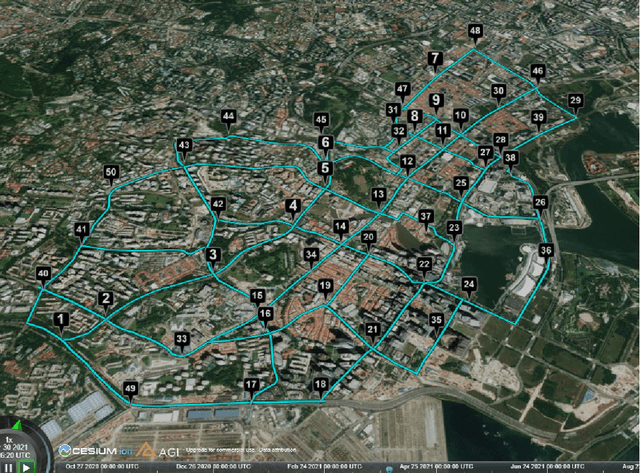
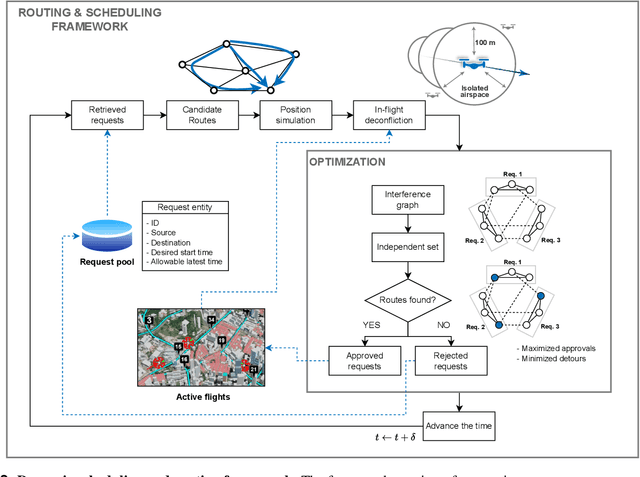


The growing integration of urban air mobility (UAM) for urban transportation and delivery has accelerated due to increasing traffic congestion and its environmental and economic repercussions. Efficiently managing the anticipated high-density air traffic in cities is critical to ensure safe and effective operations. In this study, we propose a routing and scheduling framework to address the needs of a large fleet of UAM vehicles operating in urban areas. Using mathematical optimization techniques, we plan efficient and deconflicted routes for a fleet of vehicles. Formulating route planning as a maximum weighted independent set problem enables us to utilize various algorithms and specialized optimization hardware, such as quantum annealers, which has seen substantial progress in recent years. Our method is validated using a traffic management simulator tailored for the airspace in Singapore. Our approach enhances airspace utilization by distributing traffic throughout a region. This study broadens the potential applications of optimization techniques in UAM traffic management.
Application of time-series quantum generative model to financial data
May 20, 2024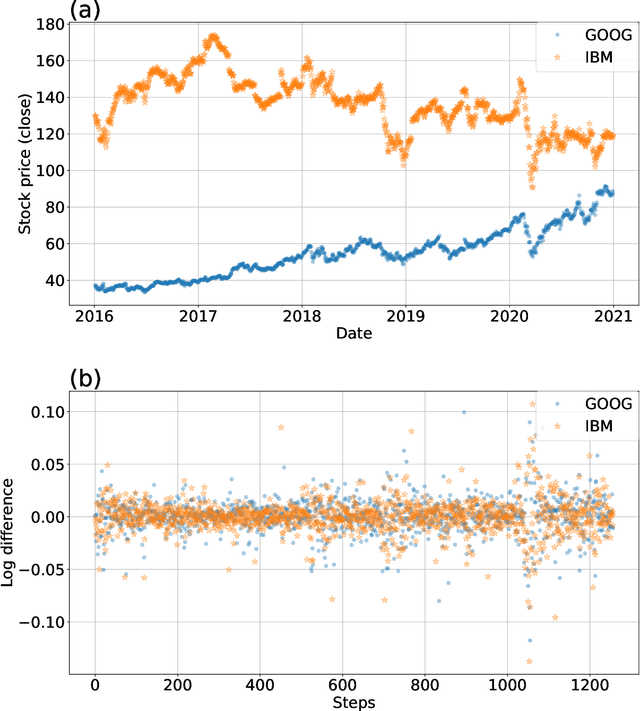


Despite proposing a quantum generative model for time series that successfully learns correlated series with multiple Brownian motions, the model has not been adapted and evaluated for financial problems. In this study, a time-series generative model was applied as a quantum generative model to actual financial data. Future data for two correlated time series were generated and compared with classical methods such as long short-term memory and vector autoregression. Furthermore, numerical experiments were performed to complete missing values. Based on the results, we evaluated the practical applications of the time-series quantum generation model. It was observed that fewer parameter values were required compared with the classical method. In addition, the quantum time-series generation model was feasible for both stationary and nonstationary data. These results suggest that several parameters can be applied to various types of time-series data.
Statistical Mechanics Calculations Using Variational Autoregressive Networks and Quantum Annealing
Apr 30, 2024


In statistical mechanics, computing the partition function is generally difficult. An approximation method using a variational autoregressive network (VAN) has been proposed recently. This approach offers the advantage of directly calculating the generation probabilities while obtaining a significantly large number of samples. The present study introduces a novel approximation method that employs samples derived from quantum annealing machines in conjunction with VAN, which are empirically assumed to adhere to the Gibbs-Boltzmann distribution. When applied to the finite-size Sherrington-Kirkpatrick model, the proposed method demonstrates enhanced accuracy compared to the traditional VAN approach and other approximate methods, such as the widely utilized naive mean field.