 Add to Chrome
 Add to Firefox
 Add to Edge
Translators as Invisible Teachers of AI: Copyright, Translation Memory, and the Political Economy of Linguistic Data
May 24, 2026
This paper examines how the labour of translators has been transformed into foundational data capital for the age of artificial intelligence (AI). Translation memories (TM) and parallel corpora preserve a one-to-one correspondence between source and target text and therefore constitute extraordinarily valuable supervised training data for machine translation. The development of statistical machine translation (SMT), neural machine translation (NMT), the Transformer architecture, and multilingual large language models (LLMs) cannot be disentangled from the accumulation of such translation data. And yet, translators' renditions have been bought as deliverables under contract, segmented as technical objects, and processed as "information analysis" data under copyright law -- losing their moral, creative, and economic attribution to the translators who produced them. The paper develops two concepts to capture this process. The first is appropriation without consumption: a mode of use in which works are not read, viewed, or listened to, but only mined for statistical features -- a use that is legitimated under Article 30-4 of the Japanese Copyright Act. The second is the invisible teacherisation of translators: the process by which translators, through the construction of translation memories, post-editing, and quality assessment, have functioned as teachers of AI without recognition as such. Drawing on the data supply chain that runs from translators through language service providers (LSPs) and platforms to model developers, on a comparative reading of Japanese, European, and United States legal frameworks, on the distinction between open and proprietary AI models, and on the premium status that human-generated data has acquired in the era of model collapse, the paper asks what translators are actually afraid of, and points toward concrete directions for redistributive design.

ChatGPT as a Translation Engine: A Case Study on Japanese-English
Oct 09, 2025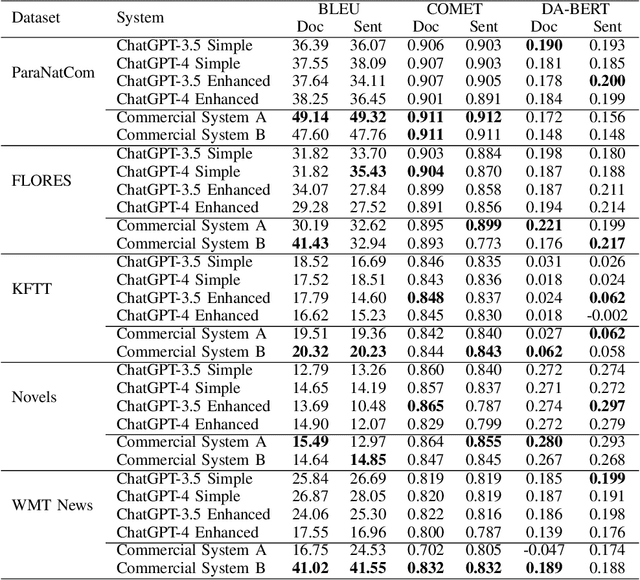
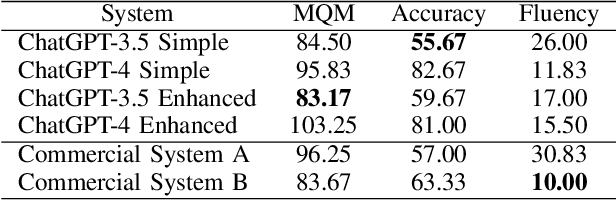
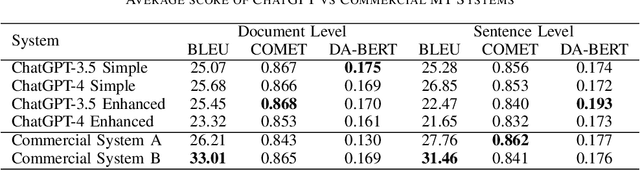
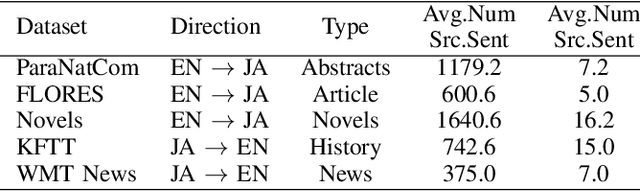
This study investigates ChatGPT for Japanese-English translation, exploring simple and enhanced prompts and comparing against commercially available translation engines. Performing both automatic and MQM-based human evaluations, we found that document-level translation outperforms sentence-level translation for ChatGPT. On the other hand, we were not able to determine if enhanced prompts performed better than simple prompts in our experiments. We also discovered that ChatGPT-3.5 was preferred by automatic evaluation, but a tradeoff exists between accuracy (ChatGPT-3.5) and fluency (ChatGPT-4). Lastly, ChatGPT yields competitive results against two widely-known translation systems.
Toward a Behavioural Translation Style Space: Simulating the Temporal Dynamics of Affect, Behaviour, and Cognition in Human Translation Production
Jul 16, 2025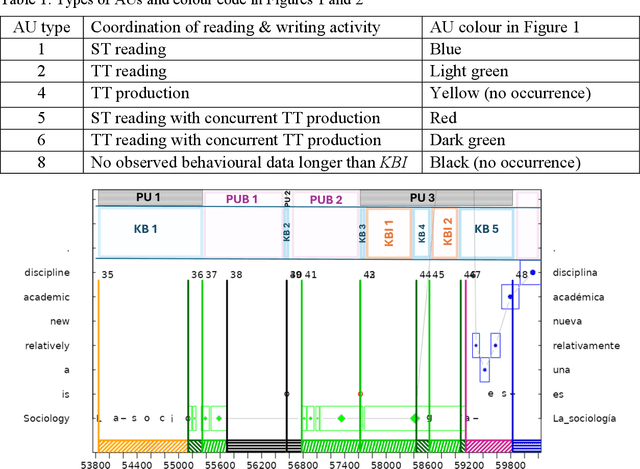
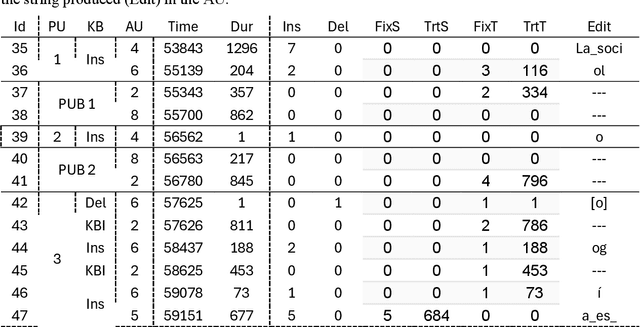
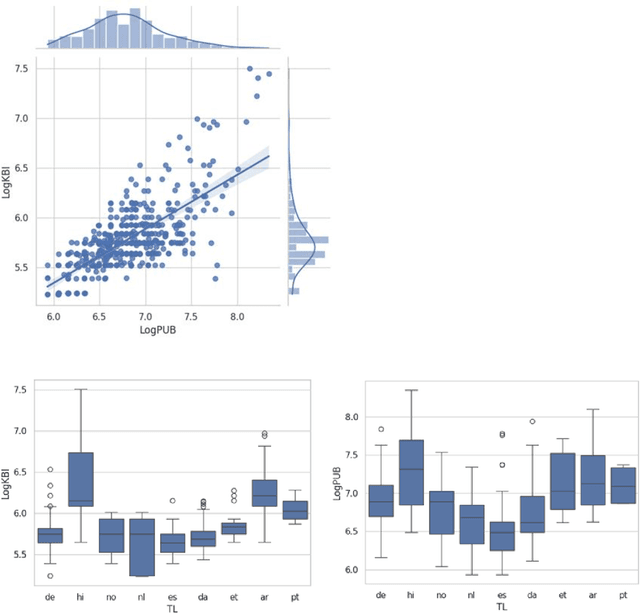
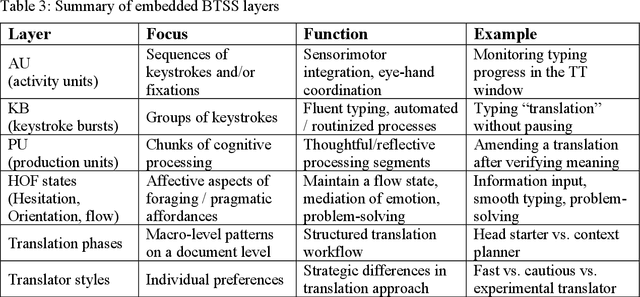
The paper introduces a Behavioural Translation Style Space (BTSS) that describes possible behavioural translation patterns. The suggested BTSS is organized as a hierarchical structure that entails various embedded processing layers. We posit that observable translation behaviour - i.e., eye and finger movements - is fundamental when executing the physical act of translation but it is caused and shaped by higher-order cognitive processes and affective translation states. We analyse records of keystrokes and gaze data as indicators of the hidden mental processing structure and organize the behavioural patterns as a multi-layered embedded BTSS. The BTSS serves as the basis for a computational translation agent to simulate the temporal dynamics of affect, automatized behaviour and cognition during human translation production.
Optimizing Machine Translation through Prompt Engineering: An Investigation into ChatGPT's Customizability
Aug 02, 2023This paper explores the influence of integrating the purpose of the translation and the target audience into prompts on the quality of translations produced by ChatGPT. Drawing on previous translation studies, industry practices, and ISO standards, the research underscores the significance of the pre-production phase in the translation process. The study reveals that the inclusion of suitable prompts in large-scale language models like ChatGPT can yield flexible translations, a feat yet to be realized by conventional Machine Translation (MT). The research scrutinizes the changes in translation quality when prompts are used to generate translations that meet specific conditions. The evaluation is conducted from a practicing translator's viewpoint, both subjectively and qualitatively, supplemented by the use of OpenAI's word embedding API for cosine similarity calculations. The findings suggest that the integration of the purpose and target audience into prompts can indeed modify the generated translations, generally enhancing the translation quality by industry standards. The study also demonstrates the practical application of the "good translation" concept, particularly in the context of marketing documents and culturally dependent idioms.