 Add to Chrome
 Add to Firefox
 Add to Edge
AWDiff: An a trous wavelet diffusion model for lung ultrasound image synthesis
Mar 03, 2026
Lung ultrasound (LUS) is a safe and portable imaging modality, but the scarcity of data limits the development of machine learning methods for image interpretation and disease monitoring. Existing generative augmentation methods, such as Generative Adversarial Networks (GANs) and diffusion models, often lose subtle diagnostic cues due to resolution reduction, particularly B-lines and pleural irregularities. We propose A trous Wavelet Diffusion (AWDiff), a diffusion based augmentation framework that integrates the a trous wavelet transform to preserve fine-scale structures while avoiding destructive downsampling. In addition, semantic conditioning with BioMedCLIP, a vision language foundation model trained on large scale biomedical corpora, enforces alignment with clinically meaningful labels. On a LUS dataset, AWDiff achieved lower distortion and higher perceptual quality compared to existing methods, demonstrating both structural fidelity and clinical diversity.

Online User Profiling to Detect Social Bots on Twitter
Mar 09, 2022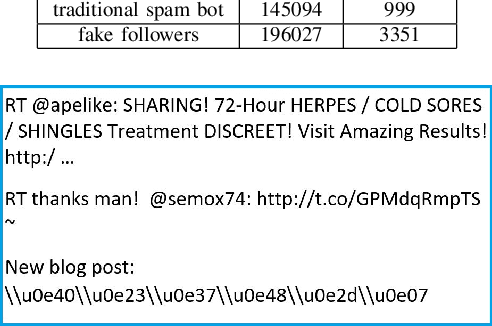
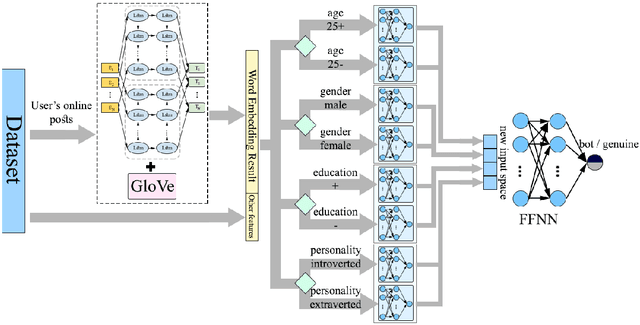
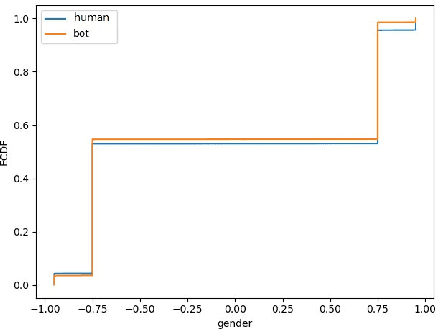
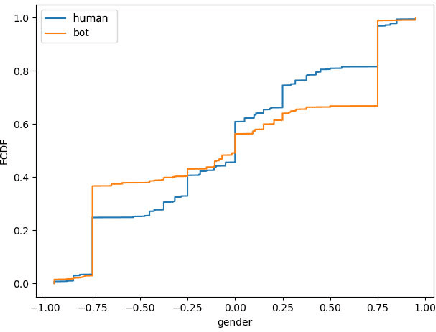
Social media platforms can expose influential trends in many aspects of everyday life. However, the movements they represent can be contaminated by disinformation. Social bots are one of the significant sources of disinformation in social media. Social bots can pose serious cyber threats to society and public opinion. This research aims to develop machine learning models to detect bots based on the extracted user's profile from a Tweet's text. Online users' profile shows the user's personal information, such as age, gender, education, and personality. In this work, the user's profile is constructed based on the user's online posts. This work's main contribution is three-fold: First, we aim to improve bot detection through machine learning models based on the user's personal information generated by the user's online comments. When comparing two online posts, the similarity of personal information makes it difficult to differentiate a bot from a human user. However, this research turns personal information similarity among two online posts into an advantage for the new bot detection model. The new proposed model for bot detection creates user profiles based on personal information such as age, personality, gender, education from users' online posts and introduces a machine learning model to detect social bots with high prediction accuracy based on personal information. Second, create a new public data set that shows the user's profile for more than 6900 Twitter accounts in the Cresci 2017 data set.