 Add to Chrome
 Add to Firefox
 Add to Edge
Tailoring AI-Driven Reading Scaffolds to the Distinct Needs of Neurodiverse Learners
Apr 02, 2026
Neurodiverse learners often require reading supports, yet increasing scaffold richness can sometimes overload attention and working memory rather than improve comprehension. Grounded in the Construction-Integration model and a contingent scaffolding perspective, we examine how structural versus semantic scaffolds shape comprehension and reading experience in a supervised inclusive context. Using an adapted reading interface, we compared four modalities: unmodified text, sentence-segmented text, segmented text with pictograms, and segmented text with pictograms plus keyword labels. In a within-subject pilot with 14 primary-school learners with special educational needs and disabilities, we measured reading comprehension using standardized questions and collected brief child- and therapist-reported experience measures alongside open-ended feedback. Results highlight heterogeneous responses as some learners showed patterns consistent with benefits from segmentation and pictograms, while others showed patterns consistent with increased coordination costs when visual scaffolds were introduced. Experience ratings showed limited differences between modalities, with some apparent effects linked to clinical complexity, particularly for perceived ease of understanding. Open-ended feedback of the learners frequently requested simpler wording and additional visual supports. These findings suggest that no single scaffold is universally optimal, reinforcing the need for calibrated, adjustable scaffolding and provide design implications for human-AI co-regulation in supervised inclusive reading contexts.

Robust Multilingual Text-to-Pictogram Mapping for Scalable Reading Rehabilitation
Mar 25, 2026Reading comprehension presents a significant challenge for children with Special Educational Needs and Disabilities (SEND), often requiring intensive one-on-one reading support. To assist therapists in scaling this support, we developed a multilingual, AI-powered interface that automatically enhances text with visual scaffolding. This system dynamically identifies key concepts and maps them to contextually relevant pictograms, supporting learners across languages. We evaluated the system across five typologically diverse languages (English, French, Italian, Spanish, and Arabic), through multilingual coverage analysis, expert clinical review by speech therapists and special education professionals, and latency assessment. Evaluation results indicate high pictogram coverage and visual scaffolding density across the five languages. Expert audits suggested that automatically selected pictograms were semantically appropriate, with combined correct and acceptable ratings exceeding 95% for the four European languages and approximately 90% for Arabic despite reduced pictogram repository coverage. System latency remained within interactive thresholds suitable for real-time educational use. These findings support the technical viability, semantic safety, and acceptability of automated multimodal scaffolding to improve accessibility for neurodiverse learners.
NLP for Social Good: A Survey of Challenges, Opportunities, and Responsible Deployment
May 28, 2025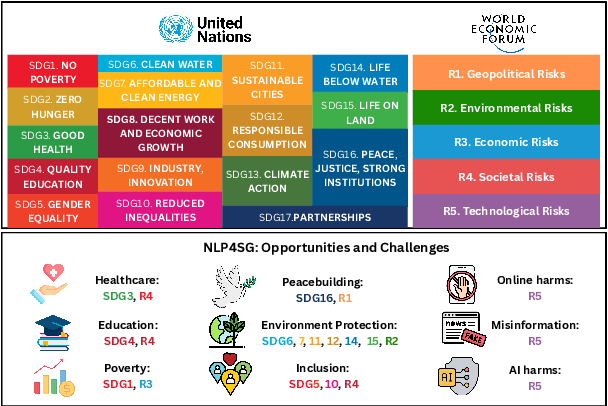
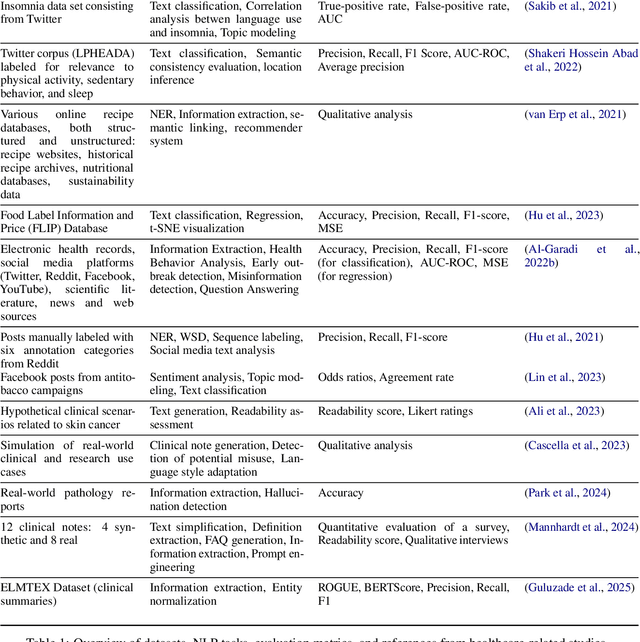
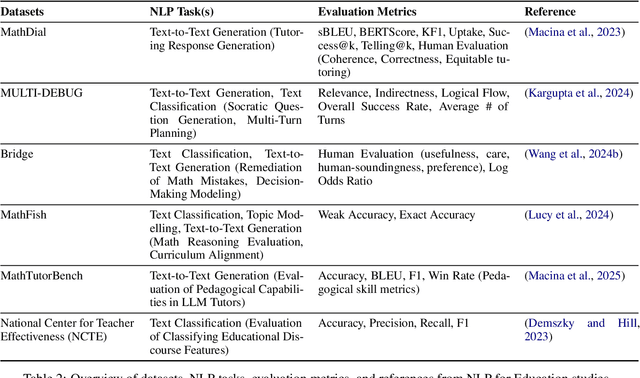
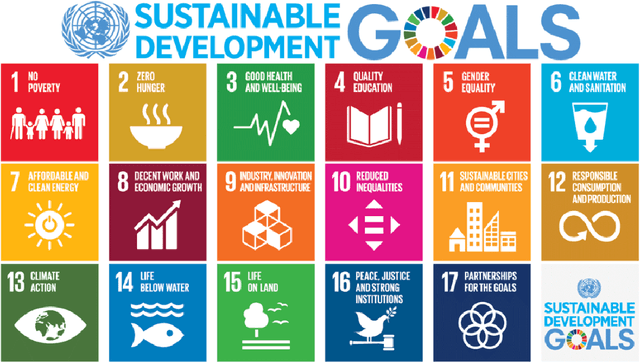
Recent advancements in large language models (LLMs) have unlocked unprecedented possibilities across a range of applications. However, as a community, we believe that the field of Natural Language Processing (NLP) has a growing need to approach deployment with greater intentionality and responsibility. In alignment with the broader vision of AI for Social Good (Toma\v{s}ev et al., 2020), this paper examines the role of NLP in addressing pressing societal challenges. Through a cross-disciplinary analysis of social goals and emerging risks, we highlight promising research directions and outline challenges that must be addressed to ensure responsible and equitable progress in NLP4SG research.
A Participatory Strategy for AI Ethics in Education and Rehabilitation grounded in the Capability Approach
May 21, 2025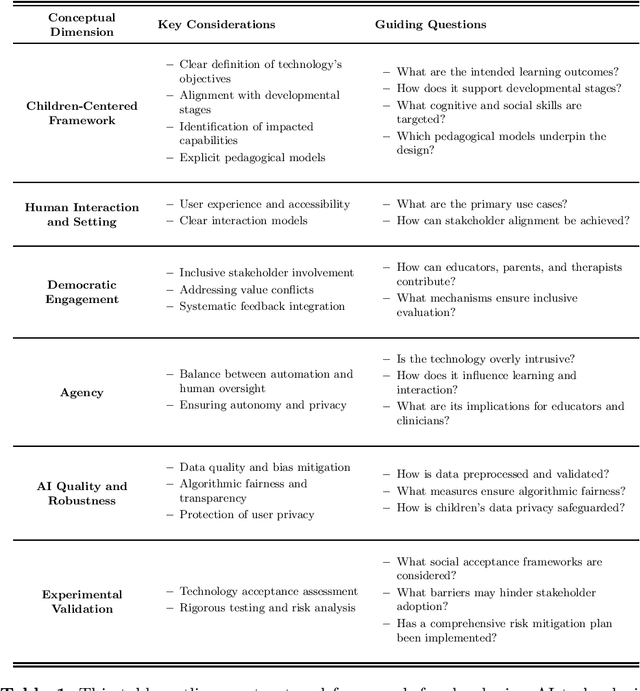
AI-based technologies have significant potential to enhance inclusive education and clinical-rehabilitative contexts for children with Special Educational Needs and Disabilities. AI can enhance learning experiences, empower students, and support both teachers and rehabilitators. However, their usage presents challenges that require a systemic-ecological vision, ethical considerations, and participatory research. Therefore, research and technological development must be rooted in a strong ethical-theoretical framework. The Capability Approach - a theoretical model of disability, human vulnerability, and inclusion - offers a more relevant perspective on functionality, effectiveness, and technological adequacy in inclusive learning environments. In this paper, we propose a participatory research strategy with different stakeholders through a case study on the ARTIS Project, which develops an AI-enriched interface to support children with text comprehension difficulties. Our research strategy integrates ethical, educational, clinical, and technological expertise in designing and implementing AI-based technologies for children's learning environments through focus groups and collaborative design sessions. We believe that this holistic approach to AI adoption in education can help bridge the gap between technological innovation and ethical responsibility.