 Add to Chrome
 Add to Firefox
 Add to Edge
A Programmer's Guide to Cascaded Adaptive Combiners: Online Learning by Biologically Accurate Models of Multilayer Neuron Networks
Jun 12, 2026
Learning in biological multilayer neuronal networks offers insights that extend beyond the classical weighted-sum neuron model commonly used in artificial neural networks. This article presents an accessible guide to a mechanistic neuronal network model that more accurately captures aspects of biological computation while enabling a simple yet powerful mechanism for learning in multilayer neural networks. The proposed approach supports efficient online streamed learning and provides a practical alternative to backpropagation. We demonstrate its potential in an image classification task, achieving competitive classification performance. The approach's simplicity, biological grounding, and broad applicability highlight a promising path toward algorithms that unify mechanistic neuron models and machine learning.

LuMaMi28: Real-Time Millimeter-Wave Massive MIMO Systems with Antenna Selection
Sep 07, 2021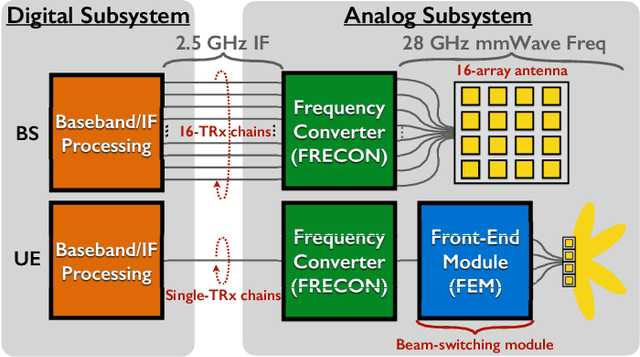
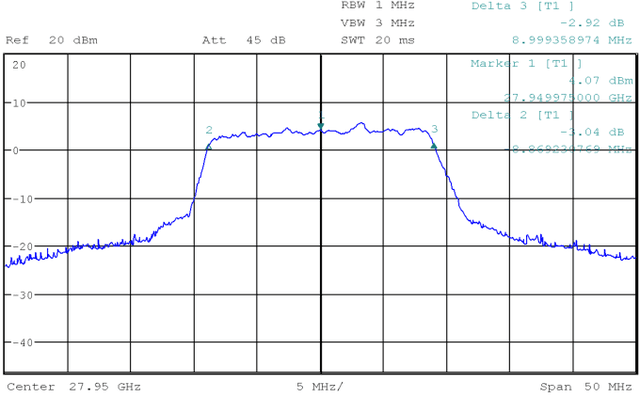
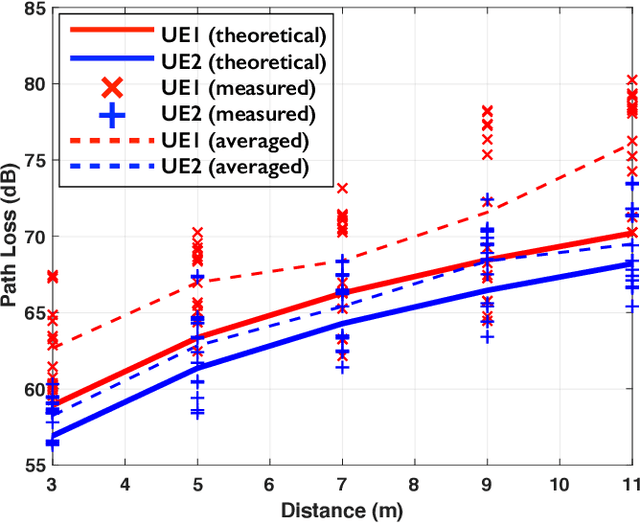
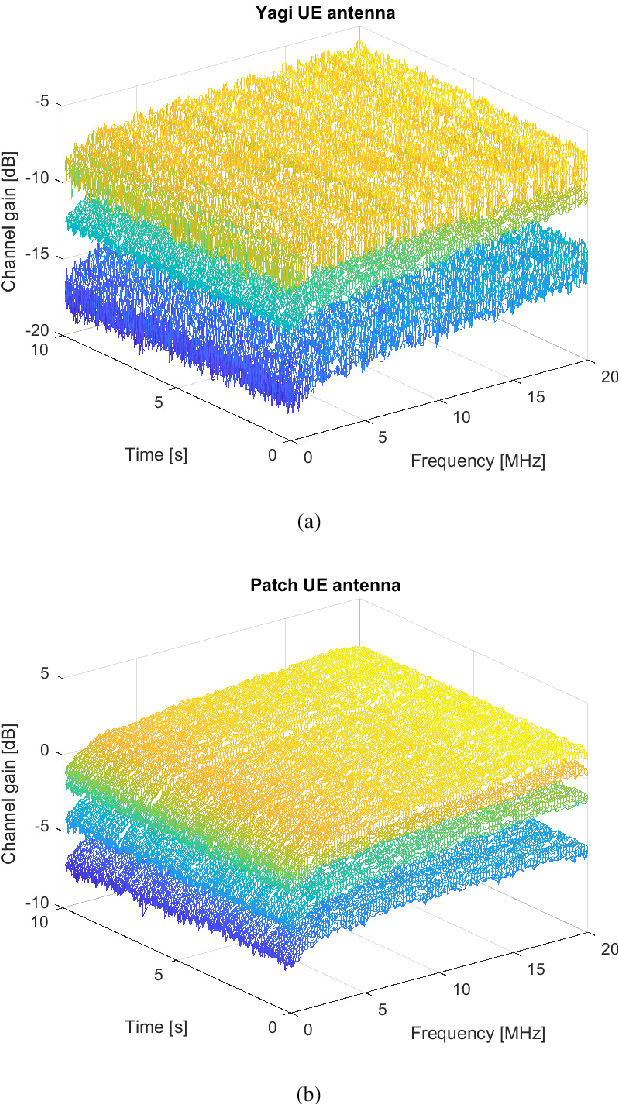
This paper presents LuMaMi28, a real-time 28 GHz massive multiple-input multiple-output (MIMO) testbed. In this testbed, the base station has 16 transceiver chains with a fully-digital beamforming architecture (with different pre-coding algorithms) and simultaneously supports multiple user equipments (UEs) with spatial multiplexing. The UEs are equipped with a beam-switchable antenna array for real-time antenna selection where the one with the highest channel magnitude, out of four pre-defined beams, is selected. For the beam-switchable antenna array, we consider two kinds of UE antennas, with different beam-width and different peak-gain. Based on this testbed, we provide measurement results for millimeter-wave (mmWave) massive MIMO performance in different real-life scenarios with static and mobile UEs. We explore the potential benefit of the mmWave massive MIMO systems with antenna selection based on measured channel data, and discuss the performance results through real-time measurements.