 Add to Chrome
 Add to Firefox
 Add to Edge
Press Start to Charge: Videogaming the Online Centralized Charging Scheduling Problem
Jan 18, 2026
We study the online centralized charging scheduling problem (OCCSP). In this problem, a central authority must decide, in real time, when to charge dynamically arriving electric vehicles (EVs), subject to capacity limits, with the objective of balancing load across a finite planning horizon. To solve the problem, we first gamify it; that is, we model it as a game where charging blocks are placed within temporal and capacity constraints on a grid. We design heuristic policies, train learning agents with expert demonstrations, and improve them using Dataset Aggregation (DAgger). From a theoretical standpoint, we show that gamification reduces model complexity and yields tighter generalization bounds than vector-based formulations. Experiments across multiple EV arrival patterns confirm that gamified learning enhances load balancing. In particular, the image-to-movement model trained with DAgger consistently outperforms heuristic baselines, vector-based approaches, and supervised learning agents, while also demonstrating robustness in sensitivity analyses. These operational gains translate into tangible economic value. In a real-world case study for the Greater Montréal Area (Québec, Canada) using utility cost data, the proposed methods lower system costs by tens of millions of dollars per year over the prevailing practice and show clear potential to delay costly grid upgrades.

Estimating causal effects with optimization-based methods: A review and empirical comparison
Feb 28, 2022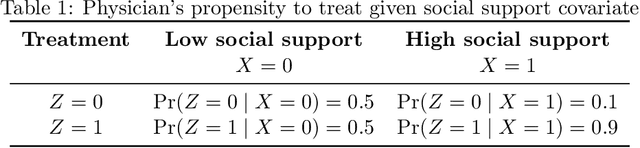
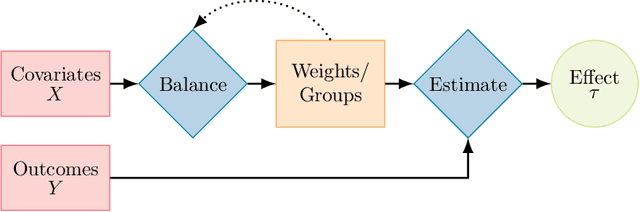
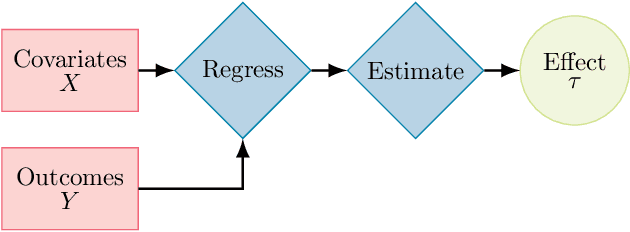
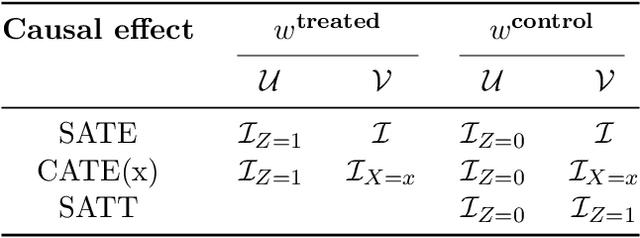
In the absence of randomized controlled and natural experiments, it is necessary to balance the distributions of (observable) covariates of the treated and control groups in order to obtain an unbiased estimate of a causal effect of interest; otherwise, a different effect size may be estimated, and incorrect recommendations may be given. To achieve this balance, there exist a wide variety of methods. In particular, several methods based on optimization models have been recently proposed in the causal inference literature. While these optimization-based methods empirically showed an improvement over a limited number of other causal inference methods in their relative ability to balance the distributions of covariates and to estimate causal effects, they have not been thoroughly compared to each other and to other noteworthy causal inference methods. In addition, we believe that there exist several unaddressed opportunities that operational researchers could contribute with their advanced knowledge of optimization, for the benefits of the applied researchers that use causal inference tools. In this review paper, we present an overview of the causal inference literature and describe in more detail the optimization-based causal inference methods, provide a comparative analysis of the prevailing optimization-based methods, and discuss opportunities for new methods.
* In Press, Corrected Proof
Atari-fying the Vehicle Routing Problem with Stochastic Service Requests
Nov 14, 2019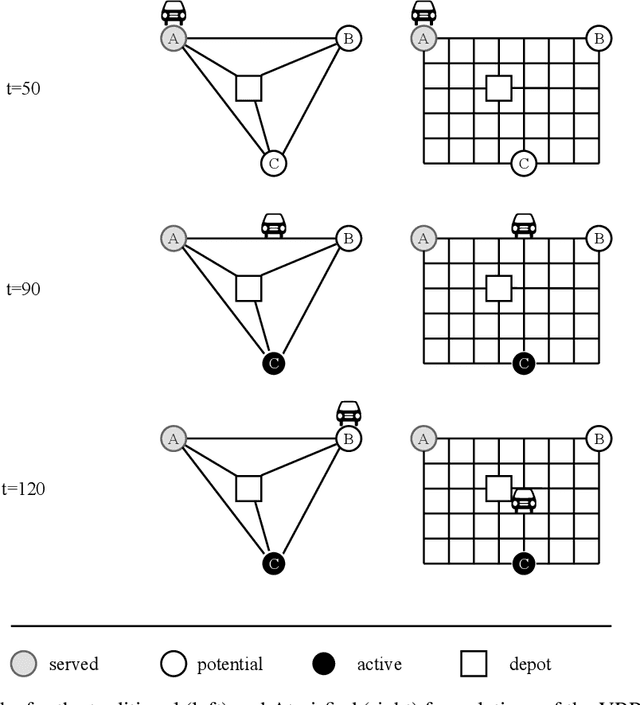

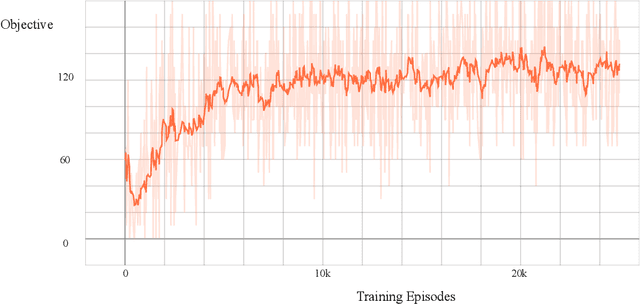
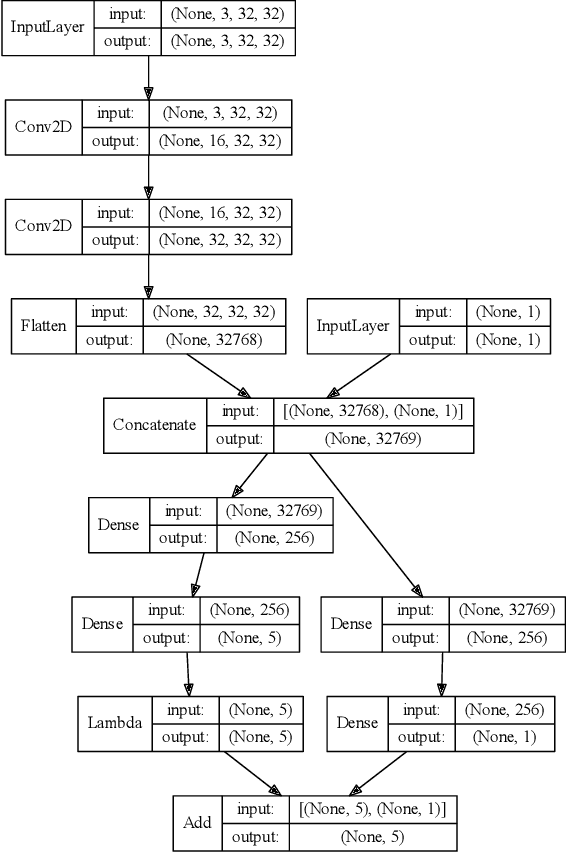
We present a new general approach to modeling research problems as Atari-like videogames to make them amenable to recent groundbreaking solution methods from the deep reinforcement learning community. The approach is flexible, applicable to a wide range of problems. We demonstrate its application on a well known vehicle routing problem. Our preliminary results on this problem, though not transformative, show signs of success and suggest that Atari-fication may be a useful modeling approach for researchers studying problems involving sequential decision making under uncertainty.