 Add to Chrome
 Add to Firefox
 Add to Edge
Budget-Aware Uncertainty for Radiotherapy Segmentation QA Using nnU-Net
Apr 13, 2026
Accurate delineation of the Clinical Target Volume (CTV) is essential for radiotherapy planning, yet remains time-consuming and difficult to assess, especially for complex treatments such as Total Marrow and Lymph Node Irradiation (TMLI). While deep learning-based auto-segmentation can reduce workload, safe clinical deployment requires reliable cues indicating where models may be wrong. In this work, we propose a budget-aware uncertainty-driven quality assurance (QA) framework built on nnU-Net, combining uncertainty quantification and post-hoc calibration to produce voxel-wise uncertainty maps (based on predictive entropy) that can guide targeted manual review. We compare temperature scaling (TS), deep ensembles (DE), checkpoint ensembles (CE), and test-time augmentation (TTA), evaluated both individually and in combination on TMLI as a representative use case. Reliability is assessed through ROI-masked calibration metrics and uncertainty--error alignment under realistic revision constraints, summarized as AUC over the top 0-5% most uncertain voxels. Across configurations, segmentation accuracy remains stable, whereas TS substantially improves calibration. Uncertainty-error alignment improves most with calibrated checkpoint-based inference, leading to uncertainty maps that highlight more consistently regions requiring manual edits. Overall, integrating calibration with efficient ensembling seems a promising strategy to implement a budget-aware QA workflow for radiotherapy segmentation.

Efficient KernelSHAP Explanations for Patch-based 3D Medical Image Segmentation
Apr 13, 2026Perturbation-based explainability methods such as KernelSHAP provide model-agnostic attributions but are typically impractical for patch-based 3D medical image segmentation due to the large number of coalition evaluations and the high cost of sliding-window inference. We present an efficient KernelSHAP framework for volumetric CT segmentation that restricts computation to a user-defined region of interest and its receptive-field support, and accelerates inference via patch logit caching, reusing baseline predictions for unaffected patches while preserving nnU-Net's fusion scheme. To enable clinically meaningful attributions, we compare three automatically generated feature abstractions within the receptive-field crop: whole-organ units, regular FCC supervoxels, and hybrid organ-aware supervoxels, and we study multiple aggregation/value functions targeting stabilizing evidence (TP/Dice/Soft Dice) or false-positive behavior. Experiments on whole-body CT segmentations show that caching substantially reduces redundant computation (with computational savings ranging from 15% to 30%) and that faithfulness and interpretability exhibit clear trade-offs: regular supervoxels often maximize perturbation-based metrics but lack anatomical alignment, whereas organ-aware units yield more clinically interpretable explanations and are particularly effective for highlighting false-positive drivers under normalized metrics.
ARTInp: CBCT-to-CT Image Inpainting and Image Translation in Radiotherapy
Feb 07, 2025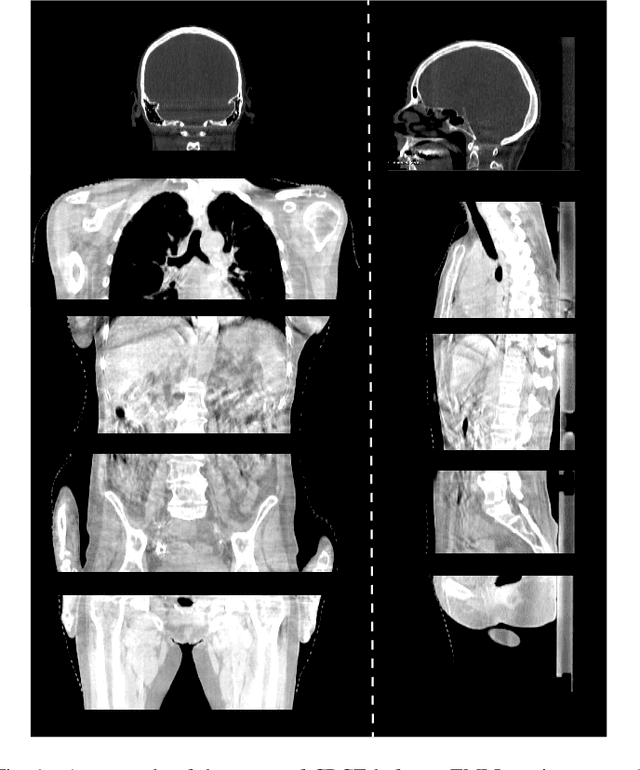
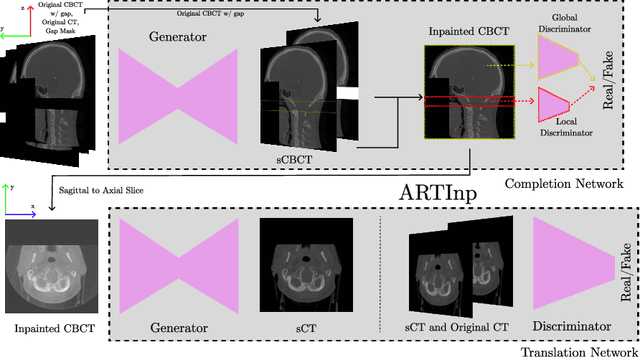
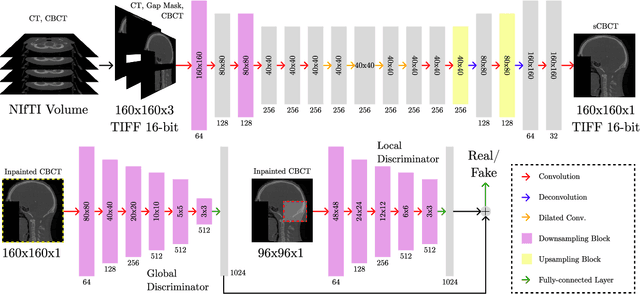
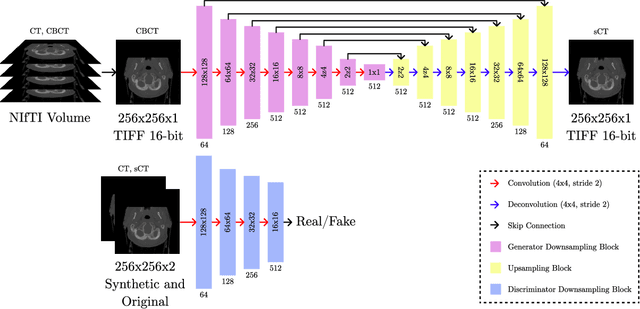
A key step in Adaptive Radiation Therapy (ART) workflows is the evaluation of the patient's anatomy at treatment time to ensure the accuracy of the delivery. To this end, Cone Beam Computerized Tomography (CBCT) is widely used being cost-effective and easy to integrate into the treatment process. Nonetheless, CBCT images have lower resolution and more artifacts than CT scans, making them less reliable for precise treatment validation. Moreover, in complex treatments such as Total Marrow and Lymph Node Irradiation (TMLI), where full-body visualization of the patient is critical for accurate dose delivery, the CBCT images are often discontinuous, leaving gaps that could contain relevant anatomical information. To address these limitations, we propose ARTInp (Adaptive Radiation Therapy Inpainting), a novel deep-learning framework combining image inpainting and CBCT-to-CT translation. ARTInp employs a dual-network approach: a completion network that fills anatomical gaps in CBCT volumes and a custom Generative Adversarial Network (GAN) to generate high-quality synthetic CT (sCT) images. We trained ARTInp on a dataset of paired CBCT and CT images from the SynthRad 2023 challenge, and the performance achieved on a test set of 18 patients demonstrates its potential for enhancing CBCT-based workflows in radiotherapy.
Investigating Gender Bias in Lymph-node Segmentation with Anatomical Priors
Sep 24, 2024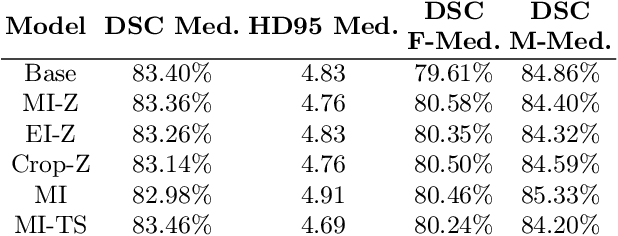
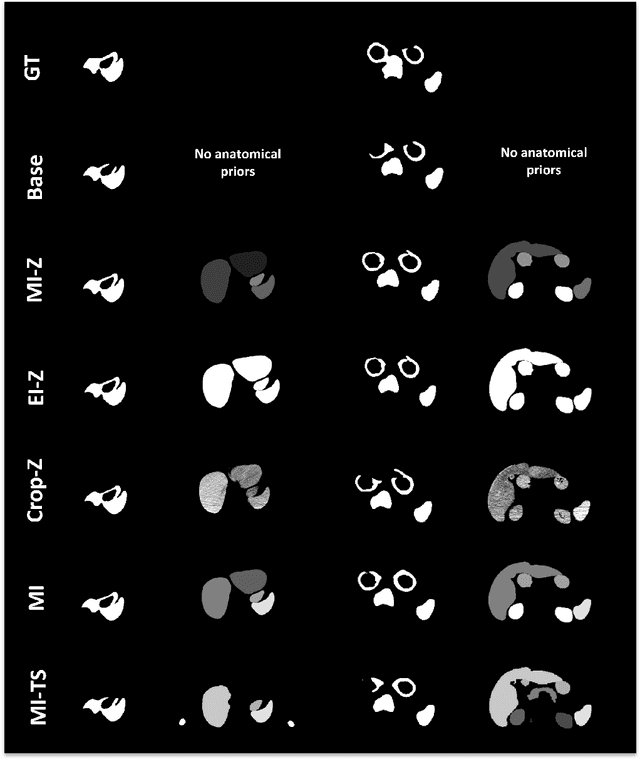
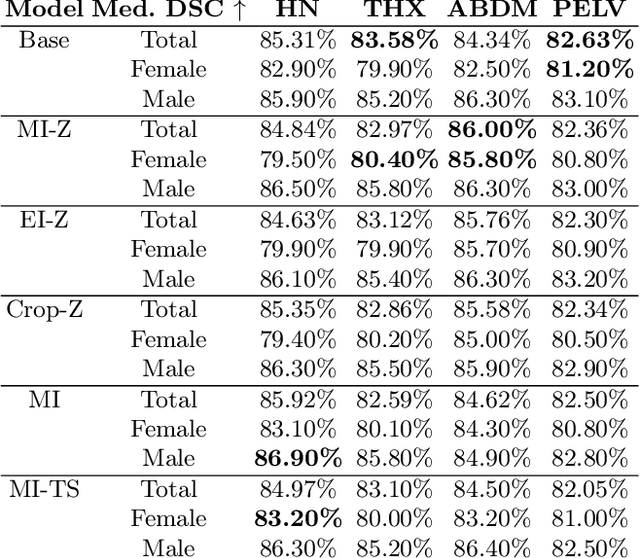
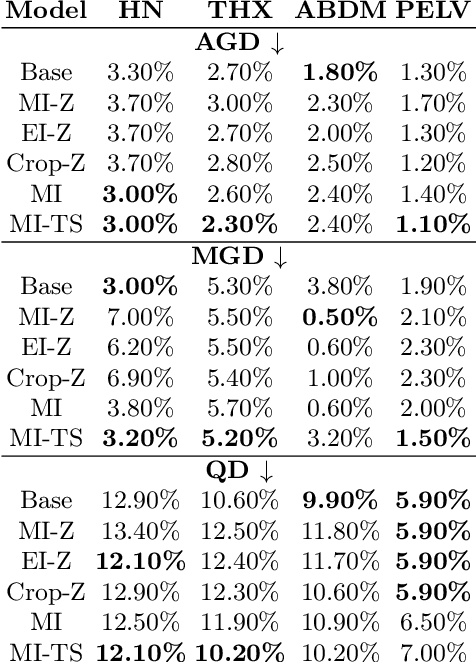
Radiotherapy requires precise segmentation of organs at risk (OARs) and of the Clinical Target Volume (CTV) to maximize treatment efficacy and minimize toxicity. While deep learning (DL) has significantly advanced automatic contouring, complex targets like CTVs remain challenging. This study explores the use of simpler, well-segmented structures (e.g., OARs) as Anatomical Prior (AP) information to improve CTV segmentation. We investigate gender bias in segmentation models and the mitigation effect of the prior information. Findings indicate that incorporating prior knowledge with the discussed strategies enhances segmentation quality in female patients and reduces gender bias, particularly in the abdomen region. This research provides a comparative analysis of new encoding strategies and highlights the potential of using AP to achieve fairer segmentation outcomes.
Leveraging Multimodal CycleGAN for the Generation of Anatomically Accurate Synthetic CT Scans from MRIs
Jul 15, 2024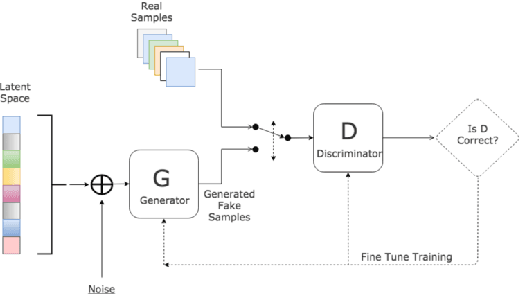
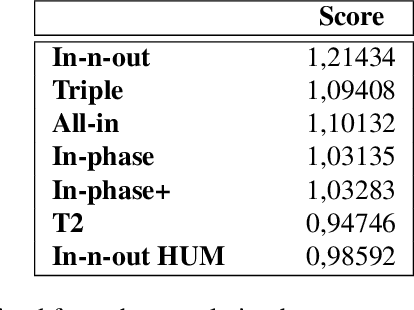
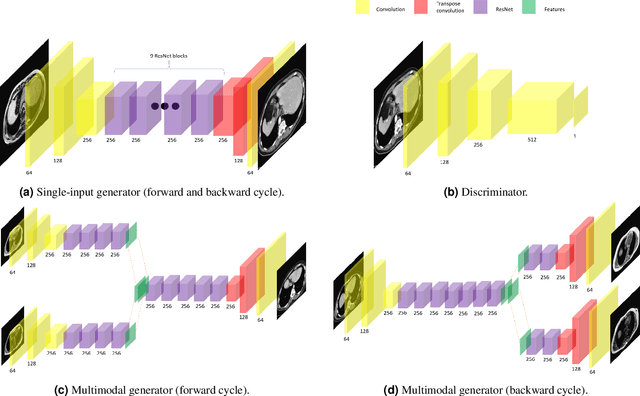
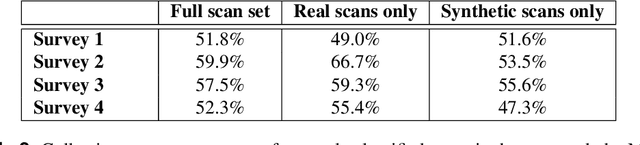
In many clinical settings, the use of both Computed Tomography (CT) and Magnetic Resonance (MRI) is necessary to pursue a thorough understanding of the patient's anatomy and to plan a suitable therapeutical strategy; this is often the case in MRI-based radiotherapy, where CT is always necessary to prepare the dose delivery, as it provides the essential information about the radiation absorption properties of the tissues. Sometimes, MRI is preferred to contour the target volumes. However, this approach is often not the most efficient, as it is more expensive, time-consuming and, most importantly, stressful for the patients. To overcome this issue, in this work, we analyse the capabilities of different configurations of Deep Learning models to generate synthetic CT scans from MRI, leveraging the power of Generative Adversarial Networks (GANs) and, in particular, the CycleGAN architecture, capable of working in an unsupervised manner and without paired images, which were not available. Several CycleGAN models were trained unsupervised to generate CT scans from different MRI modalities with and without contrast agents. To overcome the problem of not having a ground truth, distribution-based metrics were used to assess the model's performance quantitatively, together with a qualitative evaluation where physicians were asked to differentiate between real and synthetic images to understand how realistic the generated images were. The results show how, depending on the input modalities, the models can have very different performances; however, models with the best quantitative results, according to the distribution-based metrics used, can generate very difficult images to distinguish from the real ones, even for physicians, demonstrating the approach's potential.
Deep Learning-Based Auto-Segmentation of Planning Target Volume for Total Marrow and Lymph Node Irradiation
Feb 09, 2024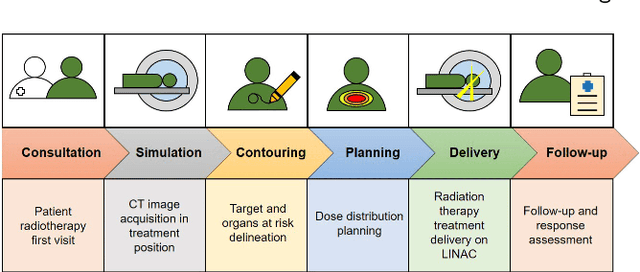
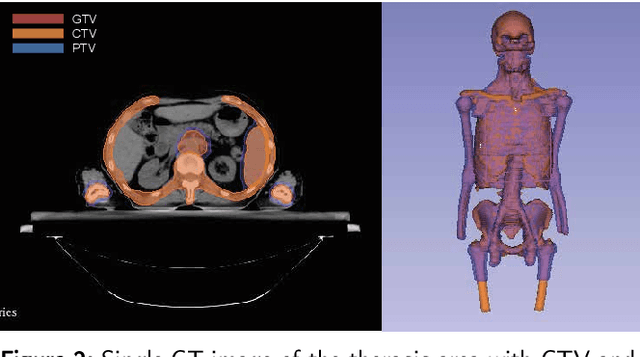
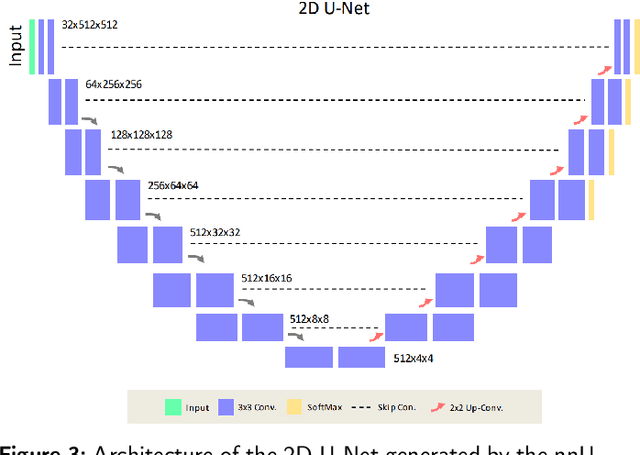
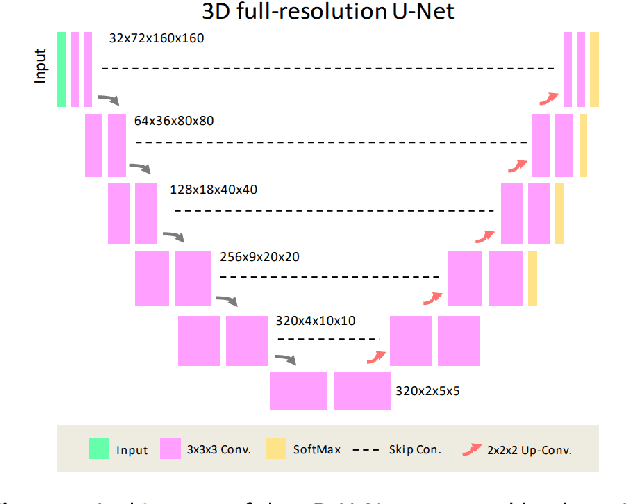
In order to optimize the radiotherapy delivery for cancer treatment, especially when dealing with complex treatments such as Total Marrow and Lymph Node Irradiation (TMLI), the accurate contouring of the Planning Target Volume (PTV) is crucial. Unfortunately, relying on manual contouring for such treatments is time-consuming and prone to errors. In this paper, we investigate the application of Deep Learning (DL) to automate the segmentation of the PTV in TMLI treatment, building upon previous work that introduced a solution to this problem based on a 2D U-Net model. We extend the previous research (i) by employing the nnU-Net framework to develop both 2D and 3D U-Net models and (ii) by evaluating the trained models on the PTV with the exclusion of bones, which consist mainly of lymp-nodes and represent the most challenging region of the target volume to segment. Our result show that the introduction of nnU-NET framework led to statistically significant improvement in the segmentation performance. In addition, the analysis on the PTV after the exclusion of bones showed that the models are quite robust also on the most challenging areas of the target volume. Overall, our study is a significant step forward in the application of DL in a complex radiotherapy treatment such as TMLI, offering a viable and scalable solution to increase the number of patients who can benefit from this treatment.
Segmentation of Planning Target Volume in CT Series for Total Marrow Irradiation Using U-Net
Apr 05, 2023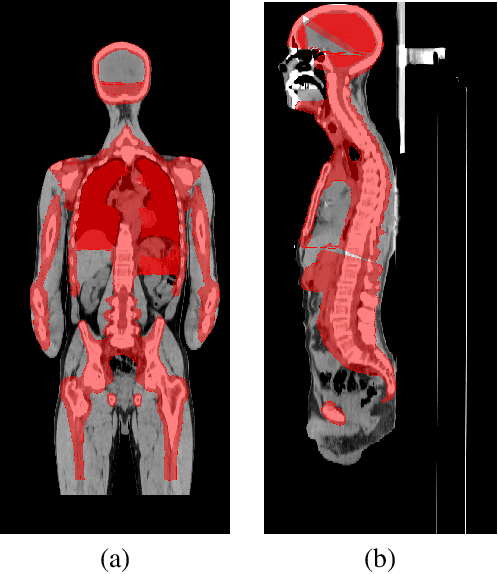
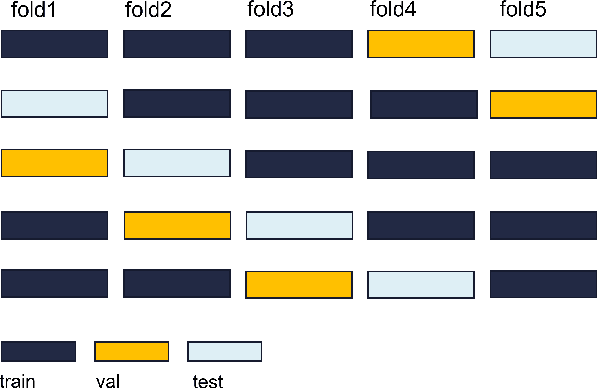

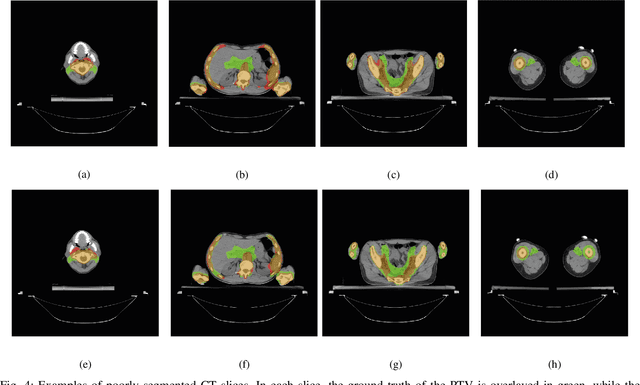
Radiotherapy (RT) is a key component in the treatment of various cancers, including Acute Lymphocytic Leukemia (ALL) and Acute Myelogenous Leukemia (AML). Precise delineation of organs at risk (OARs) and target areas is essential for effective treatment planning. Intensity Modulated Radiotherapy (IMRT) techniques, such as Total Marrow Irradiation (TMI) and Total Marrow and Lymph node Irradiation (TMLI), provide more precise radiation delivery compared to Total Body Irradiation (TBI). However, these techniques require time-consuming manual segmentation of structures in Computerized Tomography (CT) scans by the Radiation Oncologist (RO). In this paper, we present a deep learning-based auto-contouring method for segmenting Planning Target Volume (PTV) for TMLI treatment using the U-Net architecture. We trained and compared two segmentation models with two different loss functions on a dataset of 100 patients treated with TMLI at the Humanitas Research Hospital between 2011 and 2021. Despite challenges in lymph node areas, the best model achieved an average Dice score of 0.816 for PTV segmentation. Our findings are a preliminary but significant step towards developing a segmentation model that has the potential to save radiation oncologists a considerable amount of time. This could allow for the treatment of more patients, resulting in improved clinical practice efficiency and more reproducible contours.
Ensemble Methods for Multi-Organ Segmentation in CT Series
Mar 31, 2023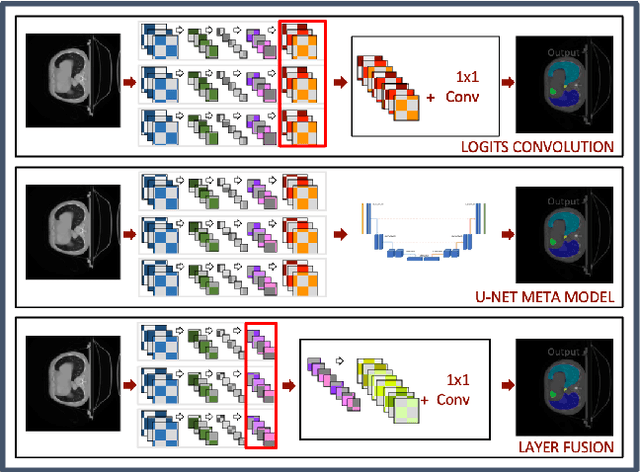
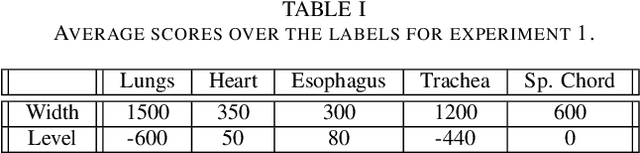
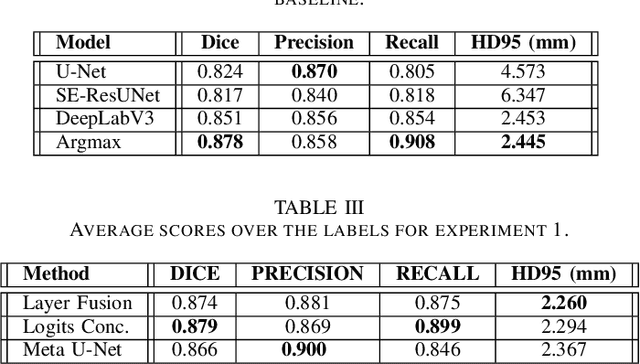
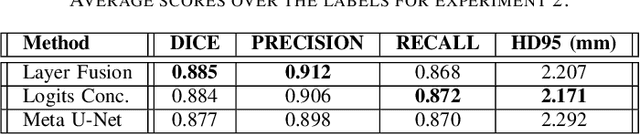
In the medical images field, semantic segmentation is one of the most important, yet difficult and time-consuming tasks to be performed by physicians. Thanks to the recent advancement in the Deep Learning models regarding Computer Vision, the promise to automate this kind of task is getting more and more realistic. However, many problems are still to be solved, like the scarce availability of data and the difficulty to extend the efficiency of highly specialised models to general scenarios. Organs at risk segmentation for radiotherapy treatment planning falls in this category, as the limited data available negatively affects the possibility to develop general-purpose models; in this work, we focus on the possibility to solve this problem by presenting three types of ensembles of single-organ models able to produce multi-organ masks exploiting the different specialisations of their components. The results obtained are promising and prove that this is a possible solution to finding efficient multi-organ segmentation methods.