 Add to Chrome
 Add to Firefox
 Add to Edge
LAPX: Lightweight Hourglass Network with Global Context
Dec 18, 2025
Human pose estimation is a crucial task in computer vision. Methods that have SOTA (State-of-the-Art) accuracy, often involve a large number of parameters and incur substantial computational cost. Many lightweight variants have been proposed to reduce the model size and computational cost of them. However, several of these methods still contain components that are not well suited for efficient deployment on edge devices. Moreover, models that primarily emphasize inference speed on edge devices often suffer from limited accuracy due to their overly simplified designs. To address these limitations, we propose LAPX, an Hourglass network with self-attention that captures global contextual information, based on previous work, LAP. In addition to adopting the self-attention module, LAPX advances the stage design and refine the lightweight attention modules. It achieves competitive results on two benchmark datasets, MPII and COCO, with only 2.3M parameters, and demonstrates real-time performance, confirming its edge-device suitability.

Attention-Enhanced Lightweight Hourglass Network for Human Pose Estimation
Dec 09, 2024
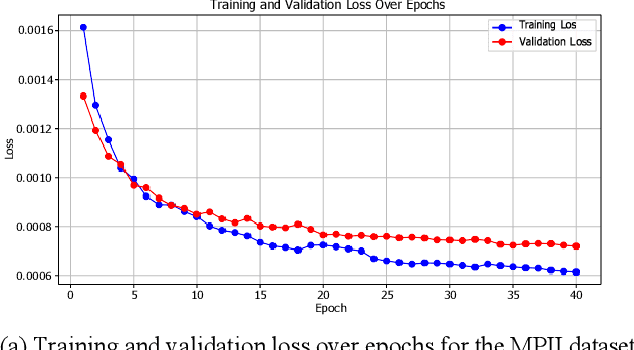


Pose estimation is a critical task in computer vision with a wide range of applications from activity monitoring to human-robot interaction. However,most of the existing methods are computationally expensive or have complex architecture. Here we propose a lightweight attention based pose estimation network that utilizes depthwise separable convolution and Convolutional Block Attention Module on an hourglass backbone. The network significantly reduces the computational complexity (floating point operations) and the model size (number of parameters) containing only about 10% of parameters of original eight stack Hourglass network.Experiments were conducted on COCO and MPII datasets using a two stack hourglass backbone. The results showed that our model performs well in comparison to six other lightweight pose estimation models with an average precision of 72.07. The model achieves this performance with only 2.3M parameters and 3.7G FLOPs.
In Silico Pharmacokinetic and Molecular Docking Studies of Natural Plants against Essential Protein KRAS for Treatment of Pancreatic Cancer
Dec 09, 2024A kind of pancreatic cancer called Pancreatic Ductal Adenocarcinoma (PDAC) is anticipated to be one of the main causes of mortality during past years. Evidence from several researches supported the concept that the oncogenic KRAS (Ki-ras2 Kirsten rat sarcoma viral oncogene) mutation is the major cause of pancreatic cancer. KRAS acts as an on-off switch that promotes cell growth. But when the KRAS gene is mutated, it will be in one position, allowing the cell growth uncontrollably. This uncontrollable multiplication of cells causes cancer growth. Therefore, KRAS was selected as the target protein in the study. Fifty plant-derived compounds are selected for the study. To determine whether the examined drugs could bind to the KRAS complex's binding pocket, molecular docking was performed. Computational analyses were used to assess the possible ability of tested substances to pass the Blood Brain Barrier (BBB). To predict the bioactivity of ligands a machine learning model was created. Five machine learning models were created and have chosen the best one among them for analyzing the bioactivity of each ligand. From the fifty plant-derived compounds the compounds with the least binding energies are selected. Then bioactivity of these six compounds is analyzed using Random Forest Regression model. Adsorption, Distribution, Metabolism, Excretion (ADME) properties of compounds are analyzed. The results showed that borneol has powerful effects and acts as a promising agent for the treatment of pancreatic cancer. This suggests that borneol found in plants like mint, ginger, rosemary, etc., is a successful compound for the treatment of pancreatic cancer.