 Add to Chrome
 Add to Firefox
 Add to Edge
Quotient Geometry and Persistence-Stable Metrics for Swarm Configurations
Mar 14, 2026
Swarm and constellation reconfiguration can be viewed as motion of an unordered point configuration in an ambient space. Here, we provide persistence-stable, symmetry-invariant geometric representations for comparing and monitoring multi-agent configuration data. We introduce a quotient formation space $\mathcal{S}_n(M,G)=M^n/(G\times S_n)$ and a formation matching metric $d_{M,G}$ obtained by optimizing a worst-case assignment error over ambient symmetries $g\in G$ and relabelings $σ\in S_n$. This metric is a structured, physically interpretable relaxation of Gromov--Hausdorff distance: the induced inter-agent metric spaces satisfy $d_{\mathrm{GH}}(X_x,X_y)\le d_{M,G}([x],[y])$. Composing this bound with stability of Vietoris--Rips persistence yields $d_B(Φ_k([x]),Φ_k([y]))\le d_{M,G}([x],[y])$, providing persistence-stable signatures for reconfiguration monitoring. We analyze the metric geometry of $(\mathcal{S}_n(M,G),d_{M,G})$: under compactness/completeness assumptions on $M$ and compact $G$ it is compact/complete and the metric induces the quotient topology; if $M$ is geodesic then the quotient is geodesic and exhibits stratified singularities along collision and symmetry strata, relating it to classical configuration spaces. We study expressivity of the signatures, identifying symmetry-mismatch and persistence-compression mechanisms for non-injectivity. Finally, in a phase-circle model we prove a conditional inverse theorem: under semicircle support and a gap-labeling margin, the $H_0$ signature is locally bi-Lipschitz to $d_{M,G}$ up to an explicit factor, yielding two-sided control. Examples on $\mathbb{S}^2$ and $\mathbb{T}^m$ illustrate satellite-constellation and formation settings.

Could AI be the Great Filter? What Astrobiology can Teach the Intelligence Community about Anthropogenic Risks
May 09, 2023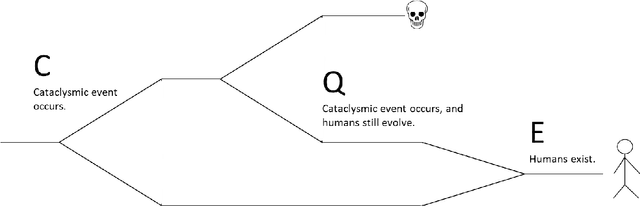
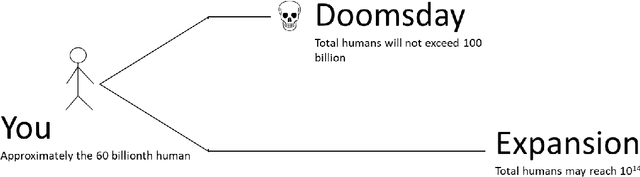
Where is everybody? This phrase distills the foreboding of what has come to be known as the Fermi Paradox - the disquieting idea that, if extraterrestrial life is probable in the Universe, then why have we not encountered it? This conundrum has puzzled scholars for decades, and many hypotheses have been proposed suggesting both naturalistic and sociological explanations. One intriguing hypothesis is known as the Great Filter, which suggests that some event required for the emergence of intelligent life is extremely unlikely, hence the cosmic silence. A logically equivalent version of this hypothesis -- and one that should give us pause -- suggests that some catastrophic event is likely to occur that prevents life's expansion throughout the cosmos. This could be a naturally occurring event, or more disconcertingly, something that intelligent beings do to themselves that leads to their own extinction. From an intelligence perspective, framing global catastrophic risk (particularly risks of anthropogenic origin) within the context of the Great Filter can provide insight into the long-term futures of technologies that we don't fully understand, like artificial intelligence. For the intelligence professional concerned with global catastrophic risk, this has significant implications for how these risks ought to be prioritized.
Examining the Differential Risk from High-level Artificial Intelligence and the Question of Control
Nov 10, 2022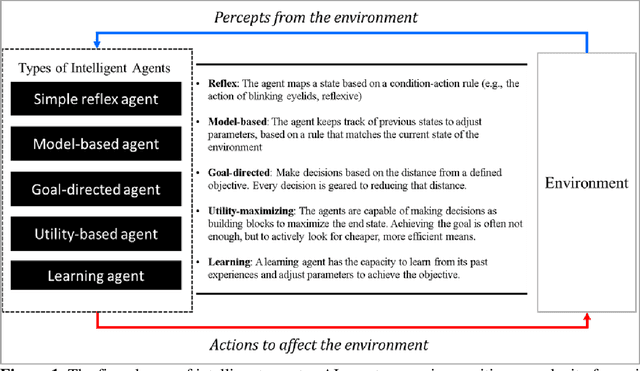
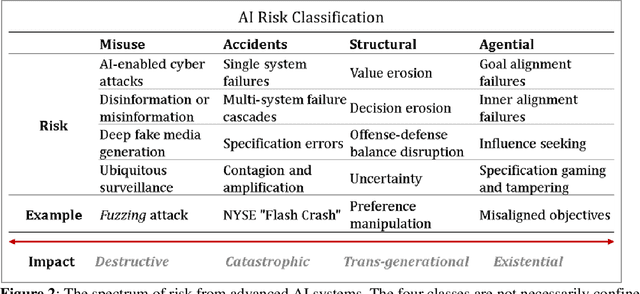
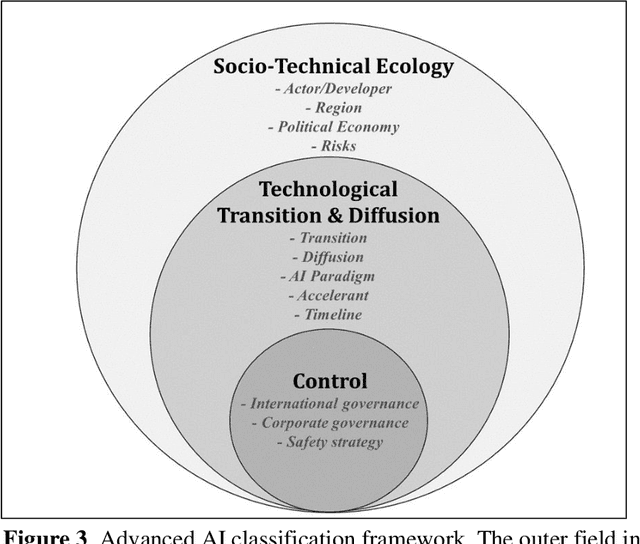
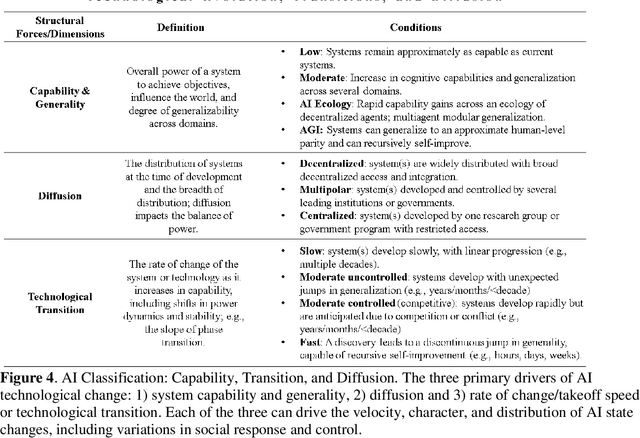
Artificial Intelligence (AI) is one of the most transformative technologies of the 21st century. The extent and scope of future AI capabilities remain a key uncertainty, with widespread disagreement on timelines and potential impacts. As nations and technology companies race toward greater complexity and autonomy in AI systems, there are concerns over the extent of integration and oversight of opaque AI decision processes. This is especially true in the subfield of machine learning (ML), where systems learn to optimize objectives without human assistance. Objectives can be imperfectly specified or executed in an unexpected or potentially harmful way. This becomes more concerning as systems increase in power and autonomy, where an abrupt capability jump could result in unexpected shifts in power dynamics or even catastrophic failures. This study presents a hierarchical complex systems framework to model AI risk and provide a template for alternative futures analysis. Survey data were collected from domain experts in the public and private sectors to classify AI impact and likelihood. The results show increased uncertainty over the powerful AI agent scenario, confidence in multiagent environments, and increased concern over AI alignment failures and influence-seeking behavior.
A Hypergraph-Based Machine Learning Ensemble Network Intrusion Detection System
Nov 08, 2022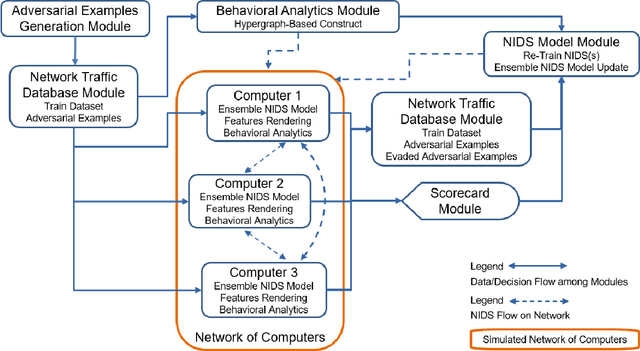
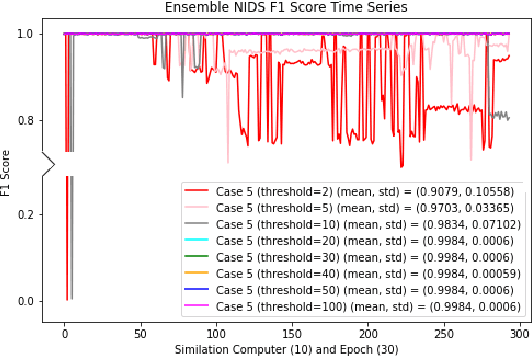
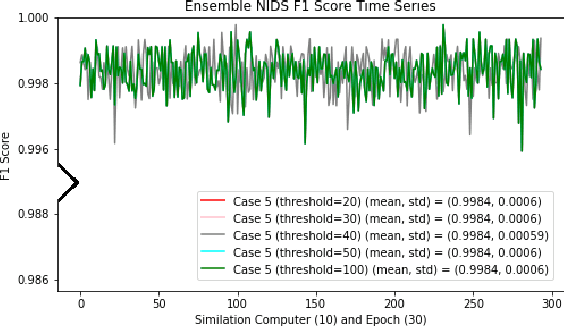
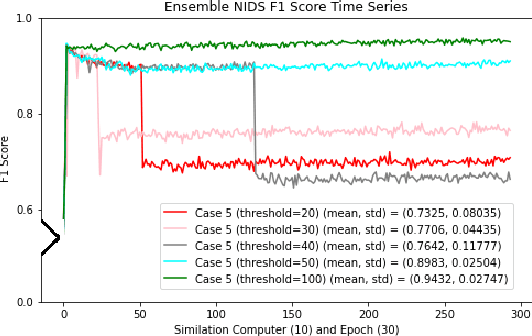
Network intrusion detection systems (NIDS) to detect malicious attacks continues to meet challenges. NIDS are vulnerable to auto-generated port scan infiltration attempts and NIDS are often developed offline, resulting in a time lag to prevent the spread of infiltration to other parts of a network. To address these challenges, we use hypergraphs to capture evolving patterns of port scan attacks via the set of internet protocol addresses and destination ports, thereby deriving a set of hypergraph-based metrics to train a robust and resilient ensemble machine learning (ML) NIDS that effectively monitors and detects port scanning activities and adversarial intrusions while evolving intelligently in real-time. Through the combination of (1) intrusion examples, (2) NIDS update rules, (3) attack threshold choices to trigger NIDS retraining requests, and (4) production environment with no prior knowledge of the nature of network traffic 40 scenarios were auto-generated to evaluate the ML ensemble NIDS comprising three tree-based models. Results show that under the model settings of an Update-ALL-NIDS rule (namely, retrain and update all the three models upon the same NIDS retraining request) the proposed ML ensemble NIDS produced the best results with nearly 100% detection performance throughout the simulation, exhibiting robustness in the complex dynamics of the simulated cyber-security scenario.
Detecting Propagators of Disinformation on Twitter Using Quantitative Discursive Analysis
Oct 11, 2022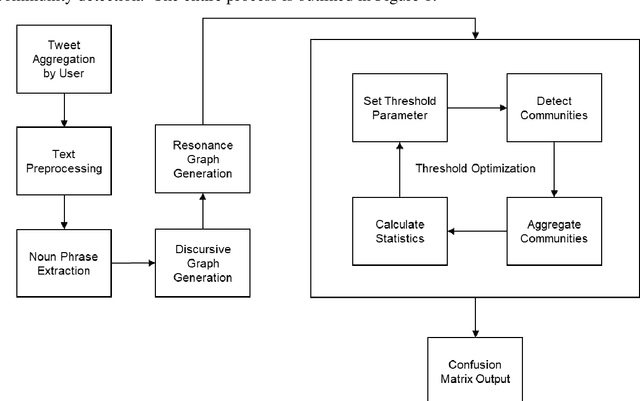
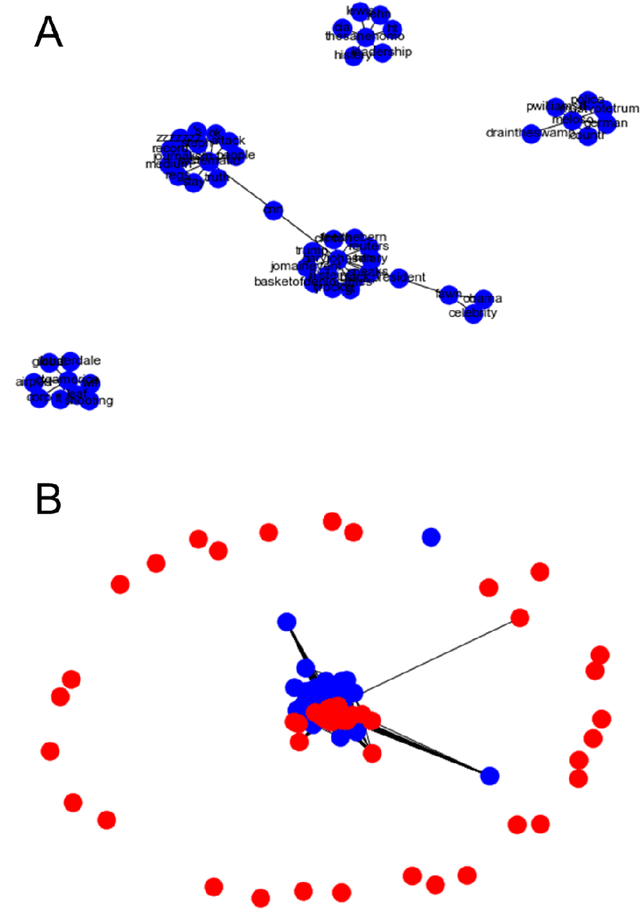
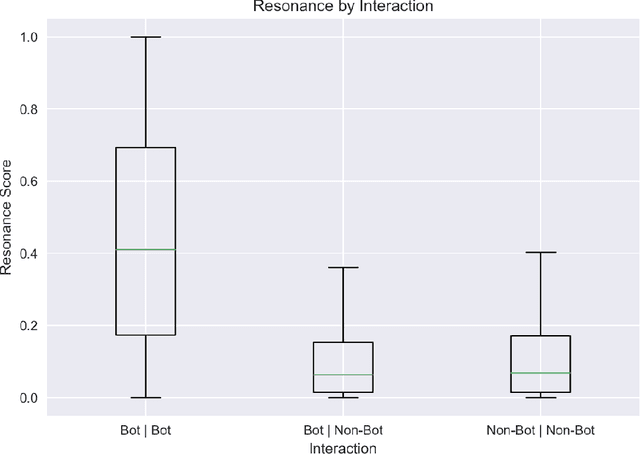
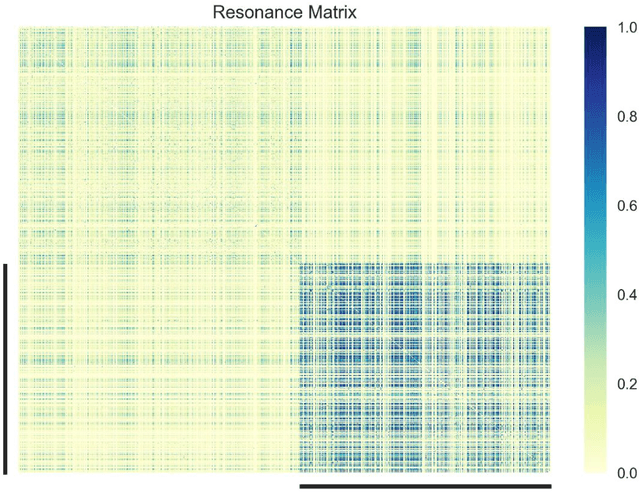
Efforts by foreign actors to influence public opinion have gained considerable attention because of their potential to impact democratic elections. Thus, the ability to identify and counter sources of disinformation is increasingly becoming a top priority for government entities in order to protect the integrity of democratic processes. This study presents a method of identifying Russian disinformation bots on Twitter using centering resonance analysis and Clauset-Newman-Moore community detection. The data reflect a significant degree of discursive dissimilarity between known Russian disinformation bots and a control set of Twitter users during the timeframe of the 2016 U.S. Presidential Election. The data also demonstrate statistically significant classification capabilities (MCC = 0.9070) based on community clustering. The prediction algorithm is very effective at identifying true positives (bots), but is not able to resolve true negatives (non-bots) because of the lack of discursive similarity between control users. This leads to a highly sensitive means of identifying propagators of disinformation with a high degree of discursive similarity on Twitter, with implications for limiting the spread of disinformation that could impact democratic processes.
* 12 pages