 Add to Chrome
 Add to Firefox
 Add to Edge
Valet: A Standardized Testbed of Traditional Imperfect-Information Card Games
Mar 03, 2026
AI algorithms for imperfect-information games are typically compared using performance metrics on individual games, making it difficult to assess robustness across game choices. Card games are a natural domain for imperfect information due to hidden hands and stochastic draws. To facilitate comparative research on imperfect-information game-playing algorithms and game systems, we introduce Valet, a diverse and comprehensive testbed of 21 traditional imperfect-information card games. These games span multiple genres, cultures, player counts, deck structures, mechanics, winning conditions, and methods of hiding and revealing information. To standardize implementations across systems, we encode the rules of each game in RECYCLE, a card game description language. We empirically characterize each game's branching factor and duration using random simulations, reporting baseline score distributions for a Monte Carlo Tree Search player against random opponents to demonstrate the suitability of Valet as a benchmarking suite.

Procedural Puzzle Challenge Generation in Fujisan
Oct 03, 2018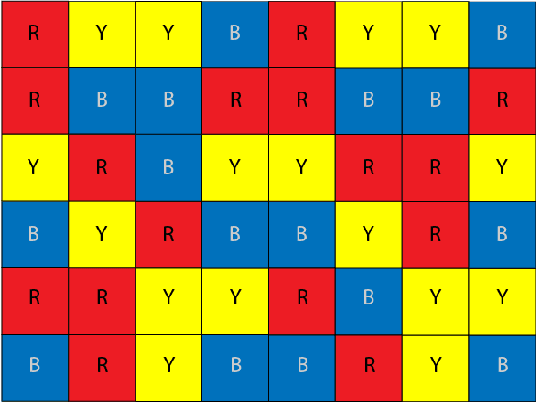

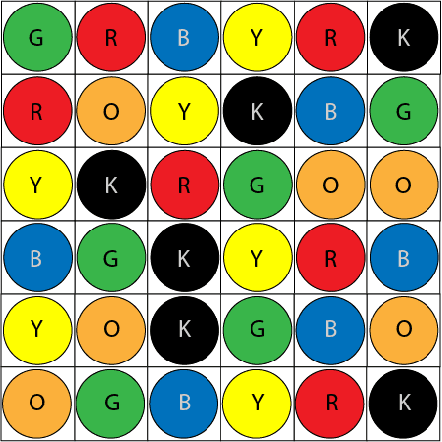

Challenges for physical solitaire puzzle games are typically designed in advance by humans and limited in number. Alternately, some games incorporate stochastic setup rules, where the human solver randomly sets up the game board before solving the challenge, which can greatly increase the number of possible challenges. However, these setup rules can often generate unsolvable or uninteresting challenges. To better understand these setup processes, we apply a taxonomy for procedural content generation algorithms to solitaire puzzle games. In particular, for the game Fujisan, we examine how different stochastic challenge generation algorithms attempt to minimize undesirable challenges, and we report their affect on ease of physical setup, challenge solvability, and challenge difficulty. We find that algorithms can be simple for the solver yet generate solvable and difficult challenges, by constraining randomness through embedding sub-elements of the puzzle mechanics into the physical pieces of the game.