 Add to Chrome
 Add to Firefox
 Add to Edge
ExPLoRe: Expert Patch-Level Loss Routing for Multi-Objective Masked Image Modeling
Jun 30, 2026
Multi-objective masked image modeling (MIM) combines complementary learning signals (token distillation, CLS alignment, and pixel reconstruction) but existing methods weight these objectives with global scalars, ignoring spatial heterogeneity across patches. We present ExPLoRe (Expert Patch-Level Loss Routing), which repurposes Soft Mixture of Experts (MoE) dispatch weights as learned, per-patch loss coefficients. The key mechanism is loss-coupling: allowing loss gradients to flow through dispatch weights to the router enables content-dependent specialization, where different patches receive different emphases across objectives. A detach ablation confirms loss-coupling as the core mechanism, degrading performance by 1.6% when gradients are blocked. On ImageNet-1K with ViT-Base, ExPLoRe improves over non-MoE baselines on two objective combinations (Token+CLS: +0.5% k-NN, +4.4% linear probe; Token+Pixel: +2.2% k-NN), achieving 80.6% linear probe and 85.3% finetuning accuracy, competitive with published methods. For downstream transfer, we develop adaptation recipes (Freeze Routing, Expert Dropout, and Freeze Attention) that improve MoE finetuning by +1.5% over the vanilla MoE, and close a 2.5--2.9 mIoU segmentation gap so that MoE models match or exceed non-MoE baselines on ADE20K.

Looking into a Pixel by Nonlinear Unmixing -- A Generative Approach
Apr 01, 2026Due to the large footprint of pixels in remote sensing imagery, hyperspectral unmixing (HU) has become an important and necessary procedure in hyperspectral image analysis. Traditional HU methods rely on a prior spectral mixing model, especially for nonlinear mixtures, which has largely limited the performance and generalization capacity of the unmixing approach. In this paper, we address the challenging problem of hyperspectral nonlinear unmixing (HNU) without explicit knowledge of the mixing model. Inspired by the principle of generative models, where images of the same distribution can be generated as that of the training images without knowing the exact probability distribution function of the image, we develop an invertible mixing-unmixing process via a bi-directional GAN framework, constrained by both the cycle consistency and the linkage between linear and nonlinear mixtures. The combination of cycle consistency and linear linkage provides powerful constraints without requiring an explicit mixing model. We refer to the proposed approach as the linearly-constrained CycleGAN unmixing net, or LCGU net. Experimental results indicate that the proposed LCGU net exhibits stable and competitive performance across different datasets compared with other state-of-the-art model-based HNU methods.
MEDiC: Multi-objective Exploration of Distillation from CLIP
Mar 30, 2026Masked image modeling (MIM) methods typically operate in either raw pixel space (reconstructing masked patches) or latent feature space (aligning with a pre-trained teacher). We present MEDiC (Multi-objective Exploration of Distillation from CLIP), a framework that combines both spaces in a single pipeline through three complementary objectives: patch-level token distillation from a frozen CLIP encoder, global CLS alignment, and pixel reconstruction via a lightweight decoder. We conduct a systematic investigation of the design space surrounding this multi-objective framework. First, we show that all three objectives provide complementary information, with the full combination reaching 73.9% kNN accuracy on ImageNet-1K. Second, we introduce hierarchical clustering with relative position bias for evolved masking and find that, despite producing more semantically coherent masks than prior methods, evolved masking does not outperform simple block masking in the teacher-guided distillation setting, a finding we attribute to the teacher's inherent semantic awareness. Third, we reveal that optimal scalar loss weights are extremely fragile, with small perturbations causing drops of up to 17 percentage points in kNN accuracy. Our framework achieves 73.9% kNN and 85.1% fine-tuning accuracy with ViT-Base at 300 epochs.
Cross-Scale MAE: A Tale of Multi-Scale Exploitation in Remote Sensing
Jan 29, 2024Remote sensing images present unique challenges to image analysis due to the extensive geographic coverage, hardware limitations, and misaligned multi-scale images. This paper revisits the classical multi-scale representation learning problem but under the general framework of self-supervised learning for remote sensing image understanding. We present Cross-Scale MAE, a self-supervised model built upon the Masked Auto-Encoder (MAE).During pre-training, Cross-Scale MAE employs scale augmentation techniques and enforces cross-scale consistency constraints through both contrastive and generative losses to ensure consistent and meaningful representations well-suited for a wide range of downstream tasks. Further, our implementation leverages the xFormers library to accelerate network pre-training on a single GPU while maintaining the quality of learned representations. Experimental evaluations demonstrate that Cross-Scale MAE exhibits superior performance compared to standard MAE and other state-of-the-art remote sensing MAE methods.
The Sensitivity of Word Embeddings-based Author Detection Models to Semantic-preserving Adversarial Perturbations
Feb 23, 2021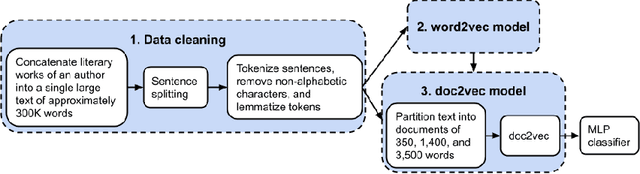

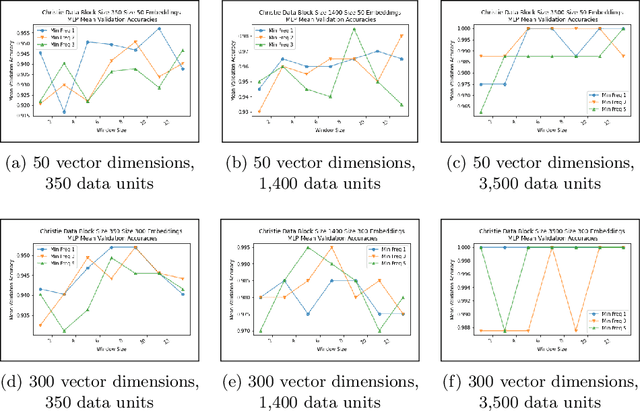

Authorship analysis is an important subject in the field of natural language processing. It allows the detection of the most likely writer of articles, news, books, or messages. This technique has multiple uses in tasks related to authorship attribution, detection of plagiarism, style analysis, sources of misinformation, etc. The focus of this paper is to explore the limitations and sensitiveness of established approaches to adversarial manipulations of inputs. To this end, and using those established techniques, we first developed an experimental frame-work for author detection and input perturbations. Next, we experimentally evaluated the performance of the authorship detection model to a collection of semantic-preserving adversarial perturbations of input narratives. Finally, we compare and analyze the effects of different perturbation strategies, input and model configurations, and the effects of these on the author detection model.