 Add to Chrome
 Add to Firefox
 Add to Edge
Riemannian geometry meets fMRI: the advantages of modeling correlation manifolds and eigenvector subspaces
May 21, 2026
Correlation matrices are fundamental summaries of functional brain networks, yet standard analyses often treat entries independently, ignoring the curved geometry of correlation space. Existing geometric methods frequently lack closed-form operations or depend on arbitrary region ordering, limiting scalability. We introduce a scalable geometric framework with two components: (i) the Off-log metric, a smooth transformation mapping correlation matrices to symmetric zero-diagonal matrices. This enables closed-form expressions for distances, Frechet means, and linear models, allowing standard statistical modeling without complex manifold optimization. (ii) Grassmannian subspace discrimination, which compares subjects via principal-angle distances between eigenvector subspaces, resolving inherent sign and basis ambiguities. Both components integrate into standard machine-learning workflows for inference, regression, and classification. Validated across two clinical cohorts (Parkinson's and psychosis) and three ageing fMRI datasets, the Off-log metric increased sensitivity in permutation tests and matched or exceeded Riemannian and Euclidean baselines in classification. Brain-age prediction performance was comparable, with Riemannian metrics excelling in two of three cohorts. The Grassmannian method consistently outperformed Euclidean baselines, highlighting disease-relevant networks. Overall, geometry-aware representations improve sensitivity and predictive performance while remaining straightforward to deploy at scale.

ASCHOPLEX encounters Dafne: a federated continuous learning project for the generalizability of the Choroid Plexus automatic segmentation
Dec 23, 2025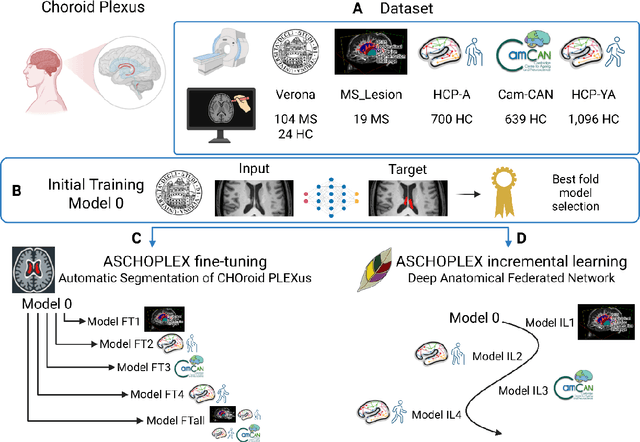
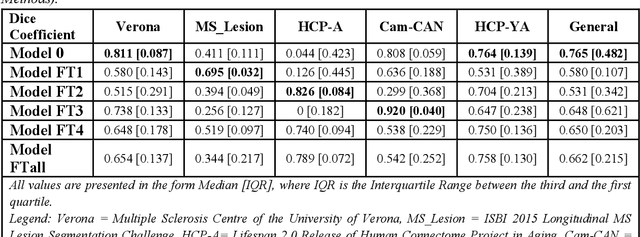
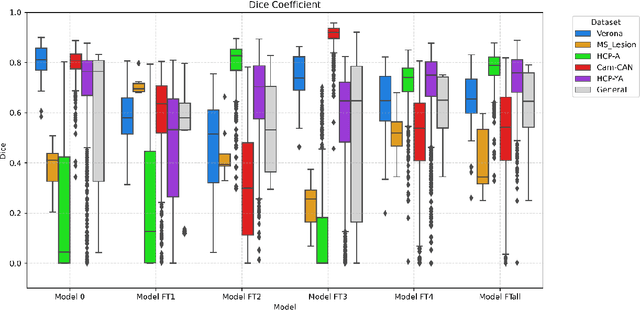

The Choroid Plexus (ChP) is a highly vascularized brain structure that plays a critical role in several physiological processes. ASCHOPLEX, a deep learning-based segmentation toolbox with an integrated fine-tuning stage, provides accurate ChP delineations on non-contrast-enhanced T1-weighted MRI scans; however, its performance is hindered by inter-dataset variability. This study introduces the first federated incremental learning approach for automated ChP segmentation from 3D T1-weighted brain MRI, by integrating an enhanced version of ASCHOPLEX within the Dafne (Deep Anatomical Federated Network) framework. A comparative evaluation is conducted to assess whether federated incremental learning through Dafne improves model generalizability across heterogeneous imaging conditions, relative to the conventional fine-tuning strategy employed by standalone ASCHOPLEX. The experimental cohort comprises 2,284 subjects, including individuals with Multiple Sclerosis as well as healthy controls, collected from five independent MRI datasets. Results indicate that the fine-tuning strategy provides high performance on homogeneous data (e.g., same MRI sequence, same cohort of subjects), but limited generalizability when the data variability is high (e.g., multiple MRI sequences, multiple and new cohorts of subjects). By contrast, the federated incremental learning variant of ASCHOPLEX constitutes a robust alternative consistently achieving higher generalizability and more stable performance across diverse acquisition settings.