 Add to Chrome
 Add to Firefox
 Add to Edge
An In-Depth Study of Filter-Agnostic Vector Search on a PostgreSQL Database System: [Experiments and Analysis]
Mar 24, 2026
Filtered Vector Search (FVS) is critical for supporting semantic search and GenAI applications in modern database systems. However, existing research most often evaluates algorithms in specialized libraries, making optimistic assumptions that do not align with enterprise-grade database systems. Our work challenges this premise by demonstrating that in a production-grade database system, commonly made assumptions do not hold, leading to performance characteristics and algorithmic trade-offs that are fundamentally different from those observed in isolated library settings. This paper presents the first in-depth analysis of filter-agnostic FVS algorithms within a production PostgreSQL-compatible system. We systematically evaluate post-filtering and inline-filtering strategies across a wide range of selectivities and correlations. Our central finding is that the optimal algorithm is not dictated by the cost of distance computations alone, but that system-level overheads that come from both distance computations and filter operations (like page accesses and data retrieval) play a significant role. We demonstrate that graph-based approaches (such as NaviX/ACORN) can incur prohibitive numbers of filter checks and system-level overheads, compared with clustering-based indexes such as ScaNN, often canceling out their theoretical benefits in real-world database environments. Ultimately, our findings provide the database community with crucial insights and practical guidelines, demonstrating that the optimal choice for a filter-agnostic FVS algorithm is not absolute, but rather a system-aware decision contingent on the interplay between workload characteristics and the underlying costs of data access in a real-world database architecture.

Context-Enhanced Relational Operators with Vector Embeddings
Dec 03, 2023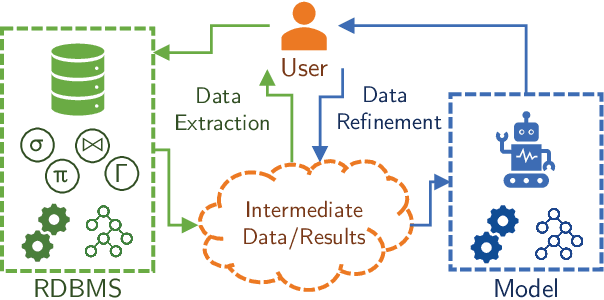
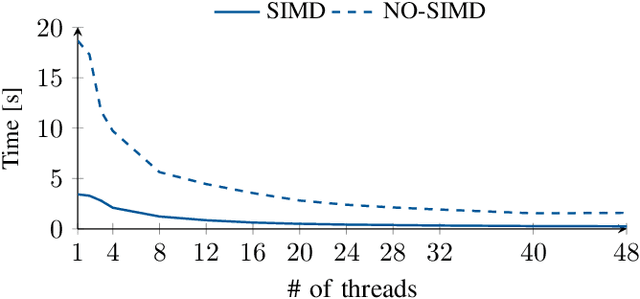
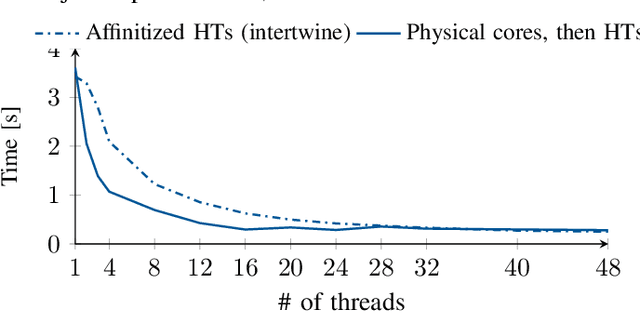
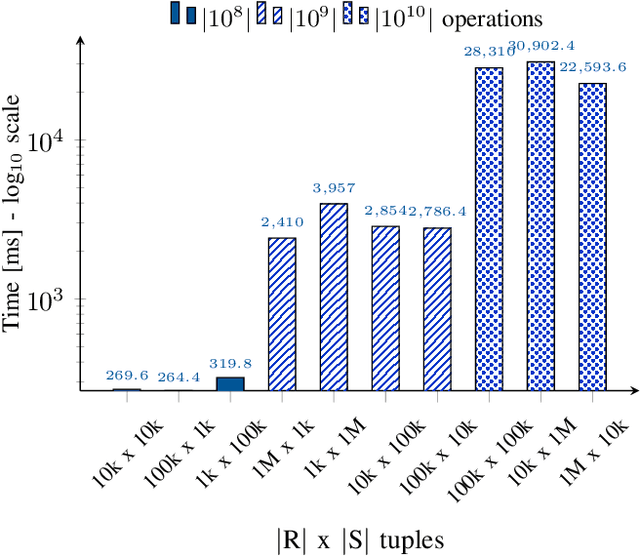
Collecting data, extracting value, and combining insights from relational and context-rich multi-modal sources in data processing pipelines presents a challenge for traditional relational DBMS. While relational operators allow declarative and optimizable query specification, they are limited to data transformations unsuitable for capturing or analyzing context. On the other hand, representation learning models can map context-rich data into embeddings, allowing machine-automated context processing but requiring imperative data transformation integration with the analytical query. To bridge this dichotomy, we present a context-enhanced relational join and introduce an embedding operator composable with relational operators. This enables hybrid relational and context-rich vector data processing, with algebraic equivalences compatible with relational algebra and corresponding logical and physical optimizations. We investigate model-operator interaction with vector data processing and study the characteristics of the E-join operator. Using an example of string embeddings, we demonstrate enabling hybrid context-enhanced processing on relational join operators with vector embeddings. The importance of holistic optimization, from logical to physical, is demonstrated in an order of magnitude execution time improvement.