 Add to Chrome
 Add to Firefox
 Add to Edge
Financial Audit Assistance using Misinformation Detection and Explanation
Jul 20, 2026
Financial statements (FS) such as Balance Sheet (BS), Income Statement (IS) and Cash-flow Statement (CS) summarize the annual financial performance of a company. FS are widely used for evaluating corporate governance, credit appraisal, risk analysis, validate taxation, make investment decisions etc. Financial auditing is a complex and knowledge-intensive discipline whose one important aim is ensuring integrity, accuracy, fairness and absence of material misstatement in the published FS. Given the importance of FS, there are incentives to hide, omit or falsify information to misrepresent the true financial health of the company; e.g., reduce tax liabilities, or increase investor confidence. Given the complex, time-consuming and expertise-dependent nature of auditing, auditors would benefit from an AI-assisted system that automatically detects instances of misinformation in the given FS and identify likely sources of this misinformation in the financial data. In this paper, we present unsupervised techniques to identify misinformation in FS, and also generate explanations as to the financial variables that are likely sources of misinformation. The auditor can then explore in more detail the associated data sources and business processes to validate these suggestions. A crucial feature of our approach is the use of past corpus of FS and associated audit reports to generate insights, which help in providing assistance. We demonstrate the efficacy of these techniques on a large corpus of 11,460 FS over 5 years and associated audit reports. This paper integrates and adds more novel contributions over the previously reported research (Shinde et al., 2022)\cite{SVAP22}, (Vaishampayan et al., 2022)\cite{VSPP22}, (Pawar et al., 2023)\cite{PAPV23}, which we have used as the foundation for our AI-assisted Auditor Assistance system.

Broken Words, Broken Performance: Effect of Tokenization on Performance of LLMs
Dec 26, 2025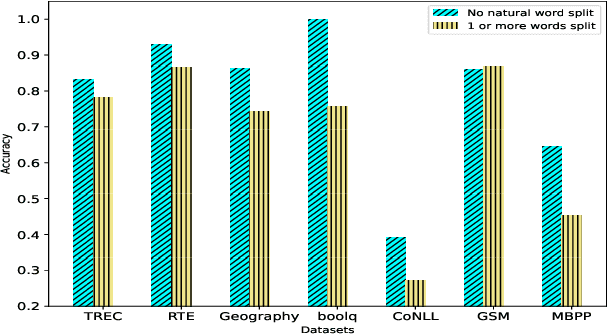
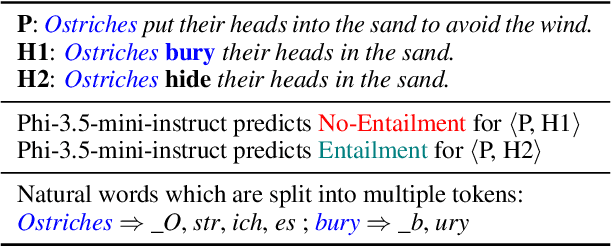
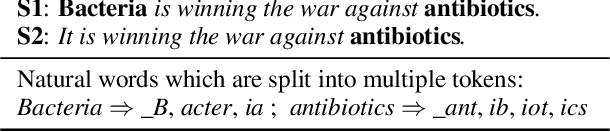
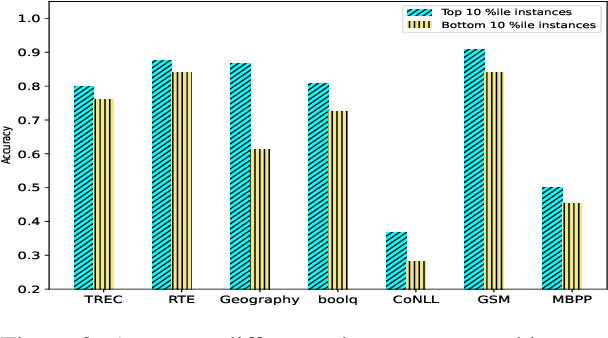
Tokenization is the first step in training any Large Language Model (LLM), where the text is split into a sequence of tokens as per the model's fixed vocabulary. This tokenization in LLMs is different from the traditional tokenization in NLP where the text is split into a sequence of "natural" words. In LLMs, a natural word may also be broken into multiple tokens due to limited vocabulary size of the LLMs (e.g., Mistral's tokenizer splits "martial" into "mart" and "ial"). In this paper, we hypothesize that such breaking of natural words negatively impacts LLM performance on various NLP tasks. To quantify this effect, we propose a set of penalty functions that compute a tokenization penalty for a given text for a specific LLM, indicating how "bad" the tokenization is. We establish statistical significance of our hypothesis on multiple NLP tasks for a set of different LLMs.
Beyond Static Datasets: A Behavior-Driven Entity-Specific Simulation to Overcome Data Scarcity and Train Effective Crypto Anti-Money Laundering Models
Jan 01, 2025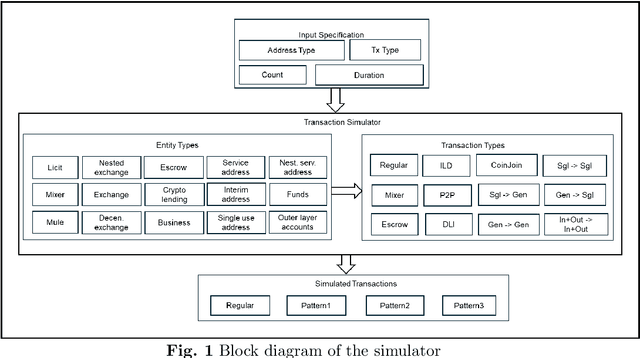
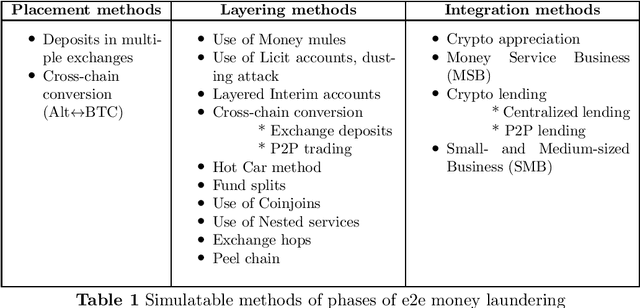
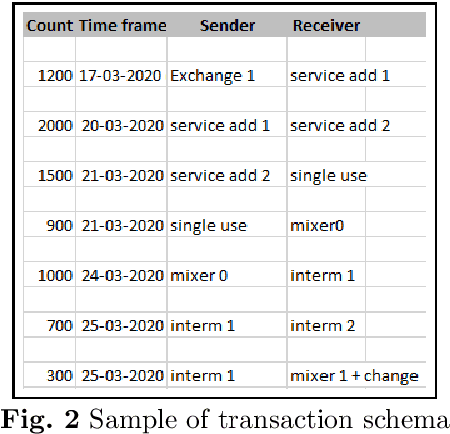
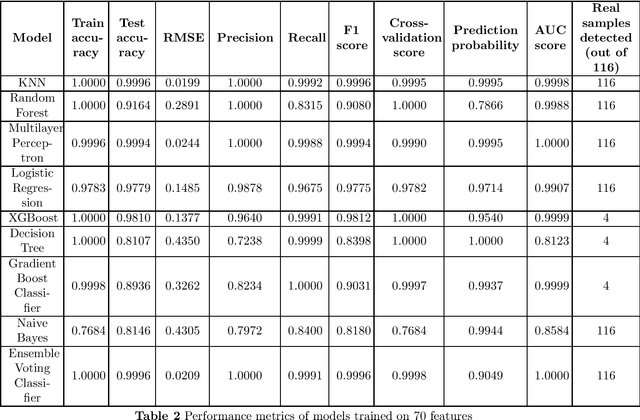
For different factors/reasons, ranging from inherent characteristics and features providing decentralization, enhanced privacy, ease of transactions, etc., to implied external hardships in enforcing regulations, contradictions in data sharing policies, etc., cryptocurrencies have been severely abused for carrying out numerous malicious and illicit activities including money laundering, darknet transactions, scams, terrorism financing, arm trades. However, money laundering is a key crime to be mitigated to also suspend the movement of funds from other illicit activities. Billions of dollars are annually being laundered. It is getting extremely difficult to identify money laundering in crypto transactions owing to many layering strategies available today, and rapidly evolving tactics, and patterns the launderers use to obfuscate the illicit funds. Many detection methods have been proposed ranging from naive approaches involving complete manual investigation to machine learning models. However, there are very limited datasets available for effectively training machine learning models. Also, the existing datasets are static and class-imbalanced, posing challenges for scalability and suitability to specific scenarios, due to lack of customization to varying requirements. This has been a persistent challenge in literature. In this paper, we propose behavior embedded entity-specific money laundering-like transaction simulation that helps in generating various transaction types and models the transactions embedding the behavior of several entities observed in this space. The paper discusses the design and architecture of the simulator, a custom dataset we generated using the simulator, and the performance of models trained on this synthetic data in detecting real addresses involved in money laundering.