 Add to Chrome
 Add to Firefox
 Add to Edge
Governed Reasoning for Institutional AI
Apr 12, 2026
Institutional decisions -- regulatory compliance, clinical triage, prior authorization appeal -- require a different AI architecture than general-purpose agents provide. Agent frameworks infer authority conversationally, reconstruct accountability from logs, and produce silent errors: incorrect determinations that execute without any human review signal. We propose Cognitive Core: a governed decision substrate built from nine typed cognitive primitives (retrieve, classify, investigate, verify, challenge, reflect, deliberate, govern, generate), a four-tier governance model where human review is a condition of execution rather than a post-hoc check, a tamper-evident SHA-256 hash-chain audit ledger endogenous to computation, and a demand-driven delegation architecture supporting both declared and autonomously reasoned epistemic sequences. We benchmark three systems on an 11-case balanced prior authorization appeal evaluation set. Cognitive Core achieves 91% accuracy against 55% (ReAct) and 45% (Plan-and-Solve). The governance result is more significant: CC produced zero silent errors while both baselines produced 5-6. We introduce governability -- how reliably a system knows when it should not act autonomously -- as a primary evaluation axis for institutional AI alongside accuracy. The baselines are implemented as prompts, representing the realistic deployment alternative to a governed framework. A configuration-driven domain model means deploying a new institutional decision domain requires YAML configuration, not engineering capacity.

Intelligent Agent for Hurricane Emergency Identification and Text Information Extraction from Streaming Social Media Big Data
Jun 14, 2021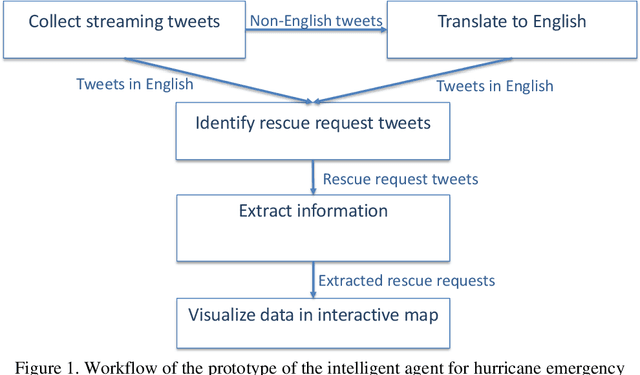
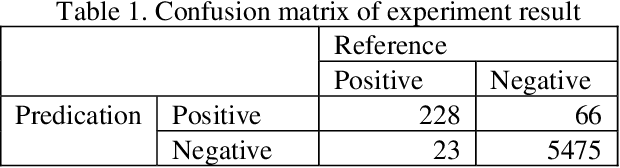
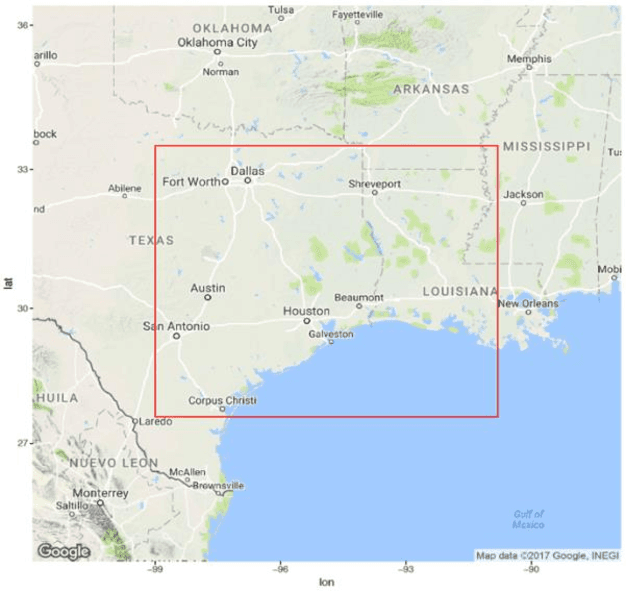
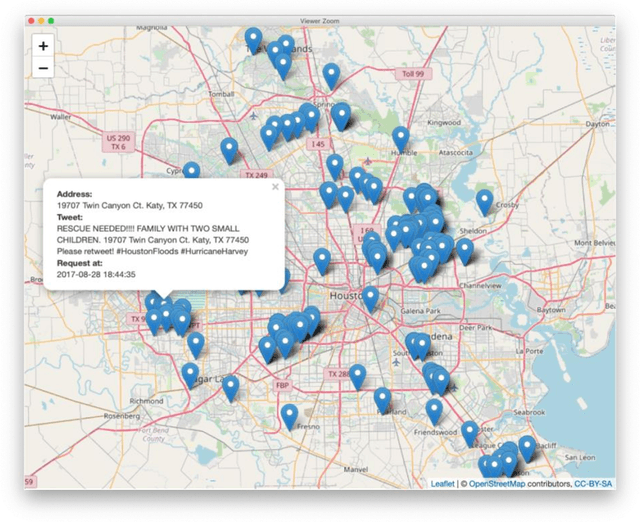
This paper presents our research on leveraging social media Big Data and AI to support hurricane disaster emergency response. The current practice of hurricane emergency response for rescue highly relies on emergency call centres. The more recent Hurricane Harvey event reveals the limitations of the current systems. We use Hurricane Harvey and the associated Houston flooding as the motivating scenario to conduct research and develop a prototype as a proof-of-concept of using an intelligent agent as a complementary role to support emergency centres in hurricane emergency response. This intelligent agent is used to collect real-time streaming tweets during a natural disaster event, to identify tweets requesting rescue, to extract key information such as address and associated geocode, and to visualize the extracted information in an interactive map in decision supports. Our experiment shows promising outcomes and the potential application of the research in support of hurricane emergency response.