 Add to Chrome
 Add to Firefox
 Add to Edge
Persona-as-Configuration: Generative Stakeholder Reporting for Agricultural Floods
Jul 20, 2026
Cyber-physical systems built on deterministic edge inference, such as on-vehicle flood detection for agricultural fields, produce structured decision logs that must be interpreted differently by heterogeneous stakeholders. Pairing such systems with large language models (LLMs) to generate stakeholder-specific reports introduces a tension: the generative layer is non-deterministic, while the edge plane must remain replayable and auditable. We propose an architectural pattern resting on two invariants: unidirectional consumption, in which the generative layer is a strict read-only consumer of the deterministic plane and never writes back, and persona-as-configuration, in which stakeholder adaptation is a versioned prompt-template artifact rather than runtime improvisation. We instantiate the pattern as a context-aware dashboard layer over the JSON decision logs of a previously published edge-based standing-water detection system, and analyse how the integration boundary admits standard generative-reliability mitigations as configuration- or middleware-level extension points. A structured expert review rated the pattern favourably across five ISO/IEC 25010-aligned quality dimensions, with strongest agreement on separation of concerns. End-user evaluation with agricultural stakeholders is planned for future work.

Mining Architectural Quality Under Agentic AI Adoption: A Causal Study of Java Repositories
Jun 11, 2026AI coding tools are now used by a majority of developers, and agentic use of these tools has popularized the practice colloquially called "vibe coding". Yet causal evidence on their effect on software architecture is scarce. Prior causal work has measured code-level outcomes (complexity, static analysis warnings); whether such degradation propagates to architecture-level outcomes remains unknown. We mine 151 open-source Java repositories, 74 with detectable agentic AI adoption (identified via configuration files and Co-Authored-By commit trailers) and 77 propensity-matched controls, across a 13-month per-repository window yielding 1,811 monthly Arcan snapshots. We estimate the causal effect of adoption on architectural smell density (ASD) with a staggered difference-in-differences design and the Borusyak imputation estimator, applying a causal design recently used for code-level metrics to the architecture level. Total smell counts are essentially unchanged (+1.1%, p = 0.82) while lines of code grow +12.8% (p = 0.003); the resulting 6.7% ASD decline (p = 0.004) is therefore a denominator effect rather than an architectural improvement. Per-type estimates and robustness checks (wild cluster bootstrap, Lee bounds, stale-observation sensitivity) corroborate the pattern; pre-trends are flat (Wald p = 0.90), consistent with parallel trends. Density-normalized outcomes can mislead when treatment affects system size: raw counts and explicit decomposition are required for causal mining studies of AI tool adoption. The complete replication package, including the curated 151-repository monthly panel, is publicly available.
Toward a Sustainable Software Architecture Community: Evaluating ICSA's Environmental Impact
Apr 05, 2026Generative AI (GenAI) tools are increasingly integrated into software architecture research, yet the environmental impact of their computational usage remains largely undocumented. This study presents the first systematic audit of the carbon footprint of both the digital footprint from GenAI usage in research papers, and the traditional footprint from conference activities within the context of the IEEE International Conference on Software Architecture (ICSA). We report two separate carbon inventories relevant to the software architecture research community: i) an exploratory estimate of the footprint of GenAI inference usage associated with accepted papers within a research-artifact boundary, and ii) the conference attendance and operations footprint of ICSA 2025 (travel, accommodation, catering, venue energy, and materials) within the conference time boundary. These two inventories, with different system boundaries and completeness, support transparency and community reflection. We discuss implications for sustainable software architecture, including recommendations for transparency, greener conference planning, and improved energy efficiency in GenAI operations. Our work supports a more climate-conscious research culture within the ICSA community and beyond
Compliance-by-Construction Argument Graphs: Using Generative AI to Produce Evidence-Linked Formal Arguments for Certification-Grade Accountability
Apr 05, 2026High-stakes decision systems increasingly require structured justification, traceability, and auditability to ensure accountability and regulatory compliance. Formal arguments commonly used in the certification of safety-critical systems provide a mechanism for structuring claims, reasoning, and evidence in a verifiable manner. At the same time, generative artificial intelligence systems are increasingly integrated into decision-support workflows, assisting with drafting explanations, summarizing evidence, and generating recommendations. However, current deployments often rely on language models as loosely constrained assistants, which introduces risks such as hallucinated reasoning, unsupported claims, and weak traceability. This paper proposes a compliance-by-construction architecture that integrates Generative AI (GenAI) with structured formal argument representations. The approach treats each AI-assisted step as a claim that must be supported by verifiable evidence and validated against explicit reasoning constraints before it becomes part of an official decision record. The architecture combines four components: i) a typed Argument Graph representation inspired by assurance-case methods, ii) retrieval-augmented generation (RAG) to draft argument fragments grounded in authoritative evidence, iii) a reasoning and validation kernel enforcing completeness and admissibility constraints, and iv) a provenance ledger aligned with the W3C PROV standard to support auditability. We present a system design and an evaluation strategy based on enforceable invariants and worked examples. The analysis suggests that deterministic validation rules can prevent unsupported claims from entering the decision record while allowing GenAI to accelerate argument construction.
Edge-Based Standing-Water Detection via FSM-Guided Tiering and Multi-Model Consensus
Mar 31, 2026Standing water in agricultural fields threatens vehicle mobility and crop health. This paper presents a deployed edge architecture for standing-water detection using Raspberry-Pi-class devices with optional Jetson acceleration. Camera input and environmental sensors (humidity, pressure, temperature) are combined in a finite-state machine (FSM) that acts as the architectural decision engine. The FSM-guided control plane selects between local and offloaded inference tiers, trading accuracy, latency, and energy under intermittent connectivity and motion-dependent compute budgets. A multi-model YOLO ensemble provides image scores, while diurnal-baseline sensor fusion adjusts caution using environmental anomalies. All decisions are logged per frame, enabling bit-identical hardware-in-the-loop replays. Across ten configurations and sensor variants on identical field sequences with frame-level ground truth, we show that the combination of adaptive tiering, multi-model consensus, and diurnal sensor fusion improves flood-detection performance over static local baselines, uses less energy than a naive always-heavy offload policy, and maintains bounded tail latency in a real agricultural setting.
RAD-AI: Rethinking Architecture Documentation for AI-Augmented Ecosystems
Mar 30, 2026AI-augmented ecosystems (interconnected systems where multiple AI components interact through shared data and infrastructure) are becoming the architectural norm for smart cities, autonomous fleets, and intelligent platforms. Yet the architecture documentation frameworks practitioners rely on, arc42 and the C4 model, were designed for deterministic software and cannot capture probabilistic behavior, data-dependent evolution, or dual ML/software lifecycles. This gap carries regulatory consequence: the EU AI Act (Regulation 2024/1689) mandates technical documentation through Annex IV that no existing framework provides structured support for, with enforcement for high-risk systems beginning August 2, 2026. We present RAD-AI, a backward-compatible extension framework that augments arc42 with eight AI-specific sections and C4 with three diagram extensions, complemented by a systematic EU AI Act Annex IV compliance mapping. A regulatory coverage assessment with six experienced software-architecture practitioners provides preliminary evidence that RAD-AI increases Annex IV addressability from approximately 36% to 93% (mean rating) and demonstrates substantial improvement over existing frameworks. Comparative analysis on two production AI platforms (Uber Michelangelo, Netflix Metaflow) captures eight additional AI-specific concerns missed by standard frameworks and demonstrates that documentation deficiencies are structural rather than domain-specific. An illustrative smart mobility ecosystem case study reveals ecosystem-level concerns, including cascading drift and differentiated compliance obligations, that are invisible under standard notation.
SAGAI-MID: A Generative AI-Driven Middleware for Dynamic Runtime Interoperability
Mar 30, 2026Modern distributed systems integrate heterogeneous services, REST APIs with different schema versions, GraphQL endpoints, and IoT devices with proprietary payloads that suffer from persistent schema mismatches. Traditional static adapters require manual coding for every schema pair and cannot handle novel combinations at runtime. We present SAGAI-MID, a FastAPI-based middleware that uses large language models (LLMs) to dynamically detect and resolve schema mismatches at runtime. The system employs a five-layer pipeline: hybrid detection (structural diff plus LLM semantic analysis), dual resolution strategies (per-request LLM transformation and LLM-generated reusable adapter code), and a three-tier safeguard stack (validation, ensemble voting, rule-based fallback). We frame the architecture through Bass et al.'s interoperability tactics, transforming them from design-time artifacts into runtime capabilities. We evaluate SAGAI-MID on 10 interoperability scenarios spanning REST version migration, IoT-to-analytics bridging, and GraphQL protocol conversion across six LLMs from two providers. The best-performing configuration achieves 0.90 pass@1 accuracy. The CODEGEN strategy consistently outperforms DIRECT (0.83 vs 0.77 mean pass@1), while cost varies by over 30x across models with no proportional accuracy gain; the most accurate model is also the cheapest. We discuss implications for software architects adopting LLMs as runtime architectural components.
Designing Internet of Behaviors Systems
Jan 06, 2022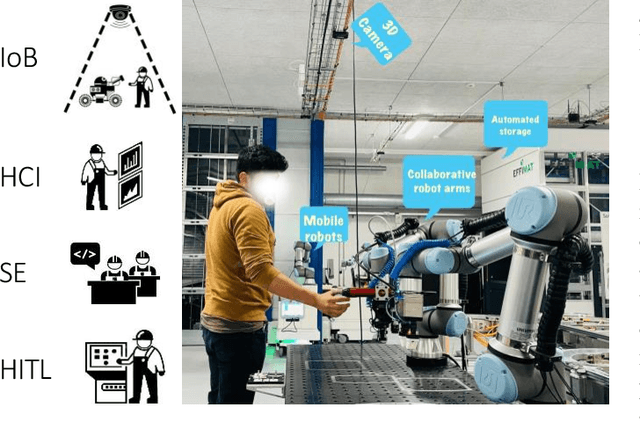
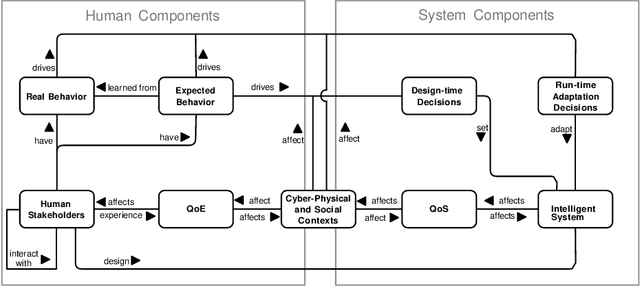
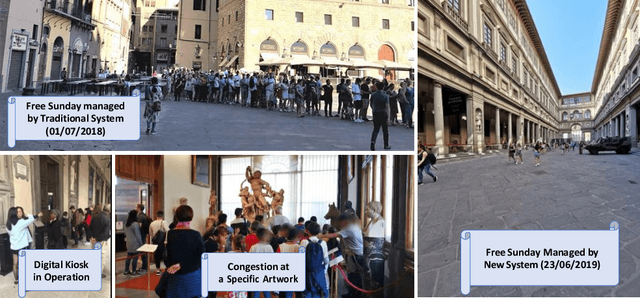
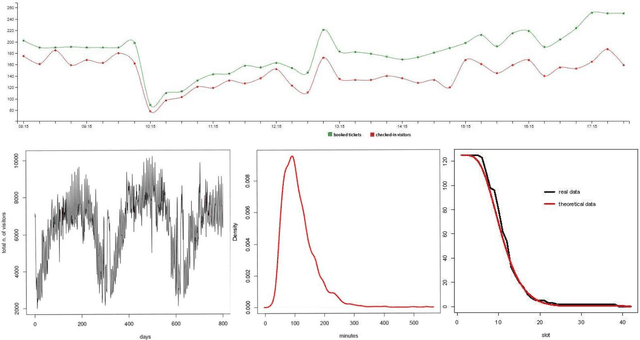
The Internet of Behaviors (IoB) puts human behavior at the core of engineering intelligent connected systems. IoB links the digital world to human behavior to establish human-driven design, development, and adaptation processes. This paper defines the novel concept by an IoB model based on a collective effort interacting with software engineers, human-computer interaction scientists, social scientists, and cognitive science communities. The model for IoB is created based on an exploratory study that synthesizes state-of-the-art analysis and experts interviews. The architecture of a real industry 4.0 manufacturing infrastructure helps to explain the IoB model and it's application. The conceptual model was used to successfully implement a socio-technical infrastructure for a crowd monitoring and queue management system for the Uffizi Galleries, Florence, Italy. The experiment, which started in the fall of 2016 and was operational in the fall of 2018, used a data-driven approach to feed the system with real-time sensory data. It also incorporated prediction models on visitors' mobility behavior. The system's main objective was to capture human behavior, model it, and build a mechanism that considers changes, adapts in real-time, and continuously learns from repetitive behaviors. In addition to the conceptual model and the real-life evaluation, this paper provides recommendations from experts and gives future directions for IoB to become a significant technological advancement in the coming few years.