 Add to Chrome
 Add to Firefox
 Add to Edge
Robust Control under Stationary Ambiguity
Aug 05, 2026
Control policies optimized in simulation can perform poorly in the real system when the parameters $x$ of the simulator are estimated from limited data but the resulting parameter uncertainty is not represented inside the simulation. A common way to incorporate such ambiguity is to simulate each trajectory of the system under a randomly drawn value for $x$. Since the policy cannot observe the drawn value, it must initially choose controls that perform well across many possible parameter values. However, if the policy progressively observes the system, it can often gradually infer the value of $x$, so that ambiguity vanishes. Over time, the policy then specializes to its estimate of $x$ and loses its robustness. This is undesirable in many real systems, where latent factors are expected to shift. In financial markets, for example, a policy hedging a derivative payoff should remain robust to changes in the volatility regime. To induce such continual robustness, we propose training policies in simulators where ambiguity varies with the system's state but does not systematically decay over time. We formalize this requirement as stationary ambiguity: the simulator should induce a stationary filter process over the latent state. We show how to construct such simulators and demonstrate, on hedging problems, that policies trained under stationary ambiguity preserve robustness to latent factors over time, leading to strong performance on real market data. As a modeling principle, stationary ambiguity informs many simulator design decisions: which models make realistic simulators, how their parameters should be randomized, and how simulator and policy should be initialized. While our experiments focus on hedging, stationary ambiguity may also be useful for other sequential control problems driven by exogenous stochastic processes with shifting latent structure.

Universality and Approximation Rates of Graph Neural Networks with Random Features
Jul 29, 2026We investigate message-passing graph neural networks with random node features. Random node features are known to enhance the expressiveness of graph neural networks (GNNs) both theoretically and empirically. Here, we establish a novel universality result focusing on permutation-equivariant neural networks (PENNs), a class of GNNs built from feedforward neural network components that subsumes many prominent GNN architectures. We show that PENNs, combined with partially random node features, can approximate arbitrarily well in probability any measurable permutation-invariant or permutation-equivariant function on directed graphs of fixed size with multidimensional node and edge features. For $k$-times continuously differentiable functions, $k\geq 2$, we also derive upper bounds on the approximation rates, relating the complexity of the feedforward components of a PENN in terms of layer depth and number of nonzero weights to the desired approximation accuracy.
Neural Slack Variables for Shape Constraints
Jun 11, 2026Enforcing functional inequality constraints such as monotonicity and convexity in neural networks is a fundamental challenge in many industrial and scientific applications. Classical one-sided penalty methods, along with primal-dual methods gated by complementary slackness, provide constraint gradients only at violated locations, resulting in fragile satisfaction. Architectures that guarantee feasibility by construction, on the other hand, remain largely limited to elementary cases and impose additional inductive biases. We introduce neural slack variables, a deep learning native primal-side approach that converts constraint enforcement into a regression problem by coupling the primary network with a jointly learned auxiliary network. The auxiliary network serves as a valid target for the primary network's constraint quantities, inducing feasibility and regularity. Neural slack variables achieve zero measured violations on dense-grid monotonicity and convexity test cases, where penalty and primal-dual baselines leave residual violations, and enable arbitrage-free learning of volatility surfaces, an open industrial challenge in quantitative finance.
Generating Financial Time Series by Matching Random Convolutional Features
Jun 03, 2026Generating realistic financial time series is challenging as training data is often limited to a single historical path. With such scarce data, overfitting is hard to avoid, especially under adversarial training where a trained discriminator can memorize the training samples. To mitigate this, recent approaches train generators to minimize the discrepancy between untrained feature representations of real and generated time series. In these works, the feature maps are based on path signatures, which can fail to capture relevant time series properties at tractable truncation depths. In this work, we instead train generators by matching random convolutional features of real and generated time series. Existing random convolutional feature maps, such as Rocket and Hydra, have been shown to provide informative representations of real-world time series, but cannot supervise generative models because they are non-differentiable. We introduce SOCK (SOft Competing Kernels), a fully differentiable random convolutional feature map, suited to train generative time series models. We show that generators trained by matching random SOCK features consistently outperform signature and diffusion baselines across a wide range of small-sample financial datasets. We further demonstrate SOCK's expressiveness on two-sample hypothesis testing and time series classification tasks, where SOCK matches or outperforms existing unsupervised feature maps.
Random Neural Network Expressivity for Non-Linear Partial Differential Equations
May 24, 2026Neural networks with randomly generated hidden weights (RaNNs) have been extensively studied, both as a standalone learning method and as an initialization for fully trainable deep learning methods. In this work, we study RaNN expressivity for learning solutions to non-linear partial differential equations (PDEs). Despite their widespread use in practical applications, a rigorous theoretical understanding of the approximation properties of RaNNs in this context remains limited. Here, we derive error bounds for RaNN approximations to time-dependent Sobolev functions and obtain a dimension-free approximation rate $\frac{1}{2}$ for sufficiently regular functions. We apply our results to two important classes of non-linear PDEs: Porous Medium Equations and Compressible Navier-Stokes Equations, showing that RaNNs are capable of efficiently approximating solutions to these complex, non-linear PDEs. Our theoretical analysis is supported by numerical experiments, showing that the obtained convergence rates extend beyond the considered setting.
Error analysis for the deep Kolmogorov method
Aug 23, 2025The deep Kolmogorov method is a simple and popular deep learning based method for approximating solutions of partial differential equations (PDEs) of the Kolmogorov type. In this work we provide an error analysis for the deep Kolmogorov method for heat PDEs. Specifically, we reveal convergence with convergence rates for the overall mean square distance between the exact solution of the heat PDE and the realization function of the approximating deep neural network (DNN) associated with a stochastic optimization algorithm in terms of the size of the architecture (the depth/number of hidden layers and the width of the hidden layers) of the approximating DNN, in terms of the number of random sample points used in the loss function (the number of input-output data pairs used in the loss function), and in terms of the size of the optimization error made by the employed stochastic optimization method.
Distributional Adversarial Attacks and Training in Deep Hedging
Aug 20, 2025In this paper, we study the robustness of classical deep hedging strategies under distributional shifts by leveraging the concept of adversarial attacks. We first demonstrate that standard deep hedging models are highly vulnerable to small perturbations in the input distribution, resulting in significant performance degradation. Motivated by this, we propose an adversarial training framework tailored to increase the robustness of deep hedging strategies. Our approach extends pointwise adversarial attacks to the distributional setting and introduces a computationally tractable reformulation of the adversarial optimization problem over a Wasserstein ball. This enables the efficient training of hedging strategies that are resilient to distributional perturbations. Through extensive numerical experiments, we show that adversarially trained deep hedging strategies consistently outperform their classical counterparts in terms of out-of-sample performance and resilience to model misspecification. Our findings establish a practical and effective framework for robust deep hedging under realistic market uncertainties.
Random Feature Representation Boosting
Jan 30, 2025
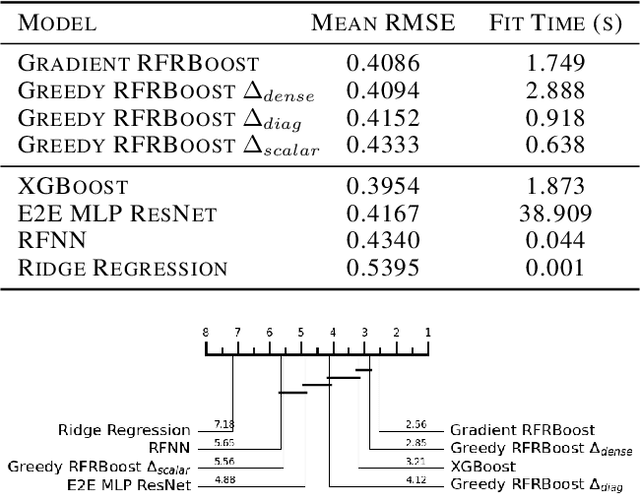
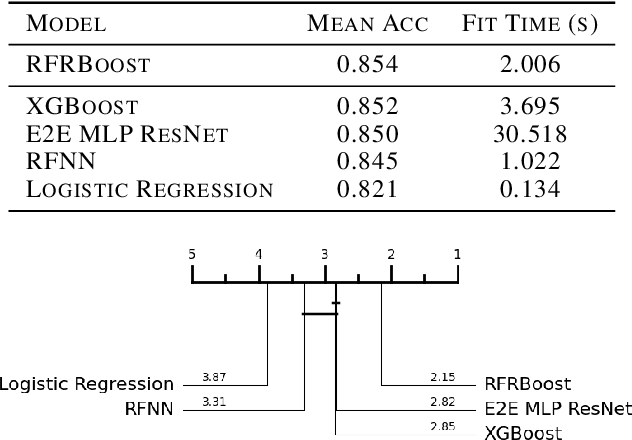

We introduce Random Feature Representation Boosting (RFRBoost), a novel method for constructing deep residual random feature neural networks (RFNNs) using boosting theory. RFRBoost uses random features at each layer to learn the functional gradient of the network representation, enhancing performance while preserving the convex optimization benefits of RFNNs. In the case of MSE loss, we obtain closed-form solutions to greedy layer-wise boosting with random features. For general loss functions, we show that fitting random feature residual blocks reduces to solving a quadratically constrained least squares problem. We demonstrate, through numerical experiments on 91 tabular datasets for regression and classification, that RFRBoost significantly outperforms traditional RFNNs and end-to-end trained MLP ResNets, while offering substantial computational advantages and theoretical guarantees stemming from boosting theory.
Fast Deep Hedging with Second-Order Optimization
Oct 29, 2024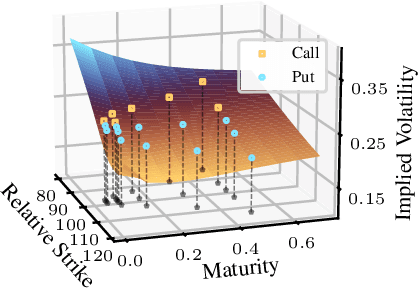
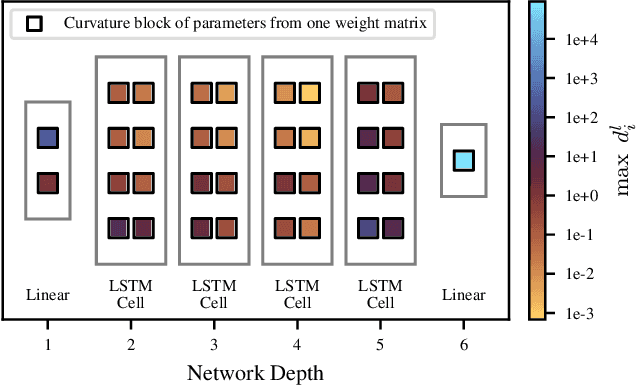
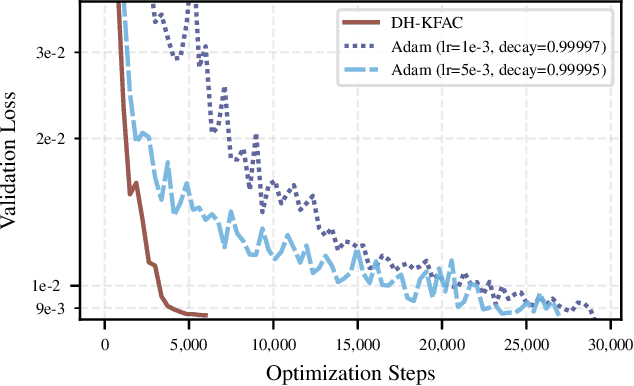
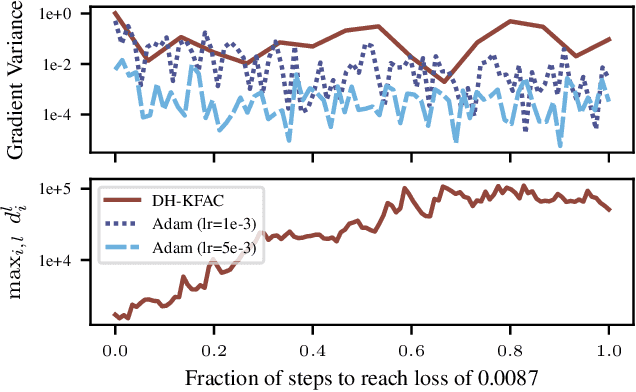
Hedging exotic options in presence of market frictions is an important risk management task. Deep hedging can solve such hedging problems by training neural network policies in realistic simulated markets. Training these neural networks may be delicate and suffer from slow convergence, particularly for options with long maturities and complex sensitivities to market parameters. To address this, we propose a second-order optimization scheme for deep hedging. We leverage pathwise differentiability to construct a curvature matrix, which we approximate as block-diagonal and Kronecker-factored to efficiently precondition gradients. We evaluate our method on a challenging and practically important problem: hedging a cliquet option on a stock with stochastic volatility by trading in the spot and vanilla options. We find that our second-order scheme can optimize the policy in 1/4 of the number of steps that standard adaptive moment-based optimization takes.
An Overview on Machine Learning Methods for Partial Differential Equations: from Physics Informed Neural Networks to Deep Operator Learning
Aug 23, 2024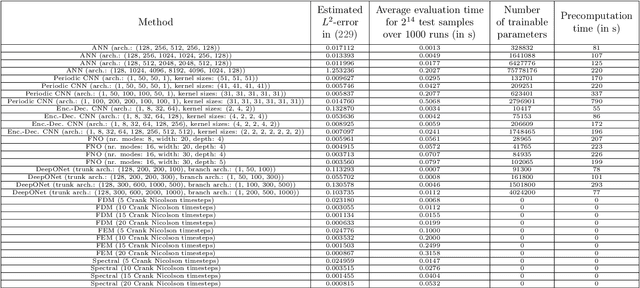
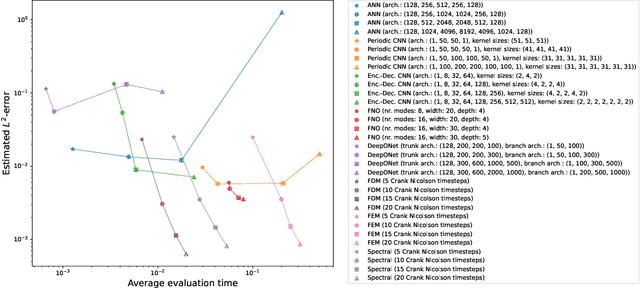
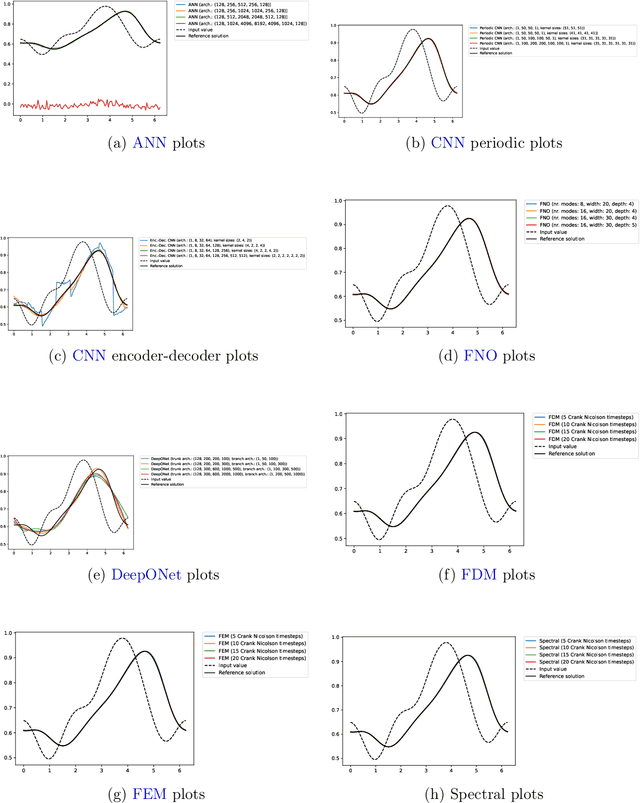
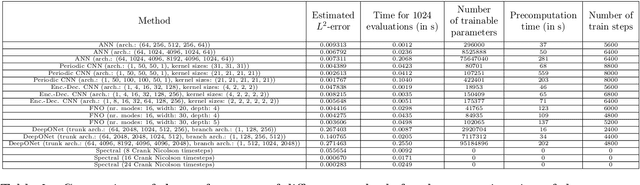
The approximation of solutions of partial differential equations (PDEs) with numerical algorithms is a central topic in applied mathematics. For many decades, various types of methods for this purpose have been developed and extensively studied. One class of methods which has received a lot of attention in recent years are machine learning-based methods, which typically involve the training of artificial neural networks (ANNs) by means of stochastic gradient descent type optimization methods. While approximation methods for PDEs using ANNs have first been proposed in the 1990s they have only gained wide popularity in the last decade with the rise of deep learning. This article aims to provide an introduction to some of these methods and the mathematical theory on which they are based. We discuss methods such as physics-informed neural networks (PINNs) and deep BSDE methods and consider several operator learning approaches.