 Add to Chrome
 Add to Firefox
 Add to Edge
TalentCLEF at CLEF2026: Skill and Job Title Intelligence for Human Capital Management
Jul 22, 2026
This paper presents the second edition of the TalentCLEF Challenge, which will run as an evaluation lab as part of CLEF 2026. The aim of TalentCLEF is to promote the development of systems and methods that use Natural Language Processing (NLP) in the field of Human Capital Management (HCM), fostering approaches that ensure fairness in results, operate across multiple languages, and adapt to diverse industries. To this end, TalentCLEF establishes public benchmarks where research teams can compare methods and share findings, moving the field toward more practical and impactful NLP solutions that effectively address the real needs of workforce management. This year's lab will feature two tasks designed to foster the development and evaluation of systems that support key HCM activities such as talent matching, upskilling, reskilling, and skill gap detection: (i) Task A - Contextualized Job-Person Matching, focused on retrieving and ranking suitable candidates for specific job positions using context-rich and privacy-preserving data; and (ii) Task B - Job-Skill Matching with Skill Type Classification, centered on identifying relevant skills for a given job title and classifying them by their type within the job profile. TalentCLEF website: https://talentclef.github.io/talentclef/

Overview of the TalentCLEF 2026: Skill and Job Title Intelligence for Human Capital Management
Jun 30, 2026This paper presents an overview of the second edition of the TalentCLEF challenge, organized as a Lab at the Conference and Labs of the Evaluation Forum (CLEF) 2026. TalentCLEF is an initiative aimed at advancing Natural Language Processing research in Human Capital Management. The second edition of the challenge consisted of two tasks: Task A, contextualized job-person matching, focuses on identifying and ranking the most suitable candidates represented by their resumes for a given job vacancy in English and Spanish. Task B, job-skill matching with skill type classification, addresses retrieving the most relevant skills for a given job title in English and distinguishing between core and contextual skills. TalentCLEF attracted 113 registered teams and received more than 400 submissions in the two tasks, reflecting the growing interest of the research community in shared evaluation benchmarks for Human Capital Management. This paper describes the motivation and organization of the challenge, summarizes the datasets and evaluation settings, and reports the main results obtained by the participating teams.
Overview of the TalentCLEF 2025: Skill and Job Title Intelligence for Human Capital Management
Jul 17, 2025Advances in natural language processing and large language models are driving a major transformation in Human Capital Management, with a growing interest in building smart systems based on language technologies for talent acquisition, upskilling strategies, and workforce planning. However, the adoption and progress of these technologies critically depend on the development of reliable and fair models, properly evaluated on public data and open benchmarks, which have so far been unavailable in this domain. To address this gap, we present TalentCLEF 2025, the first evaluation campaign focused on skill and job title intelligence. The lab consists of two tasks: Task A - Multilingual Job Title Matching, covering English, Spanish, German, and Chinese; and Task B - Job Title-Based Skill Prediction, in English. Both corpora were built from real job applications, carefully anonymized, and manually annotated to reflect the complexity and diversity of real-world labor market data, including linguistic variability and gender-marked expressions. The evaluations included monolingual and cross-lingual scenarios and covered the evaluation of gender bias. TalentCLEF attracted 76 registered teams with more than 280 submissions. Most systems relied on information retrieval techniques built with multilingual encoder-based models fine-tuned with contrastive learning, and several of them incorporated large language models for data augmentation or re-ranking. The results show that the training strategies have a larger effect than the size of the model alone. TalentCLEF provides the first public benchmark in this field and encourages the development of robust, fair, and transferable language technologies for the labor market.
MELO: An Evaluation Benchmark for Multilingual Entity Linking of Occupations
Oct 10, 2024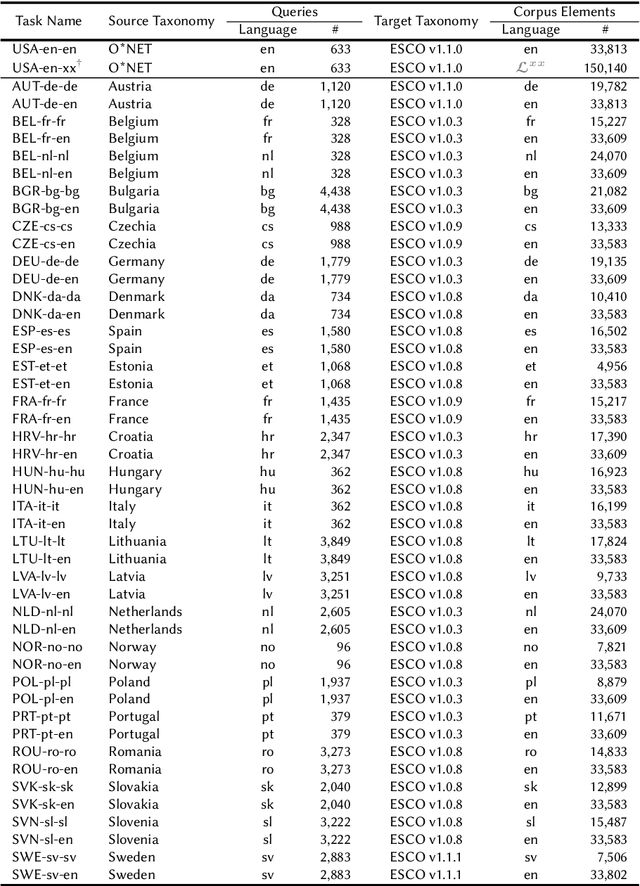
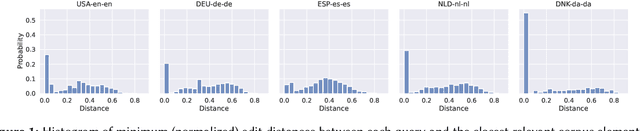
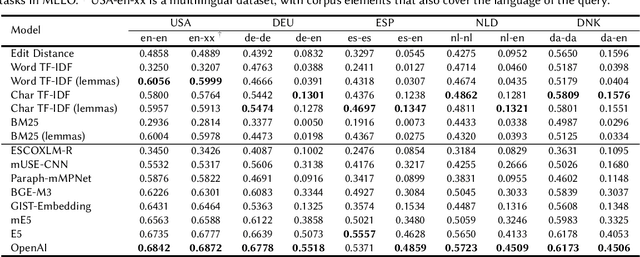
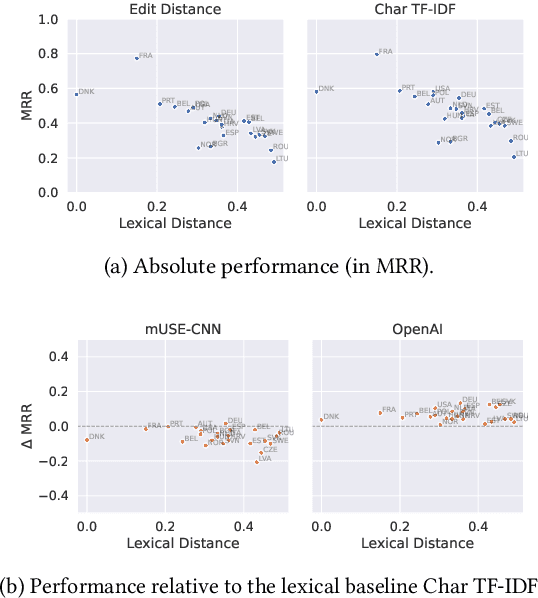
We present the Multilingual Entity Linking of Occupations (MELO) Benchmark, a new collection of 48 datasets for evaluating the linking of entity mentions in 21 languages to the ESCO Occupations multilingual taxonomy. MELO was built using high-quality, pre-existent human annotations. We conduct experiments with simple lexical models and general-purpose sentence encoders, evaluated as bi-encoders in a zero-shot setup, to establish baselines for future research. The datasets and source code for standardized evaluation are publicly available at https://github.com/Avature/melo-benchmark
Overview of BioASQ 2023: The eleventh BioASQ challenge on Large-Scale Biomedical Semantic Indexing and Question Answering
Jul 11, 2023This is an overview of the eleventh edition of the BioASQ challenge in the context of the Conference and Labs of the Evaluation Forum (CLEF) 2023. BioASQ is a series of international challenges promoting advances in large-scale biomedical semantic indexing and question answering. This year, BioASQ consisted of new editions of the two established tasks b and Synergy, and a new task (MedProcNER) on semantic annotation of clinical content in Spanish with medical procedures, which have a critical role in medical practice. In this edition of BioASQ, 28 competing teams submitted the results of more than 150 distinct systems in total for the three different shared tasks of the challenge. Similarly to previous editions, most of the participating systems achieved competitive performance, suggesting the continuous advancement of the state-of-the-art in the field.
Overview of BioASQ 2022: The tenth BioASQ challenge on Large-Scale Biomedical Semantic Indexing and Question Answering
Oct 13, 2022This paper presents an overview of the tenth edition of the BioASQ challenge in the context of the Conference and Labs of the Evaluation Forum (CLEF) 2022. BioASQ is an ongoing series of challenges that promotes advances in the domain of large-scale biomedical semantic indexing and question answering. In this edition, the challenge was composed of the three established tasks a, b, and Synergy, and a new task named DisTEMIST for automatic semantic annotation and grounding of diseases from clinical content in Spanish, a key concept for semantic indexing and search engines of literature and clinical records. This year, BioASQ received more than 170 distinct systems from 38 teams in total for the four different tasks of the challenge. As in previous years, the majority of the competing systems outperformed the strong baselines, indicating the continuous advancement of the state-of-the-art in this domain.
* 25 pages, 14 tables, 4 figures. arXiv admin note: substantial text overlap with arXiv:2106.14885
Overview of BioASQ 2021: The ninth BioASQ challenge on Large-Scale Biomedical Semantic Indexing and Question Answering
Jun 28, 2021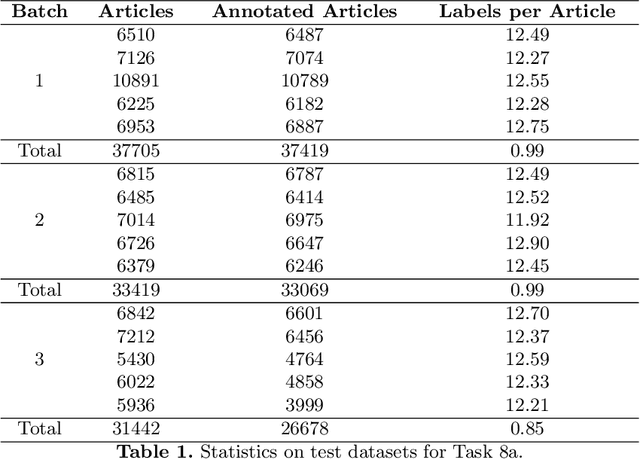
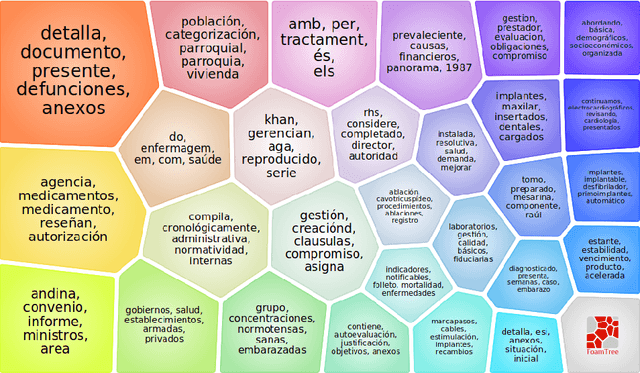
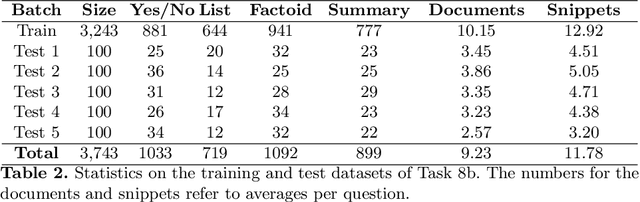
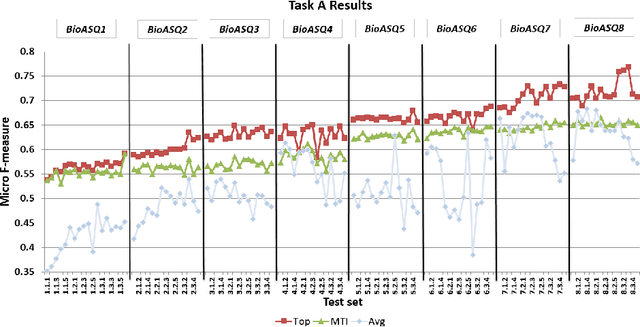
Advancing the state-of-the-art in large-scale biomedical semantic indexing and question answering is the main focus of the BioASQ challenge. BioASQ organizes respective tasks where different teams develop systems that are evaluated on the same benchmark datasets that represent the real information needs of experts in the biomedical domain. This paper presents an overview of the ninth edition of the BioASQ challenge in the context of the Conference and Labs of the Evaluation Forum (CLEF) 2021. In this year, a new question answering task, named Synergy, is introduced to support researchers studying the COVID-19 disease and measure the ability of the participating teams to discern information while the problem is still developing. In total, 42 teams with more than 170 systems were registered to participate in the four tasks of the challenge. The evaluation results, similarly to previous years, show a performance gain against the baselines which indicates the continuous improvement of the state-of-the-art in this field.