 Add to Chrome
 Add to Firefox
 Add to Edge
SIMPC: Learning Self-Induced Mirror-Point Consistency for Unsupervised Point Cloud Denoising
May 26, 2026
In point clouds, noise directly perturbs point coordinates that encode both spatial location and geometry, making one-to-one correspondence construction more challenging than in images. Existing methods impose statistical mappings across noisy variants via noise or optimal transport, but suffer from correspondence ambiguity. In this work, we propose Self-Induced Mirror-Point Consistency (SIMPC) to learn deterministic correspondences between points and the underlying surface in an unsupervised manner. For each noisy point, SIMPC generates a mirror-point on the opposite side of the underlying surface, guided by geometric priors during the denoising process. By encouraging consistency between the denoising targets of the original point and its mirror counterpart, SIMPC effectively localizes the position of underlying surface. Extensive experiments on synthetic and real-world datasets demonstrate that SIMPC significantly outperforms state-of-the-art unsupervised methods and surpasses several strong supervised counterparts.

The First Airborne Experiment of Sparse Microwave Imaging: Prototype System Design and Result Analysis
Oct 20, 2021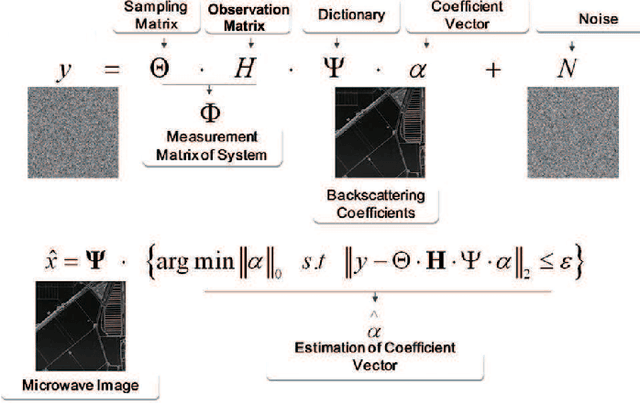
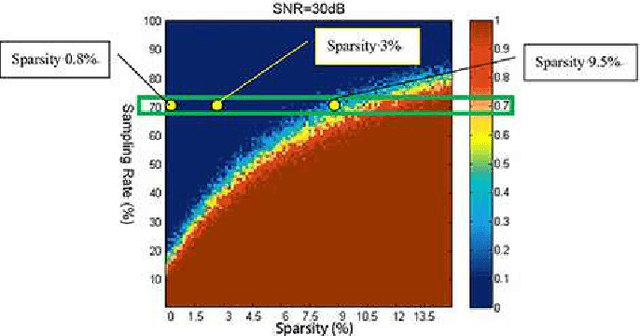
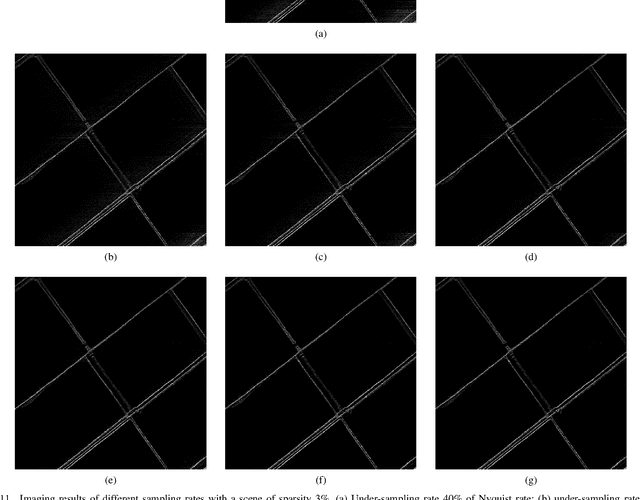
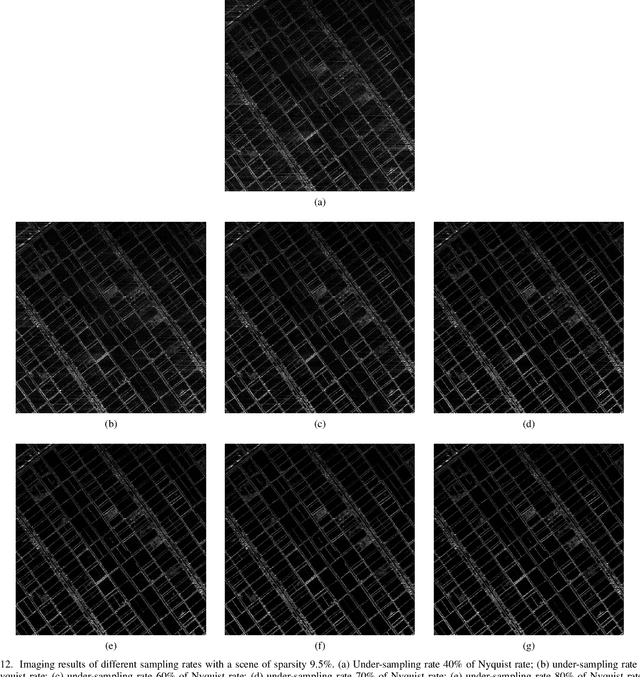
In this paper we report the first airborne experiments of sparse microwave imaging, conducted in September 2013 and May 2014, using our prototype sparse microwave imaging radar system. This is the first reported imaging radar system and airborne experiment that specially designed for sparse microwave imaging. Sparse microwave imaging is a novel concept of radar imaging, it is mainly the combination of traditional radar imaging technology and newly developed sparse signal processing theory, achieving benefits in both improving the imaging quality of current microwave imaging systems and designing optimized sparse microwave imaging radar system to reduce system sampling rate towards the sparse target scenes. During recent years, many researchers focus on related topics of sparse microwave imaging, but rarely few paid attention to prototype system design and experiment. We introduce our prototype sparse microwave imaging radar system, including its system design, hardware considerations and signal processing methods. Several design principles should be considered during the system designing, including the sampling scheme, antenna, SNR, waveform, resolution, etc. We select jittered sampling in azimuth and uniform sampling in range to balance the system complexity and performance. The imaging algorithm is accelerated $\ell_q$ regularization algorithm. To test the prototype radar system and verify the effectiveness of sparse microwave imaging framework, airborne experiments are carried out using our prototype system and we achieve the first sparse microwave image successfully. We analyze the imaging performance of prototype sparse microwave radar system with different sparsities, sampling rates, SNRs and sampling schemes, using three-dimensional phase transit diagram as the evaluation tool.