 Add to Chrome
 Add to Firefox
 Add to Edge
Offline-Online Curriculum RL for Multimodal Reasoning
Jul 26, 2026
Multimodal large language models exhibit capabilities on reasoning tasks, yet often produce flawed intermediate steps while yielding correct final answers. This behavior undermines interpretability and reliability, suggesting reliance on spurious shortcuts rather than faithful reasoning. Although efforts have explored step-level supervision, distinguishing decisive steps from redundant ones remains challenging. We propose $O^2$-CritiCuRL, a novel curriculum reinforcement learning framework that introduces critical-step awareness through an iterative offline-online paradigm. In the offline stage, $O^2$-CritiCuRL conducts multi-rollout analysis over step-annotated trajectories to estimate step-level importance, allowing the framework to distill critical reasoning steps and filter out redundant ones. In the online stage, we employ a progressive step-level reinforcement learning strategy, where truncated chains guide the model to infer missing steps and refine its reasoning, thereby sharpening its focus on critical steps and overcoming the limitations of static supervision. Extensive experiments on multimodal reasoning benchmarks show that our method achieves state-of-the-art performance while delivering superior training and inference efficiency. Code is available at https://github.com/kk0013/CritiCuRL.

ReplayCAD: Generative Diffusion Replay for Continual Anomaly Detection
May 10, 2025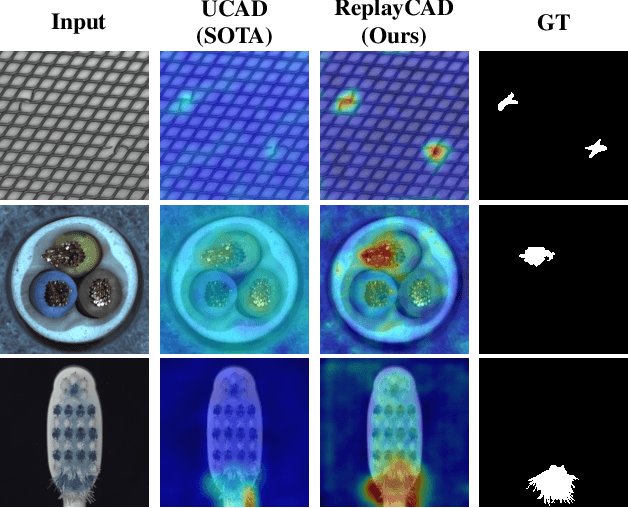
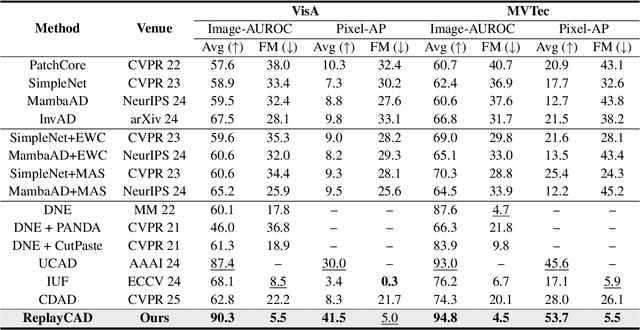
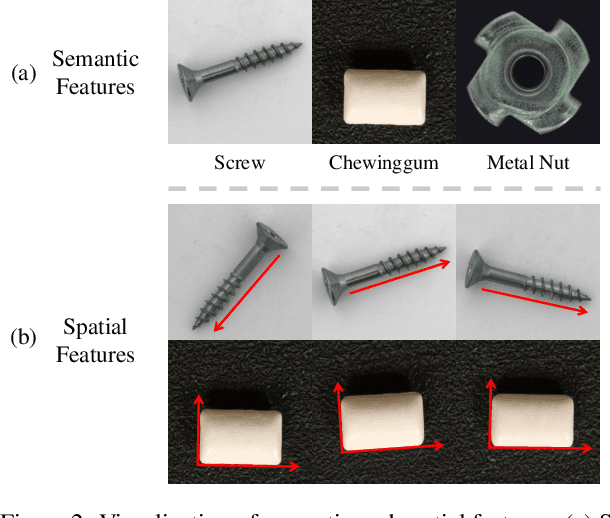
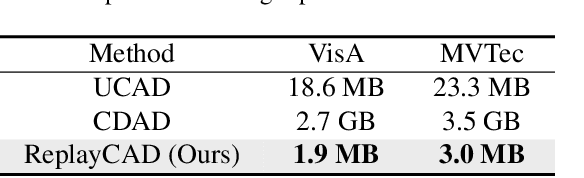
Continual Anomaly Detection (CAD) enables anomaly detection models in learning new classes while preserving knowledge of historical classes. CAD faces two key challenges: catastrophic forgetting and segmentation of small anomalous regions. Existing CAD methods store image distributions or patch features to mitigate catastrophic forgetting, but they fail to preserve pixel-level detailed features for accurate segmentation. To overcome this limitation, we propose ReplayCAD, a novel diffusion-driven generative replay framework that replay high-quality historical data, thus effectively preserving pixel-level detailed features. Specifically, we compress historical data by searching for a class semantic embedding in the conditional space of the pre-trained diffusion model, which can guide the model to replay data with fine-grained pixel details, thus improving the segmentation performance. However, relying solely on semantic features results in limited spatial diversity. Hence, we further use spatial features to guide data compression, achieving precise control of sample space, thereby generating more diverse data. Our method achieves state-of-the-art performance in both classification and segmentation, with notable improvements in segmentation: 11.5% on VisA and 8.1% on MVTec. Our source code is available at https://github.com/HULEI7/ReplayCAD.