 Add to Chrome
 Add to Firefox
 Add to Edge
3D Segment Anything Model with Visual Mamba for Diagnosing Placenta Accreta Spectrum
May 30, 2026
Placenta Accreta Spectrum (PAS) is a rare but highly dangerous obstetric disease. Early and accurate PAS diagnosis is critical for maternal health. Traditional PAS diagnosis relies on experienced doctors by analyzing the cesarean history and Magnetic Resonance Imaging (MRI) data. However, district-level hospitals often lack the expertise and resources for accurate PAS diagnosis. To address these challenges, we establish the first MRI-based PAS dataset, which includes both fine-grained segmentation and classification annotations. Meanwhile, diagnosing PAS can be significantly enhanced by segmenting lesion areas from MRI images of the uterus. To achieve automatic PAS diagnosis, we propose 3DSAMba, a novel feature learning framework for effective lesion segmentation. More specifically, we first design a 3D Segment Anything Model (SAM) and incorporate medical domain information into the model through an efficient adapter mechanism. In addition, we introduce a Multi-Level Aggregation Mamba (MLAM) to aggregate feature maps across different levels and a Fusion State Space Model (FSSM) to fuse multi-scale features from both the encoder and decoder. Finally, we apply segmentation masks to the original MRI images through element-wise multiplication, effectively isolating lesion areas for more accurate PAS diagnosis. Extensive experiments validate that our framework significantly improves the PAS diagnostic performance. To facilitate further research in PAS diagnosis, we have released the dataset and source code at https://github.com/Drchip61/PASD.

Coordination Group Formation for OnLine Coordinated Routing Mechanisms
Nov 12, 2019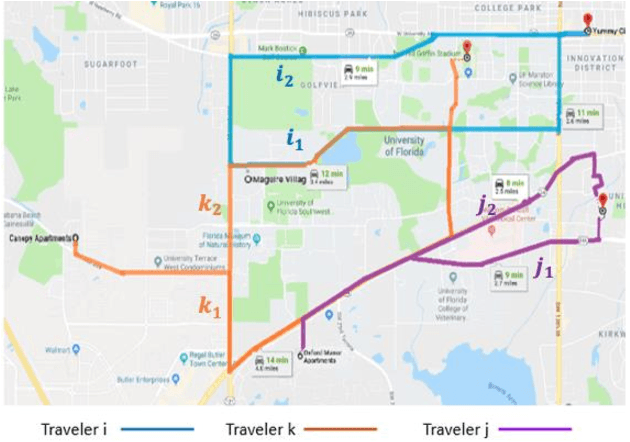
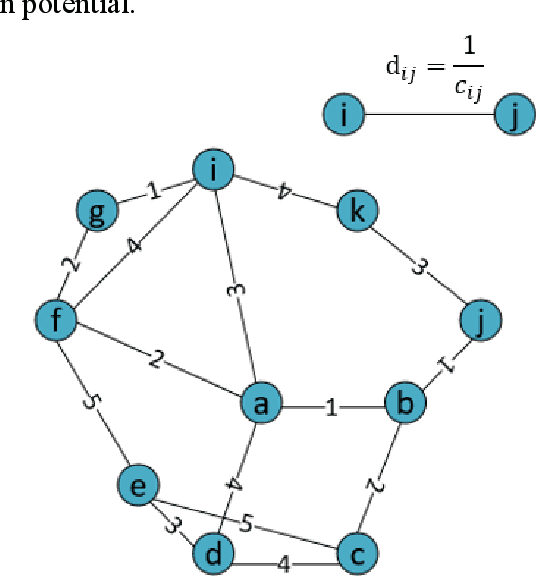
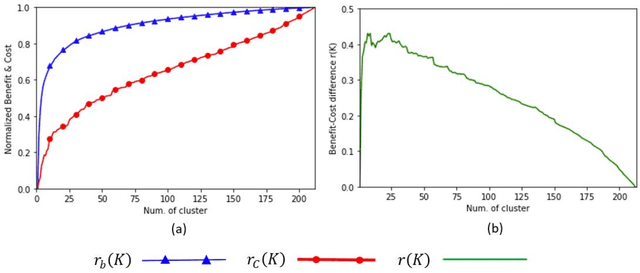
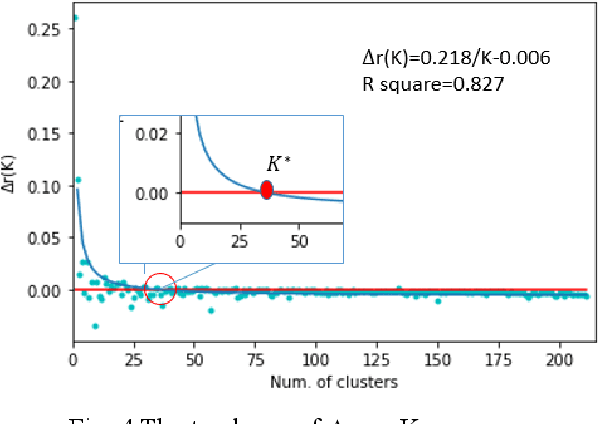
This study considers that the collective route choices of travelers en route represent a resolution of their competition on network routes. Well understanding this competition and coordinating their route choices help mitigate urban traffic congestion. Even though existing studies have developed such mechanisms (e.g., the CRM [1]), we still lack the quantitative method to evaluate the coordination penitential and identify proper coordination groups (CG) to implement the CRM. Thus, they hit prohibitive computing difficulty when implemented with many opt-in travelers. Motived by this view, this study develops mathematical approaches to quantify the coordination potential between two and among multiple travelers. Next, we develop the adaptive centroid-based clustering algorithm (ACCA), which splits travelers en route in a local network into CGs, each with proper size and strong coordination potential. Moreover, the ACCA is statistically secured to stop at a local optimal clustering solution, which balances the inner-cluster and inter-cluster coordination potential. It can be implemented by parallel computation to accelerate its computing efficiency. Furthermore, we propose a clustering based coordinated routing mechanism (CB-CRM), which implements a CRM on each individual CG. The numerical experiments built upon both Sioux Falls and Hardee city networks show that the ACCA works efficiently to form proper coordination groups so that as compared to the CRM, the CB-CRM significantly improves computation efficiency with minor system performance loss in a large network. This merit becomes more apparent under high penetration and congested traffic condition. Last, the experiments validate the good features of the ACCA as well as the value of implementing parallel computation.