 Add to Chrome
 Add to Firefox
 Add to Edge
SPARK: Security Knowledge Priming and Representation-Guided Knowledge Activation for LLM-based Secure Code Generation
Jun 15, 2026
Large language models routinely generate code with exploitable security flaws. Prior literature attributes this limitation to a lack of security expertise, steering current defense mechanisms toward heavy fine-tuning or external knowledge retrieval, which introduces significant computational overhead and data bias through redundant code examples. Contrary to this view, we argue that pretraining corpora are already rich in security material. The bottleneck is activation: without an explicit and brief cue, statistical pressure toward common training-distribution patterns suppresses the model's safety-relevant representations. We present SPARK, an inference-time security harness that activates this latent knowledge without any retraining. The harness has two parts. Component~I retrieves a few of the relevant Common Weakness Enumeration (CWE) entries for each coding task and appends a short structured cue to the prompt; this alone is enough to surface the model's existing security representations. Component~II adds a precomputed token bias to the logits at every decoding step. We obtain the bias by projecting a safe-direction vector, the unit difference between the mean safe and mean unsafe last-layer hidden states, through the language model head. The bias is computed once offline; applying it costs a single vector addition per generated token. We evaluate SPARK on 9 open-source models across C++, Java, and Python, and compare with 7 baselines spanning fine-tuning and retrieval-augmented methods. SPARK matches or improves on the best baseline in every setting while preserving HumanEval utility. We further test Component~I in a black-box setting on 7 of today's strongest models, including Claude, DeepSeek, and GPT, demonstrating the bottleneck of insecure code generation and the improvements enabled by our method.

NeST: Neuron Selective Tuning for LLM Safety
Feb 18, 2026Safety alignment is essential for the responsible deployment of large language models (LLMs). Yet, existing approaches often rely on heavyweight fine-tuning that is costly to update, audit, and maintain across model families. Full fine-tuning incurs substantial computational and storage overhead, while parameter-efficient methods such as LoRA trade efficiency for inconsistent safety gains and sensitivity to design choices. Safety intervention mechanisms such as circuit breakers reduce unsafe outputs without modifying model weights, but do not directly shape or preserve the internal representations that govern safety behavior. These limitations hinder rapid and reliable safety updates, particularly in settings where models evolve frequently or must adapt to new policies and domains. We present NeST, a lightweight, structure-aware safety alignment framework that strengthens refusal behavior by selectively adapting a small subset of safety-relevant neurons while freezing the remainder of the model. NeST aligns parameter updates with the internal organization of safety behavior by clustering functionally coherent safety neurons and enforcing shared updates within each cluster, enabling targeted and stable safety adaptation without broad model modification or inference-time overhead. We benchmark NeST against three dominant baselines: full fine-tuning, LoRA-based fine-tuning, and circuit breakers across 10 open-weight LLMs spanning multiple model families and sizes. Across all evaluated models, NeST reduces the attack success rate from an average of 44.5% to 4.36%, corresponding to a 90.2% reduction in unsafe generations, while requiring only 0.44 million trainable parameters on average. This amounts to a 17,310x decrease in updated parameters compared to full fine-tuning and a 9.25x reduction relative to LoRA, while consistently achieving stronger safety performance for alignment.
NASCTY: Neuroevolution to Attack Side-channel Leakages Yielding Convolutional Neural Networks
Jan 25, 2023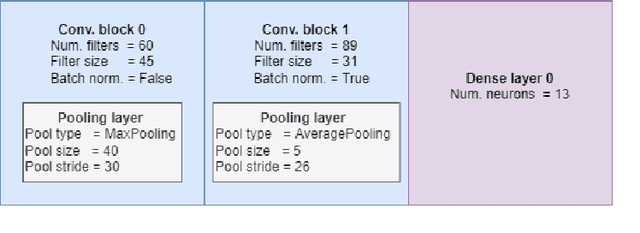
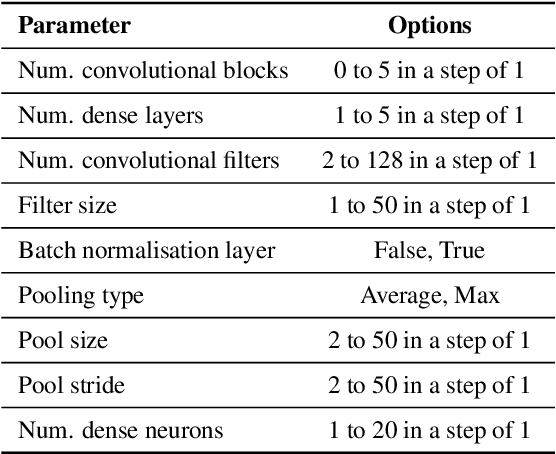
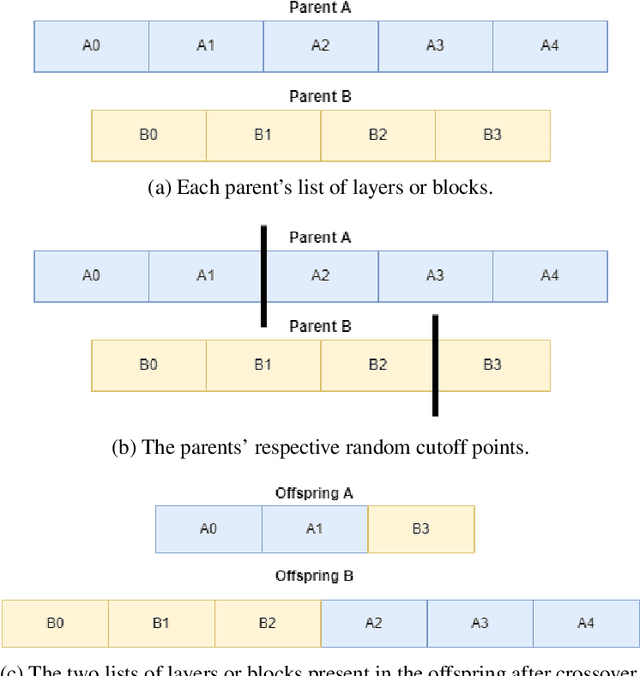
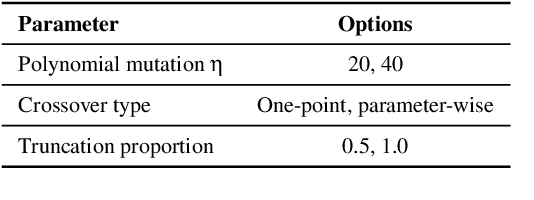
Side-channel analysis (SCA) can obtain information related to the secret key by exploiting leakages produced by the device. Researchers recently found that neural networks (NNs) can execute a powerful profiling SCA, even on targets protected with countermeasures. This paper explores the effectiveness of Neuroevolution to Attack Side-channel Traces Yielding Convolutional Neural Networks (NASCTY-CNNs), a novel genetic algorithm approach that applies genetic operators on architectures' hyperparameters to produce CNNs for side-channel analysis automatically. The results indicate that we can achieve performance close to state-of-the-art approaches on desynchronized leakages with mask protection, demonstrating that similar neuroevolution methods provide a solid venue for further research. Finally, the commonalities among the constructed NNs provide information on how NASCTY builds effective architectures and deals with the applied countermeasures.