 Add to Chrome
 Add to Firefox
 Add to Edge
PRISM: Perinuclear Ring-based Image Segmentation Method for Acute Lymphoblastic Leukemia Classification
May 13, 2026
Automated analysis of peripheral blood smears for Acute Lymphoblastic Leukemia (ALL) is hindered by low contrast and substantial variability in cytoplasmic appearance, which complicate conventional membrane-based segmentation. We found that many recent approaches rely on heavy neural architectures and extensive training, but still struggle to generalize across staining and acquisition variability. To address these limitations, we propose the Perinuclear Ring-based Image Segmentation Method (PRISM), which replaces explicit cytoplasmic delineation with adaptive concentric zones constructed around the nucleus. These perinuclear regions enable the extraction of robust cytoplasmic descriptors by integrating color information with texture statistics derived from grey-level co-occurrence patterns, without requiring accurate cell-boundary detection. A calibrated stacking ensemble of traditional classifiers leverages these descriptors to achieve a high performance, with an accuracy of 98.46% and a precision-recall AUC of 0.9937.

Energy-Aware Ensemble Learning for Coffee Leaf Disease Classification
Jan 17, 2026Coffee yields are contingent on the timely and accurate diagnosis of diseases; however, assessing leaf diseases in the field presents significant challenges. Although Artificial Intelligence (AI) vision models achieve high accuracy, their adoption is hindered by the limitations of constrained devices and intermittent connectivity. This study aims to facilitate sustainable on-device diagnosis through knowledge distillation: high-capacity Convolutional Neural Networks (CNNs) trained in data centers transfer knowledge to compact CNNs through Ensemble Learning (EL). Furthermore, dense tiny pairs were integrated through simple and optimized ensembling to enhance accuracy while adhering to strict computational and energy constraints. On a curated coffee leaf dataset, distilled tiny ensembles achieved competitive with prior work with significantly reduced energy consumption and carbon footprint. This indicates that lightweight models, when properly distilled and ensembled, can provide practical diagnostic solutions for Internet of Things (IoT) applications.
Evaluating Convolutional Neural Networks for COVID-19 classification in chest X-ray images
Dec 26, 2024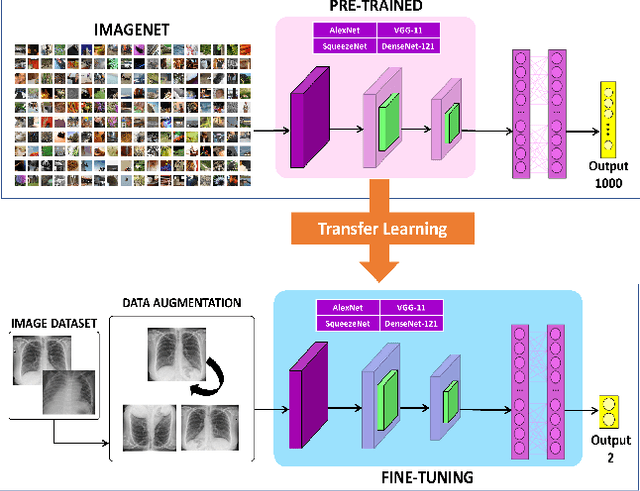
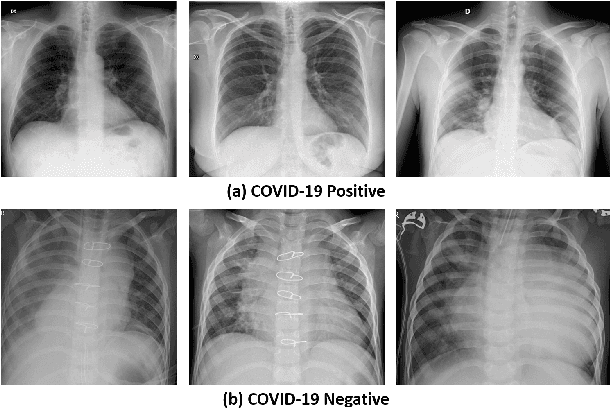

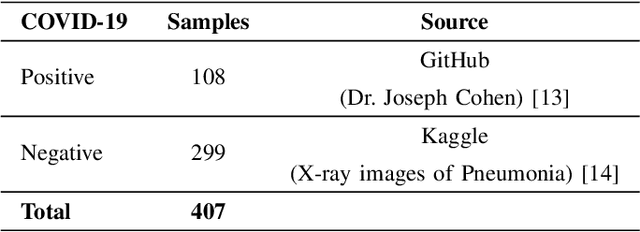
Coronavirus Disease 2019 (COVID-19) pandemic rapidly spread globally, impacting the lives of billions of people. The effective screening of infected patients is a critical step to struggle with COVID-19, and treating the patients avoiding this quickly disease spread. The need for automated and scalable methods has increased due to the unavailability of accurate automated toolkits. Recent researches using chest X-ray images suggest they include relevant information about the COVID-19 virus. Hence, applying machine learning techniques combined with radiological imaging promises to identify this disease accurately. It is straightforward to collect these images once it is spreadly shared and analyzed in the world. This paper presents a method for automatic COVID-19 detection using chest Xray images through four convolutional neural networks, namely: AlexNet, VGG-11, SqueezeNet, and DenseNet-121. This method had been providing accurate diagnostics for positive or negative COVID-19 classification. We validate our experiments using a ten-fold cross-validation procedure over the training and test sets. Our findings include the shallow fine-tuning and data augmentation strategies that can assist in dealing with the low number of positive COVID-19 images publicly available. The accuracy for all CNNs is higher than 97.00%, and the SqueezeNet model achieved the best result with 99.20%.
* 6 pages