 Add to Chrome
 Add to Firefox
 Add to Edge
Bi-CamoDiffusion: A Boundary-informed Diffusion Approach for Camouflaged Object Detection
Mar 09, 2026
Bi-CamoDiffusion is introduced, an evolution of the CamoDiffusion framework for camouflaged object detection. It integrates edge priors into early-stage embeddings via a parameter-free injection process, which enhances boundary sharpness and prevents structural ambiguity. This is governed by a unified optimization objective that balances spatial accuracy, structural constraints, and uncertainty supervision, allowing the model to capture of both the object's global context and its intricate boundary transitions. Evaluations across the CAMO, COD10K, and NC4K benchmarks show that Bi-CamoDiffusion surpasses the baseline, delivering sharper delineation of thin structures and protrusions while also minimizing false positives. Also, our model consistently outperforms existing state-of-the-art methods across all evaluated metrics, including $S_m$, $F_β^{w}$, $E_m$, and $MAE$, demonstrating a more precise object-background separation and sharper boundary recovery.

StrokeNeXt: A Siamese-encoder Approach for Brain Stroke Classification in Computed Tomography Imagery
Feb 16, 2026We present StrokeNeXt, a model for stroke classification in 2D Computed Tomography (CT) images. StrokeNeXt employs a dual-branch design with two ConvNeXt encoders, whose features are fused through a lightweight convolutional decoder based on stacked 1D operations, including a bottleneck projection and transformation layers, and a compact classification head. The model is evaluated on a curated dataset of 6,774 CT images, addressing both stroke detection and subtype classification between ischemic and hemorrhage cases. StrokeNeXt consistently outperforms convolutional and Transformer-based baselines, reaching accuracies and F1-scores of up to 0.988. Paired statistical tests confirm that the performance gains are statistically significant, while class-wise sensitivity and specificity demonstrate robust behavior across diagnostic categories. Calibration analysis shows reduced prediction error compared to competing methods, and confusion matrix results indicate low misclassification rates. In addition, the model exhibits low inference time and fast convergence.
MMLSv2: A Multimodal Dataset for Martian Landslide Detection in Remote Sensing Imagery
Feb 08, 2026We present MMLSv2, a dataset for landslide segmentation on Martian surfaces. MMLSv2 consists of multimodal imagery with seven bands: RGB, digital elevation model, slope, thermal inertia, and grayscale channels. MMLSv2 comprises 664 images distributed across training, validation, and test splits. In addition, an isolated test set of 276 images from a geographically disjoint region from the base dataset is released to evaluate spatial generalization. Experiments conducted with multiple segmentation models show that the dataset supports stable training and achieves competitive performance, while still posing challenges in fragmented, elongated, and small-scale landslide regions. Evaluation on the isolated test set leads to a noticeable performance drop, indicating increased difficulty and highlighting its value for assessing model robustness and generalization beyond standard in-distribution settings. Dataset will be available at: https://github.com/MAIN-Lab/MMLS_v2
Multi-encoder ConvNeXt Network with Smooth Attentional Feature Fusion for Multispectral Semantic Segmentation
Feb 08, 2026This work proposes MeCSAFNet, a multi-branch encoder-decoder architecture for land cover segmentation in multispectral imagery. The model separately processes visible and non-visible channels through dual ConvNeXt encoders, followed by individual decoders that reconstruct spatial information. A dedicated fusion decoder integrates intermediate features at multiple scales, combining fine spatial cues with high-level spectral representations. The feature fusion is further enhanced with CBAM attention, and the ASAU activation function contributes to stable and efficient optimization. The model is designed to process different spectral configurations, including a 4-channel (4c) input combining RGB and NIR bands, as well as a 6-channel (6c) input incorporating NDVI and NDWI indices. Experiments on the Five-Billion-Pixels (FBP) and Potsdam datasets demonstrate significant performance gains. On FBP, MeCSAFNet-base (6c) surpasses U-Net (4c) by +19.21%, U-Net (6c) by +14.72%, SegFormer (4c) by +19.62%, and SegFormer (6c) by +14.74% in mIoU. On Potsdam, MeCSAFNet-large (4c) improves over DeepLabV3+ (4c) by +6.48%, DeepLabV3+ (6c) by +5.85%, SegFormer (4c) by +9.11%, and SegFormer (6c) by +4.80% in mIoU. The model also achieves consistent gains over several recent state-of-the-art approaches. Moreover, compact variants of MeCSAFNet deliver notable performance with lower training time and reduced inference cost, supporting their deployment in resource-constrained environments.
A Decade of You Only Look Once (YOLO) for Object Detection
Apr 24, 2025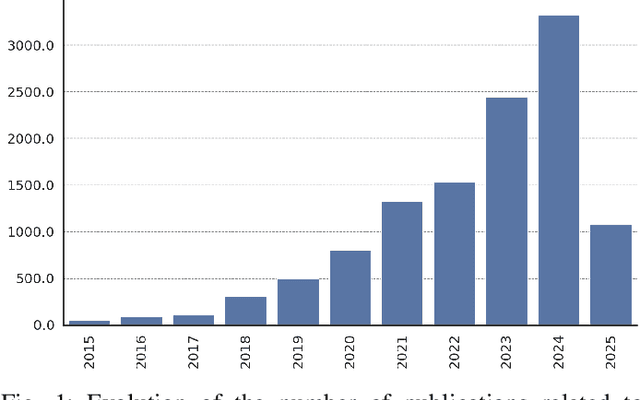
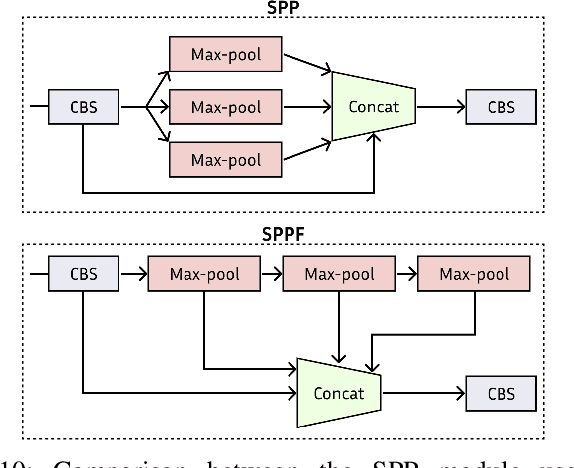

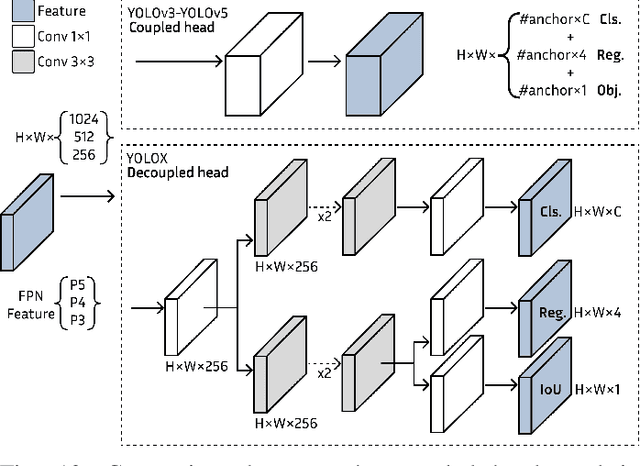
This review marks the tenth anniversary of You Only Look Once (YOLO), one of the most influential frameworks in real-time object detection. Over the past decade, YOLO has evolved from a streamlined detector into a diverse family of architectures characterized by efficient design, modular scalability, and cross-domain adaptability. The paper presents a technical overview of the main versions, highlights key architectural trends, and surveys the principal application areas in which YOLO has been adopted. It also addresses evaluation practices, ethical considerations, and potential future directions for the framework's continued development. The analysis aims to provide a comprehensive and critical perspective on YOLO's trajectory and ongoing transformation.