 Add to Chrome
 Add to Firefox
 Add to Edge
Moment-Matching Array Processing Technique for diffuse source estimation
Dec 17, 2025
Direction of Arrival (DOA) estimation is a fundamental problem in signal processing. Diffuse sources, whose power density cannot be represented with a single angular coordinate, are usually characterized based on prior assumptions, which associate the source angular density with a specific set of functions. However, these assumptions can lead to significant estimation biases when they are incorrect. This paper introduces the Moment-Matching Estimation Technique (MoMET), a low-complexity method for estimating the mean DOA, spread, and power of a narrow diffuse source without requiring prior knowledge on the source distribution. The unknown source density is characterized by its mean DOA and its first central moments, which are estimated through covariance matching techniques which fit the empirical covariance of the measurements to that modeled from the moments. The MoMET parameterization is robust to incorrect model assumptions, and numerically efficient. The asymptotic bias and covariance of the new estimator are derived and its performance is demonstrated through simulations.

Caract{é}risation d'une Source Diffuse {à} partir des Moments de sa Densit{é} de Puissance en Tomographie SAR
Mar 28, 2025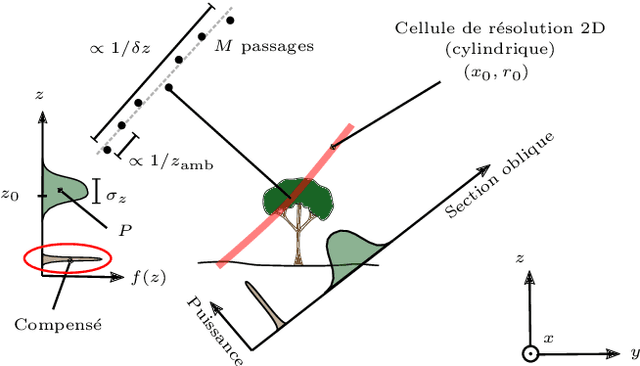
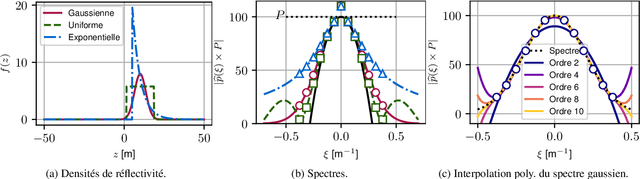
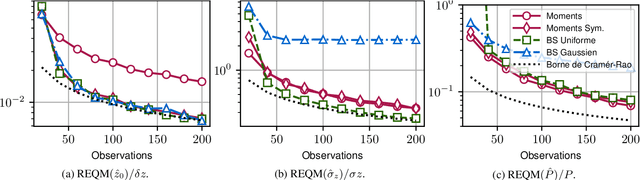
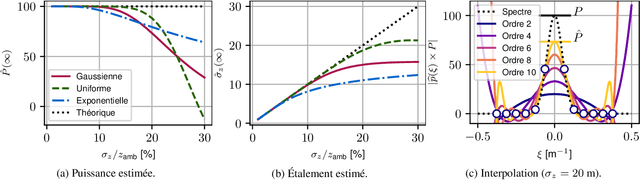
This paper presents a method for estimating the characteristics of a diffuse source from interferometric measurements in the context of SAR tomography. The proposed method is based on the use of central moments of the reflectivity density and does not use any a priori model. The method's performance is discussed as a function of antenna array parameters (resolution and ambiguity).
Moment-based Characterization of Spatially Distributed Sources in SAR Tomography
Mar 17, 2025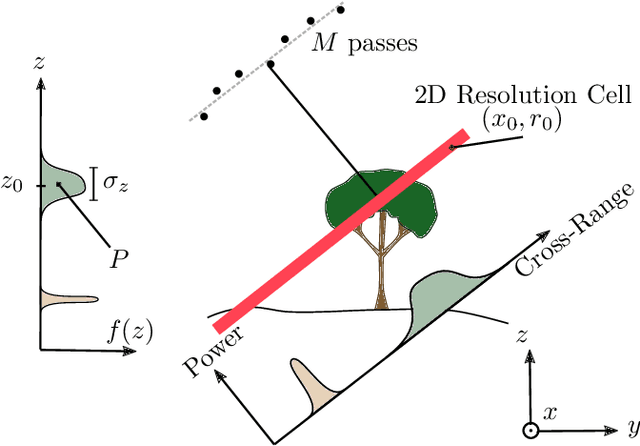
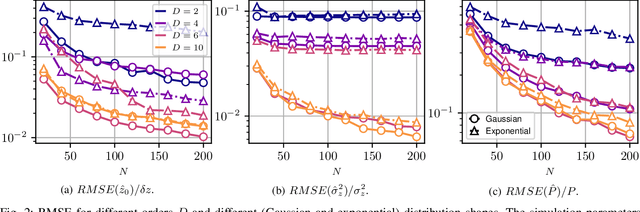
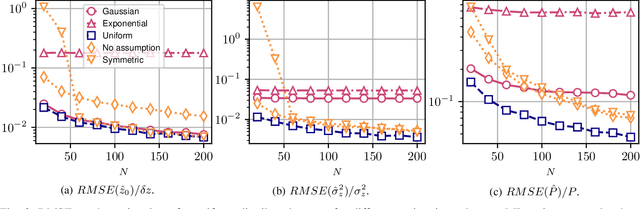
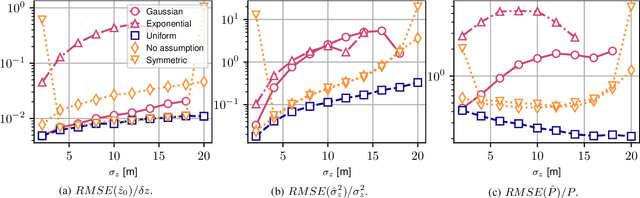
This paper presents a non-parametric method for 3-D imaging of natural volumes using Synthetic Aperture Radar tomography. This array processing-based technique aims at characterizing a spatially distributed density of incoherent sources, whose shape is imprecisely known. The proposed technique estimates the moments of the reflectivity density using a low-complexity covariance matching approach, and retrieves the mean location, dispersion, and power of the distributed source. Numerical simulations of realistic tomographic scenarios show that the proposed model-free scheme achieves better accuracy than slightly misspecified maximum likelihood estimators, derived from approximately known distribution shapes.
A Deep Learning Approach for SAR Tomographic Imaging of Forested Areas
Jan 20, 2023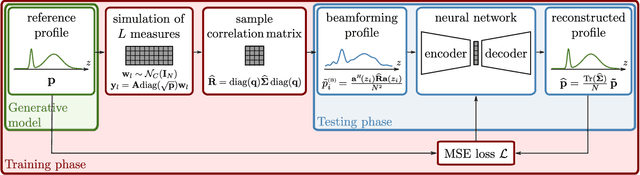
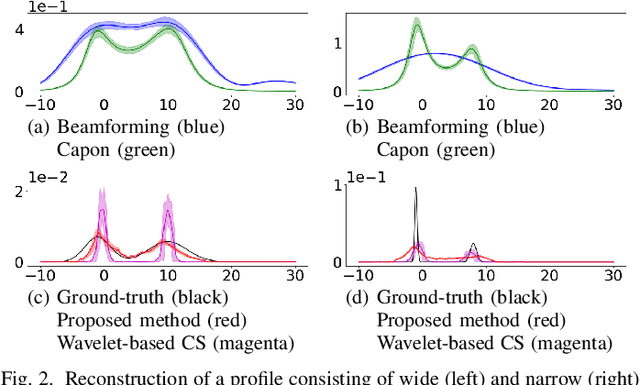
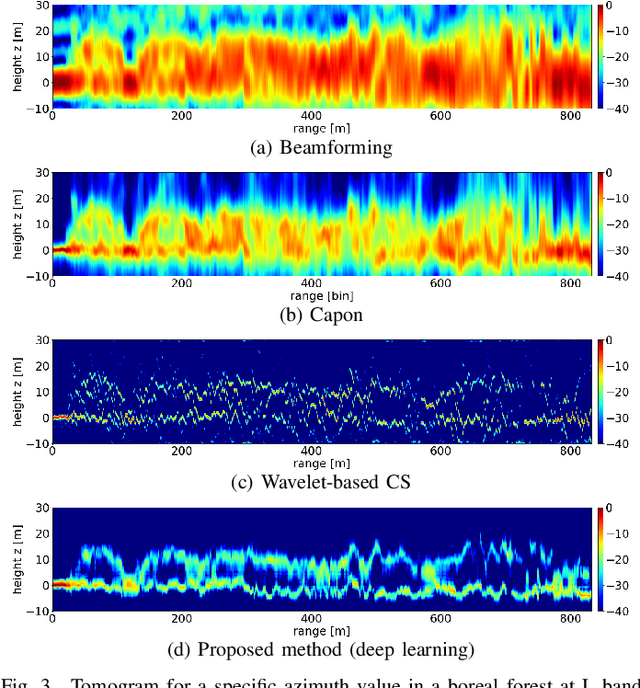
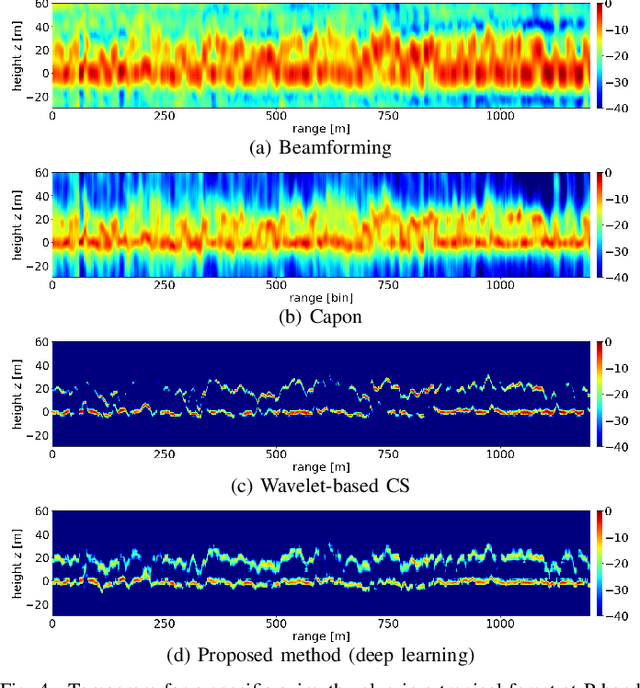
Synthetic aperture radar tomographic imaging reconstructs the three-dimensional reflectivity of a scene from a set of coherent acquisitions performed in an interferometric configuration. In forest areas, a large number of elements backscatter the radar signal within each resolution cell. To reconstruct the vertical reflectivity profile, state-of-the-art techniques perform a regularized inversion implemented in the form of iterative minimization algorithms. We show that light-weight neural networks can be trained to perform the tomographic inversion with a single feed-forward pass, leading to fast reconstructions that could better scale to the amount of data provided by the future BIOMASS mission. We train our encoder-decoder network using simulated data and validate our technique on real L-band and P-band data.
Urban Surface Reconstruction in SAR Tomography by Graph-Cuts
Mar 12, 2021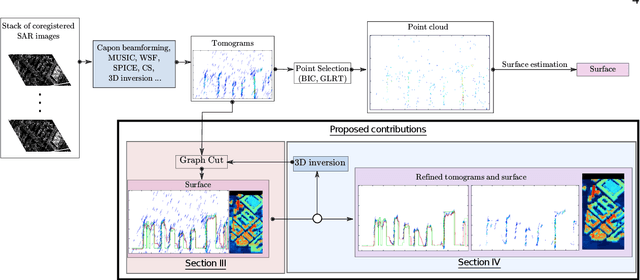
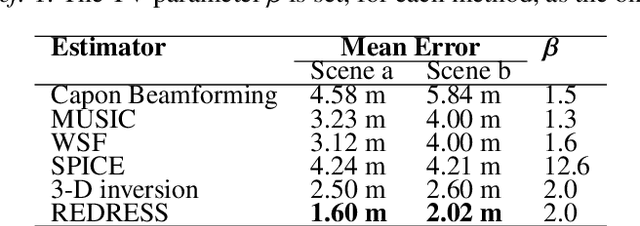
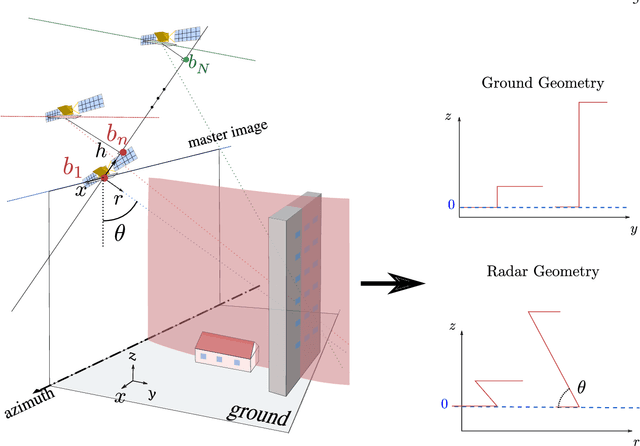
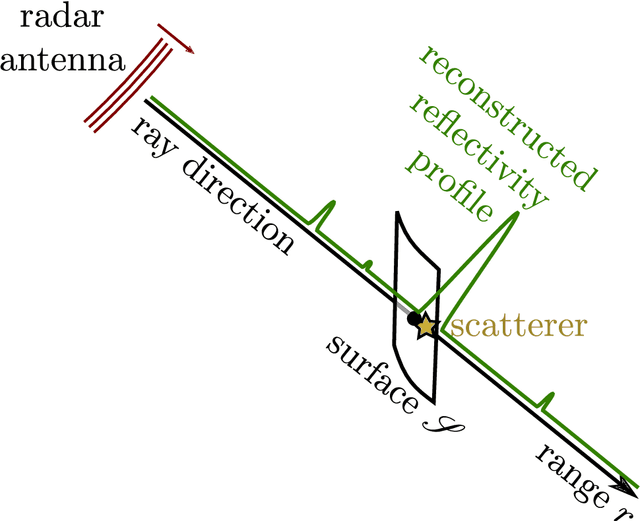
SAR (Synthetic Aperture Radar) tomography reconstructs 3-D volumes from stacks of SAR images. High-resolution satellites such as TerraSAR-X provide images that can be combined to produce 3-D models. In urban areas, sparsity priors are generally enforced during the tomographic inversion process in order to retrieve the location of scatterers seen within a given radar resolution cell. However, such priors often miss parts of the urban surfaces. Those missing parts are typically regions of flat areas such as ground or rooftops. This paper introduces a surface segmentation algorithm based on the computation of the optimal cut in a flow network. This segmentation process can be included within the 3-D reconstruction framework in order to improve the recovery of urban surfaces. Illustrations on a TerraSAR-X tomographic dataset demonstrate the potential of the approach to produce a 3-D model of urban surfaces such as ground, fa\c{c}ades and rooftops.