 Add to Chrome
 Add to Firefox
 Add to Edge
OpenAI GPT-5 System Card
Dec 19, 2025
This is the system card published alongside the OpenAI GPT-5 launch, August 2025. GPT-5 is a unified system with a smart and fast model that answers most questions, a deeper reasoning model for harder problems, and a real-time router that quickly decides which model to use based on conversation type, complexity, tool needs, and explicit intent (for example, if you say 'think hard about this' in the prompt). The router is continuously trained on real signals, including when users switch models, preference rates for responses, and measured correctness, improving over time. Once usage limits are reached, a mini version of each model handles remaining queries. This system card focuses primarily on gpt-5-thinking and gpt-5-main, while evaluations for other models are available in the appendix. The GPT-5 system not only outperforms previous models on benchmarks and answers questions more quickly, but -- more importantly -- is more useful for real-world queries. We've made significant advances in reducing hallucinations, improving instruction following, and minimizing sycophancy, and have leveled up GPT-5's performance in three of ChatGPT's most common uses: writing, coding, and health. All of the GPT-5 models additionally feature safe-completions, our latest approach to safety training to prevent disallowed content. Similarly to ChatGPT agent, we have decided to treat gpt-5-thinking as High capability in the Biological and Chemical domain under our Preparedness Framework, activating the associated safeguards. While we do not have definitive evidence that this model could meaningfully help a novice to create severe biological harm -- our defined threshold for High capability -- we have chosen to take a precautionary approach.

GDPval: Evaluating AI Model Performance on Real-World Economically Valuable Tasks
Oct 05, 2025
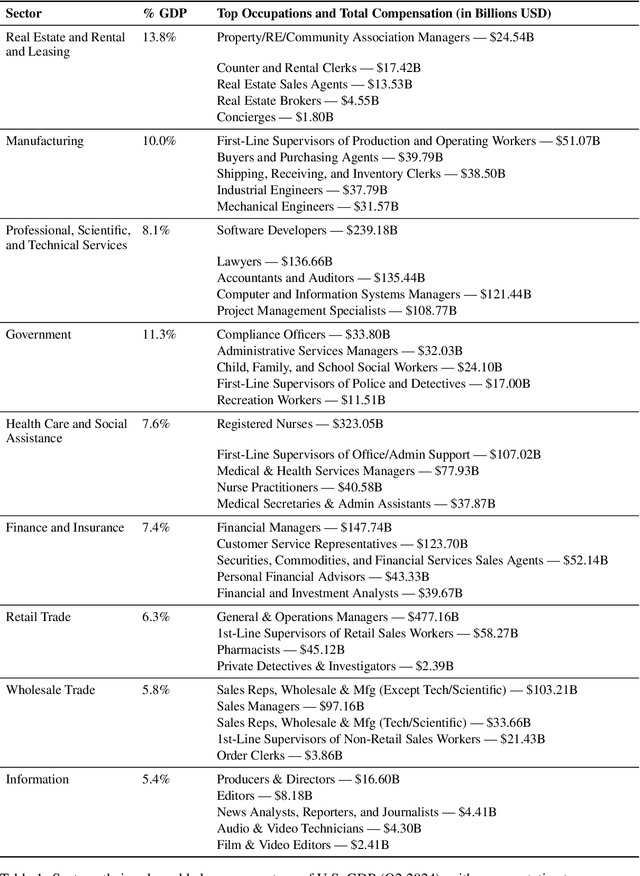
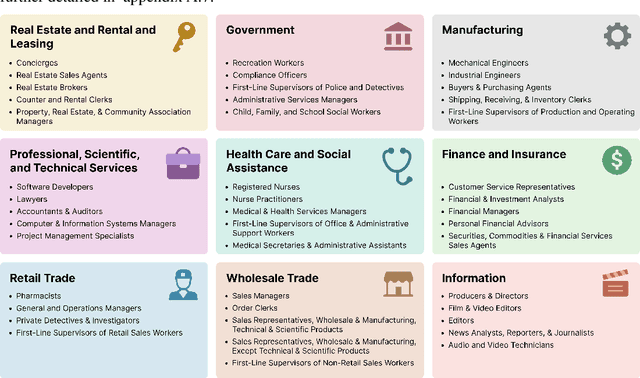
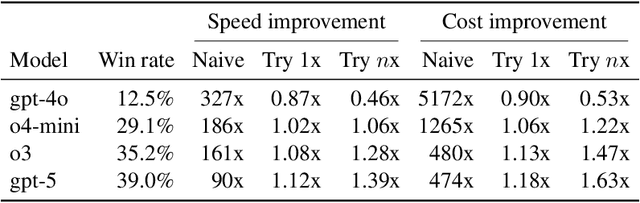
We introduce GDPval, a benchmark evaluating AI model capabilities on real-world economically valuable tasks. GDPval covers the majority of U.S. Bureau of Labor Statistics Work Activities for 44 occupations across the top 9 sectors contributing to U.S. GDP (Gross Domestic Product). Tasks are constructed from the representative work of industry professionals with an average of 14 years of experience. We find that frontier model performance on GDPval is improving roughly linearly over time, and that the current best frontier models are approaching industry experts in deliverable quality. We analyze the potential for frontier models, when paired with human oversight, to perform GDPval tasks cheaper and faster than unaided experts. We also demonstrate that increased reasoning effort, increased task context, and increased scaffolding improves model performance on GDPval. Finally, we open-source a gold subset of 220 tasks and provide a public automated grading service at evals.openai.com to facilitate future research in understanding real-world model capabilities.