 Add to Chrome
 Add to Firefox
 Add to Edge
tensorFM: Low-Rank Approximations of Cross-Order Feature Interactions
Feb 16, 2026
We address prediction problems on tabular categorical data, where each instance is defined by multiple categorical attributes, each taking values from a finite set. These attributes are often referred to as fields, and their categorical values as features. Such problems frequently arise in practical applications, including click-through rate prediction and social sciences. We introduce and analyze {tensorFM}, a new model that efficiently captures high-order interactions between attributes via a low-rank tensor approximation representing the strength of these interactions. Our model generalizes field-weighted factorization machines. Empirically, tensorFM demonstrates competitive performance with state-of-the-art methods. Additionally, its low latency makes it well-suited for time-sensitive applications, such as online advertising.

Optimal Downsampling for Imbalanced Classification with Generalized Linear Models
Oct 11, 2024


Downsampling or under-sampling is a technique that is utilized in the context of large and highly imbalanced classification models. We study optimal downsampling for imbalanced classification using generalized linear models (GLMs). We propose a pseudo maximum likelihood estimator and study its asymptotic normality in the context of increasingly imbalanced populations relative to an increasingly large sample size. We provide theoretical guarantees for the introduced estimator. Additionally, we compute the optimal downsampling rate using a criterion that balances statistical accuracy and computational efficiency. Our numerical experiments, conducted on both synthetic and empirical data, further validate our theoretical results, and demonstrate that the introduced estimator outperforms commonly available alternatives.
How Adversarial Robustness Transfers from Pre-training to Downstream Tasks
Aug 07, 2022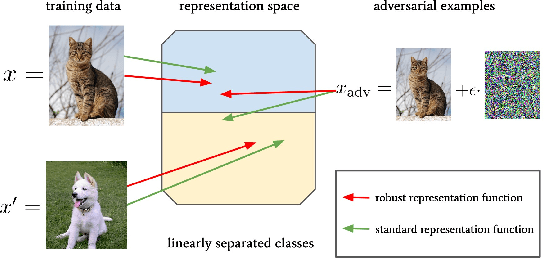
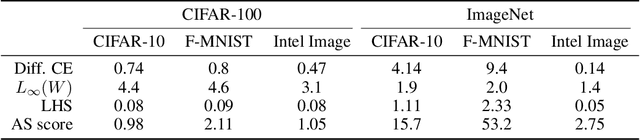
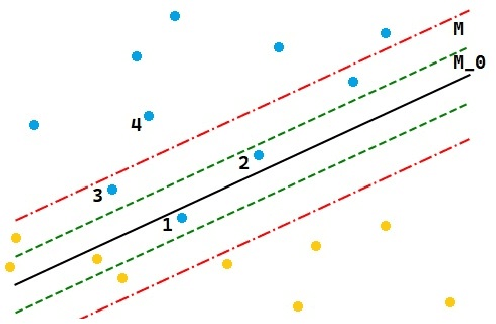
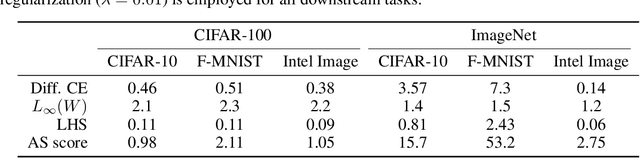
Given the rise of large-scale training regimes, adapting pre-trained models to a wide range of downstream tasks has become a standard approach in machine learning. While large benefits in empirical performance have been observed, it is not yet well understood how robustness properties transfer from a pre-trained model to a downstream task. We prove that the robustness of a predictor on downstream tasks can be bound by the robustness of its underlying representation, irrespective of the pre-training protocol. Taken together, our results precisely characterize what is required of the representation function for reliable performance upon deployment.