 Add to Chrome
 Add to Firefox
 Add to Edge
Can Conversational XAI Improve User Performance? An Experimental Study
May 19, 2026
Explainable AI (XAI) techniques aim to provide insights into predictive models and enhance user performance, yet they often fall short of these expectations. Conversational XAI assistants promise to overcome such limitations, but empirical evidence on their impact on objective performance measures remains limited. We propose an experimental design for evaluating explanation assistance through prediction accuracy, model understanding, and error identification. Using an explainable-by-design prediction model, we create conditions where users can outperform the model by identifying and compensating for systematic errors. We compare conversational assistance against Q&A-based assistance to assess which better supports users in working with model explanations. Preliminary results from testing our experimental design show that participants (N=42) in both treatments significantly outperformed the model but reveal no performance differences between assistance types and modest engagement overall. These findings inform refinements for our planned full study, including enhanced engagement interventions and investigation of the mechanisms driving improved predictions.

Quantifying Visual Properties of GAM Shape Plots: Impact on Perceived Cognitive Load and Interpretability
Sep 25, 2024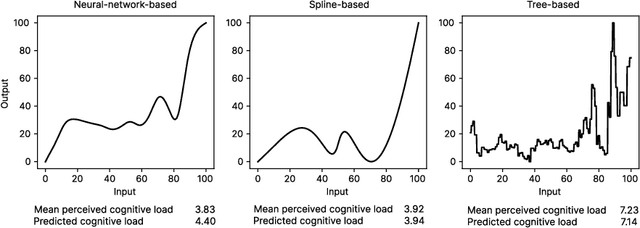
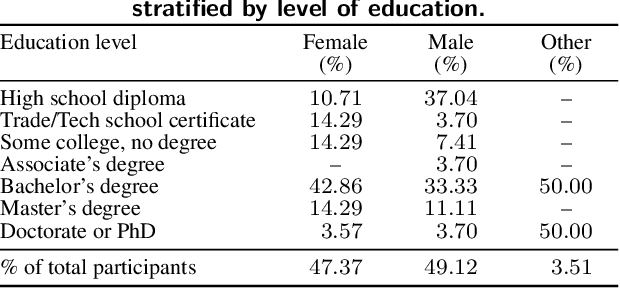
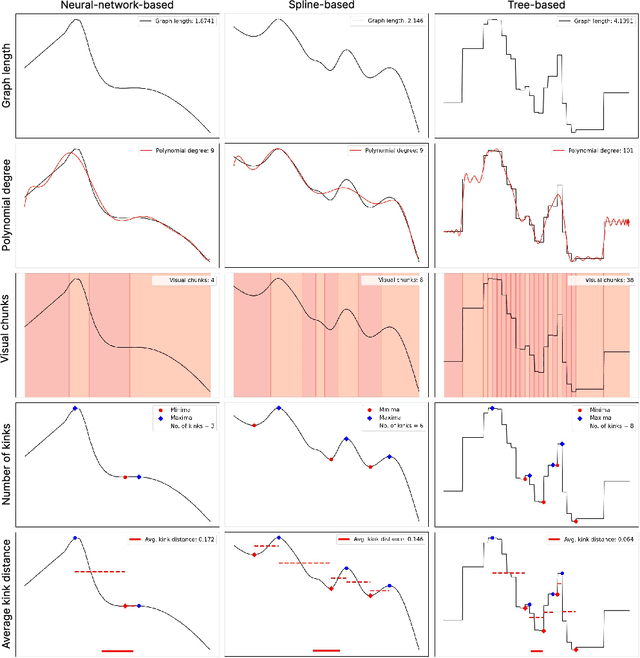
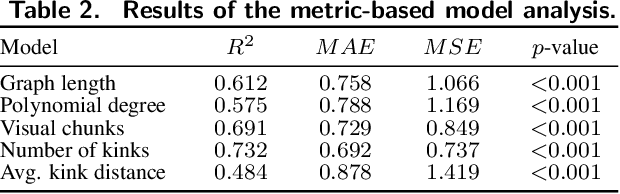
Generalized Additive Models (GAMs) offer a balance between performance and interpretability in machine learning. The interpretability aspect of GAMs is expressed through shape plots, representing the model's decision-making process. However, the visual properties of these plots, e.g. number of kinks (number of local maxima and minima), can impact their complexity and the cognitive load imposed on the viewer, compromising interpretability. Our study, including 57 participants, investigates the relationship between the visual properties of GAM shape plots and cognitive load they induce. We quantify various visual properties of shape plots and evaluate their alignment with participants' perceived cognitive load, based on 144 plots. Our results indicate that the number of kinks metric is the most effective, explaining 86.4% of the variance in users' ratings. We develop a simple model based on number of kinks that provides a practical tool for predicting cognitive load, enabling the assessment of one aspect of GAM interpretability without direct user involvement.