 Add to Chrome
 Add to Firefox
 Add to Edge
MUST: Modality-Specific Representation-Aware Transformer for Diffusion-Enhanced Survival Prediction with Missing Modality
Mar 27, 2026
Accurate survival prediction from multimodal medical data is essential for precision oncology, yet clinical deployment faces a persistent challenge: modalities are frequently incomplete due to cost constraints, technical limitations, or retrospective data availability. While recent methods attempt to address missing modalities through feature alignment or joint distribution learning, they fundamentally lack explicit modeling of the unique contributions of each modality as opposed to the information derivable from other modalities. We propose MUST (Modality-Specific representation-aware Transformer), a novel framework that explicitly decomposes each modality's representation into modality-specific and cross-modal contextualized components through algebraic constraints in a learned low-rank shared subspace. This decomposition enables precise identification of what information is lost when a modality is absent. For the truly modality-specific information that cannot be inferred from available modalities, we employ conditional latent diffusion models to generate high-quality representations conditioned on recovered shared information and learned structural priors. Extensive experiments on five TCGA cancer datasets demonstrate that MUST achieves state-of-the-art performance with complete data while maintaining robust predictions in both missing pathology and missing genomics conditions, with clinically acceptable inference latency.

CV-Attention UNet: Attention-based UNet for 3D Cerebrovascular Segmentation of Enhanced TOF-MRA Images
Nov 16, 2023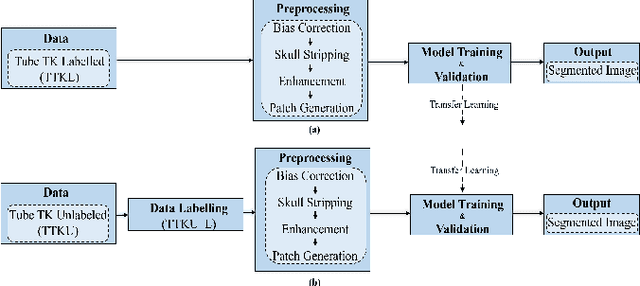
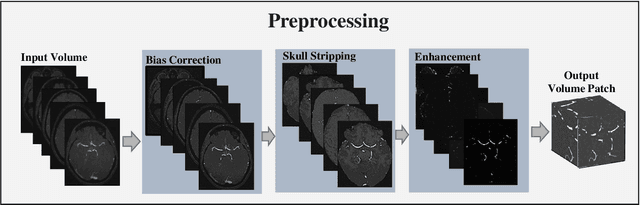
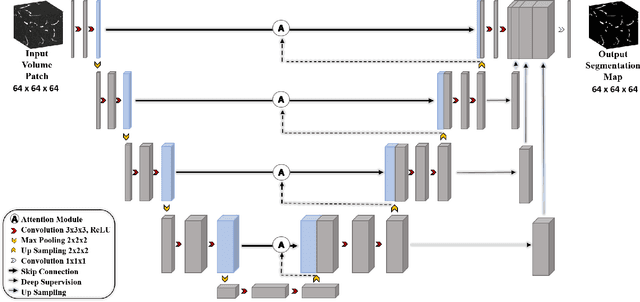
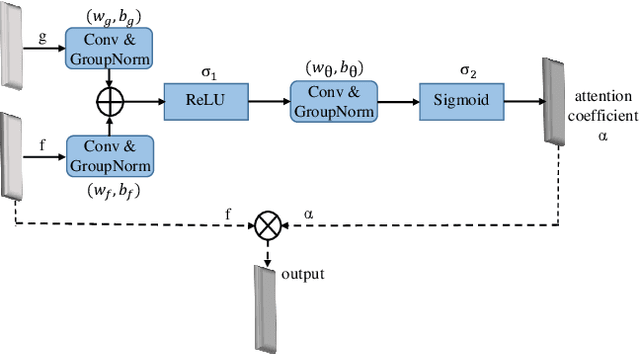
Due to the lack of automated methods, to diagnose cerebrovascular disease, time-of-flight magnetic resonance angiography (TOF-MRA) is assessed visually, making it time-consuming. The commonly used encoder-decoder architectures for cerebrovascular segmentation utilize redundant features, eventually leading to the extraction of low-level features multiple times. Additionally, convolutional neural networks (CNNs) suffer from performance degradation when the batch size is small, and deeper networks experience the vanishing gradient problem. Methods: In this paper, we attempt to solve these limitations and propose the 3D cerebrovascular attention UNet method, named CV-AttentionUNet, for precise extraction of brain vessel images. We proposed a sequence of preprocessing techniques followed by deeply supervised UNet to improve the accuracy of segmentation of the brain vessels leading to a stroke. To combine the low and high semantics, we applied the attention mechanism. This mechanism focuses on relevant associations and neglects irrelevant anatomical information. Furthermore, the inclusion of deep supervision incorporates different levels of features that prove to be beneficial for network convergence. Results: We demonstrate the efficiency of the proposed method by cross-validating with an unlabeled dataset, which was further labeled by us. We believe that the novelty of this algorithm lies in its ability to perform well on both labeled and unlabeled data with image processing-based enhancement. The results indicate that our method performed better than the existing state-of-the-art methods on the TubeTK dataset. Conclusion: The proposed method will help in accurate segmentation of cerebrovascular structure leading to stroke