 Add to Chrome
 Add to Firefox
 Add to Edge
IoT-Enabled Autonomous Maritime Navigation in Smart Ports: A Curriculum-Guided Shared Policy Learning Framework
Aug 12, 2026
As smart port infrastructures increasingly rely on autonomous maritime devices enabled by the Internet of Things (IoT), ensuring reliable onboard navigation intelligence has become a critical challenge for safe and scalable operations in congested waterways. This paper investigates onboard autonomous navigation for such IoT devices under partial observability and dense traffic conditions. A curriculum-guided reinforcement learning framework with a shared recurrent policy is developed to enhance temporal reasoning, deployment scalability, and robustness of edge-level decision-making. Centralized training is adopted as an offline design-time strategy, while all navigation actions are executed fully onboard, consistent with IoT edge intelligence paradigms. Extensive simulations in multiple realistic port environments demonstrate that the proposed approach improves navigation reliability, collision avoidance, and training stability compared with standard baseline methods, and generalizes effectively to previously unseen high-density scenarios. The results indicate that curriculum-guided shared learning provides a practical solution for scalable deployment of IoT-enabled autonomous maritime devices in smart port operations.

Random vector functional link neural network based ensemble deep learning for short-term load forecasting
Jul 30, 2021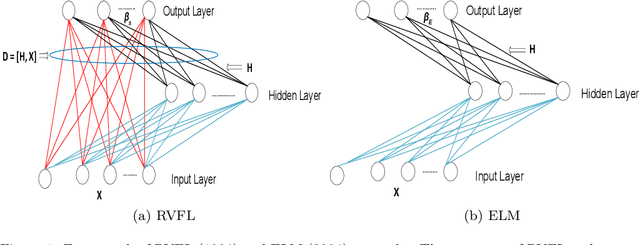
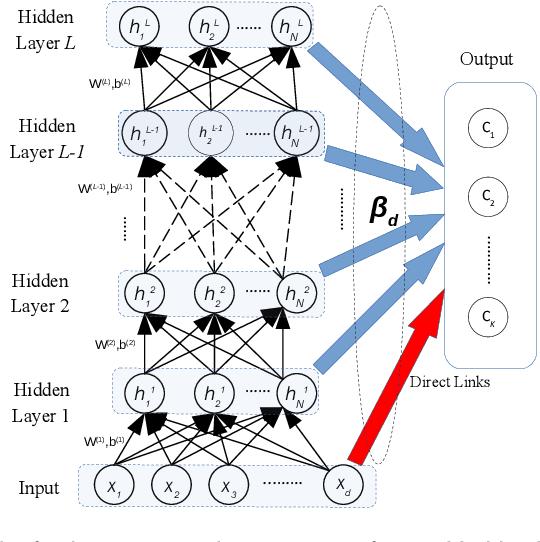
Electricity load forecasting is crucial for the power systems' planning and maintenance. However, its un-stationary and non-linear characteristics impose significant difficulties in anticipating future demand. This paper proposes a novel ensemble deep Random Vector Functional Link (edRVFL) network for electricity load forecasting. The weights of hidden layers are randomly initialized and kept fixed during the training process. The hidden layers are stacked to enforce deep representation learning. Then, the model generates the forecasts by ensembling the outputs of each layer. Moreover, we also propose to augment the random enhancement features by empirical wavelet transformation (EWT). The raw load data is decomposed by EWT in a walk-forward fashion, not introducing future data leakage problems in the decomposition process. Finally, all the sub-series generated by the EWT, including raw data, are fed into the edRVFL for forecasting purposes. The proposed model is evaluated on twenty publicly available time series from the Australian Energy Market Operator of the year 2020. The simulation results demonstrate the proposed model's superior performance over eleven forecasting methods in three error metrics and statistical tests on electricity load forecasting tasks.