 Add to Chrome
 Add to Firefox
 Add to Edge
Data-aware Static Analysis: Improving Detection of Semantic Faults in Machine Learning Code Using Data Characteristics
Jun 08, 2026
Semantic faults specific to the use of machine learning models are a common problem for machine learning developers, causing suboptimal predictions, high computational cost, or incorrect outputs. For example, one may erroneously use unscaled data to train a scale-sensitive model. Machine learning developers detect these faults after training their models and manually analyzing the results, making it an inefficient process. We propose a novel data-aware static analysis approach to detect semantic faults in machine learning code, allowing developers to reveal these bugs while writing code instead of after training the model. Our approach uses combined data and control flow analysis, and API contracts, enabling data-aware reasoning about machine learning code at a high level of abstraction. We highlight the potential of our solution by analyzing a sample of real-world machine learning notebooks, finding that we can detect faults that require a data-aware approach.

Quality Assurance of LLM-generated Code: Addressing Non-Functional Quality Characteristics
Nov 13, 2025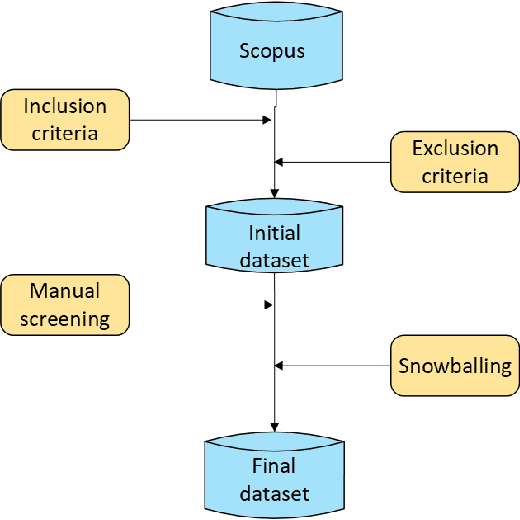
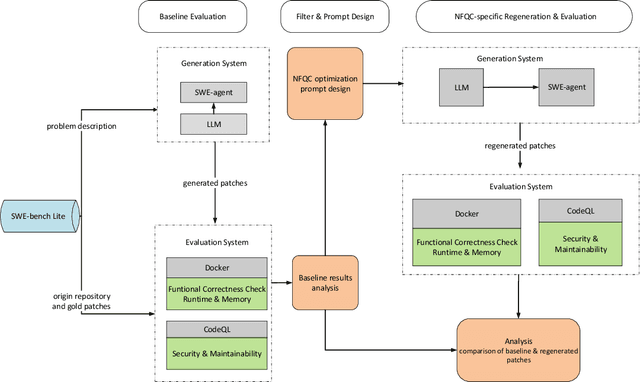
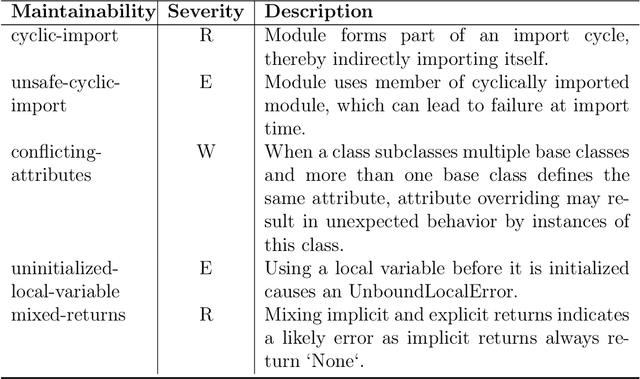
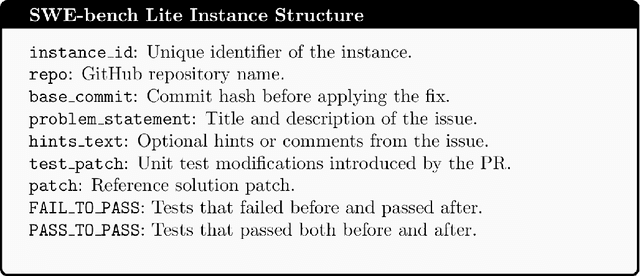
In recent years, LLMs have been widely integrated into software engineering workflows, supporting tasks like code generation. However, while these models often generate functionally correct outputs, we still lack a systematic understanding and evaluation of their non-functional qualities. Existing studies focus mainly on whether generated code passes the tests rather than whether it passes with quality. Guided by the ISO/IEC 25010 quality model, this study conducted three complementary investigations: a systematic review of 108 papers, two industry workshops with practitioners from multiple organizations, and an empirical analysis of patching real-world software issues using three LLMs. Motivated by insights from both the literature and practitioners, the empirical study examined the quality of generated patches on security, maintainability, and performance efficiency. Across the literature, we found that security and performance efficiency dominate academic attention, while maintainability and other qualities are understudied. In contrast, industry experts prioritize maintainability and readability, warning that generated code may accelerate the accumulation of technical debt. In our evaluation of functionally correct patches generated by three LLMs, improvements in one quality dimension often come at the cost of others. Runtime and memory results further show high variance across models and optimization strategies. Overall, our findings reveal a mismatch between academic focus, industry priorities, and model performance, highlighting the urgent need to integrate quality assurance mechanisms into LLM code generation pipelines to ensure that future generated code not only passes tests but truly passes with quality.