 Add to Chrome
 Add to Firefox
 Add to Edge
Emission-Aware Reinforcement Learning for Sustainable Electric Vehicle Charging and Carbon Dioxide Reduction Under Varying Renewable Penetration
May 23, 2026
The rapid growth of Electric Vehicle (EV) adoption challenges power distribution networks through peak load spikes, voltage instability, and transformer overloads from uncoordinated charging. While Model Predictive Control (MPC) and standard Reinforcement Learning (RL) methods have addressed these issues, existing approaches rarely treat real-time carbon intensity or fluctuating renewable energy (RE) availability as primary scheduling objectives, leaving substantial decarbonisation potential unrealised. This paper proposes an emission-aware RL strategy based on the Soft Actor Critic (SAC) algorithm, with a multi-objective reward that penalises carbon emissions, curtailed on-site renewables, and unmet user demand. The agent is trained within a unified benchmarking framework on the EV2Gym platform, incorporating behind-the-meter solar and wind profiles, time-varying EirGrid carbon intensity data, and realistic workplace EV behaviour across 25 Electric Vehicle Supply Equipment (EVSE) units. Nine control strategies, including heuristics, emission-aware MPC variants, and the proposed RL agent, are compared under five renewable penetration scenarios (0%-50%) over ten independent runs each. The RL agent achieves a carbon intensity as low as 23.96 grams of carbon dioxide per kilowatt-hour under 50% wind penetration, representing up to 87% emission reduction versus the uncontrolled baseline, and outperforms the external graph-based Power Distribution Network (PDN) benchmark. Transformer overload remains below 7 kWh across scenarios, against up to 1093 kWh for the As Fast As Possible (AFAP) heuristic, and renewable self-consumption reaches 52% under combined wind and solar supply. Embedding carbon intensity forecasts into the RL state and reward aligns charging with low-emission periods while preserving grid compliance and user satisfaction.

Component Based Quantum Machine Learning Explainability
Jun 14, 2025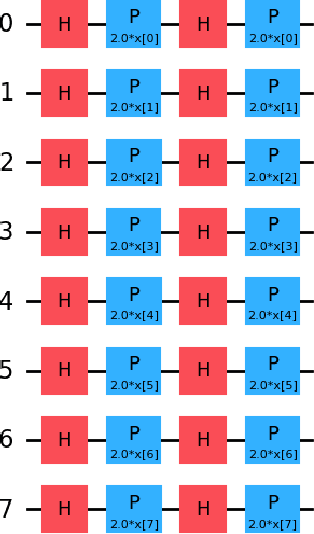
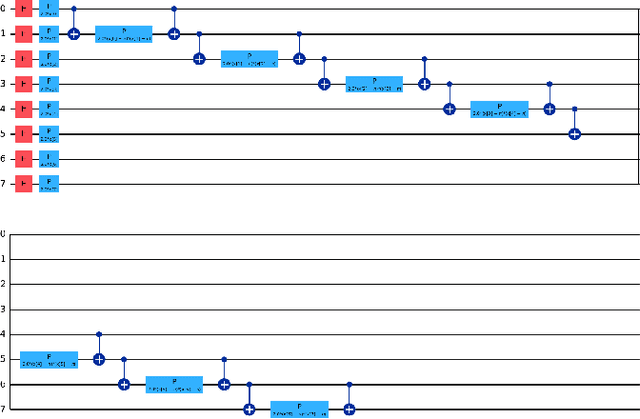
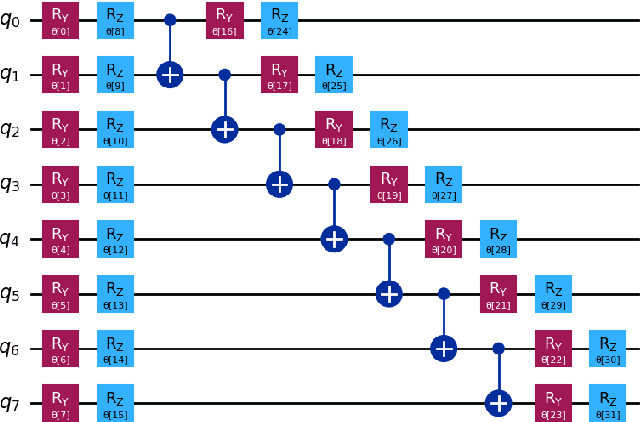
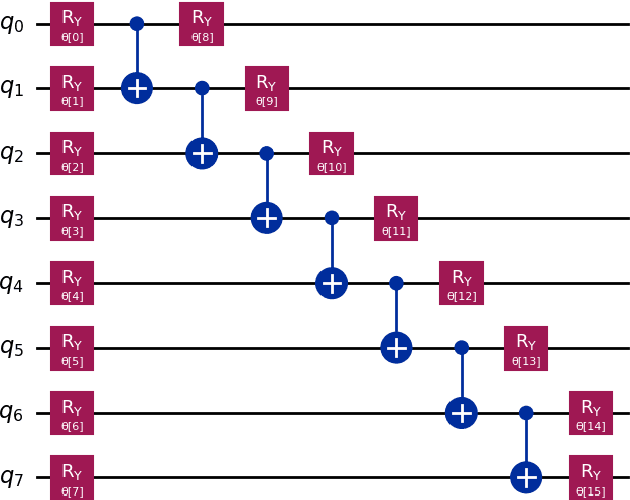
Explainable ML algorithms are designed to provide transparency and insight into their decision-making process. Explaining how ML models come to their prediction is critical in fields such as healthcare and finance, as it provides insight into how models can help detect bias in predictions and help comply with GDPR compliance in these fields. QML leverages quantum phenomena such as entanglement and superposition, offering the potential for computational speedup and greater insights compared to classical ML. However, QML models also inherit the black-box nature of their classical counterparts, requiring the development of explainability techniques to be applied to these QML models to help understand why and how a particular output was generated. This paper will explore the idea of creating a modular, explainable QML framework that splits QML algorithms into their core components, such as feature maps, variational circuits (ansatz), optimizers, kernels, and quantum-classical loops. Each component will be analyzed using explainability techniques, such as ALE and SHAP, which have been adapted to analyse the different components of these QML algorithms. By combining insights from these parts, the paper aims to infer explainability to the overall QML model.
Feature Importance and Explainability in Quantum Machine Learning
May 14, 2024Many Machine Learning (ML) models are referred to as black box models, providing no real insights into why a prediction is made. Feature importance and explainability are important for increasing transparency and trust in ML models, particularly in settings such as healthcare and finance. With quantum computing's unique capabilities, such as leveraging quantum mechanical phenomena like superposition, which can be combined with ML techniques to create the field of Quantum Machine Learning (QML), and such techniques may be applied to QML models. This article explores feature importance and explainability insights in QML compared to Classical ML models. Utilizing the widely recognized Iris dataset, classical ML algorithms such as SVM and Random Forests, are compared against hybrid quantum counterparts, implemented via IBM's Qiskit platform: the Variational Quantum Classifier (VQC) and Quantum Support Vector Classifier (QSVC). This article aims to provide a comparison of the insights generated in ML by employing permutation and leave one out feature importance methods, alongside ALE (Accumulated Local Effects) and SHAP (SHapley Additive exPlanations) explainers.