 Add to Chrome
 Add to Firefox
 Add to Edge
AI Sovereignty as National Learning Capacity: A Human-Centered Learning Mechanics Viewpoint on France, the United States, and China
May 30, 2026
Artificial Intelligence is often discussed in France in terms of investment, compute capacity, regulation, employment, sovereignty, and education. These dimensions are usually treated separately. This viewpoint paper proposes a unified interpretation: France should be understood as a \emph{national AI learning system}. Building on Human-Centered Learning Mechanics (HCLM), recently formulated as a dynamical framework for entropy-regulated representation learning, we interpret national AI development as a controlled balance between information injection and entropy dissipation. Information injection corresponds to compute, data, talent, research, capital, industrial deployment, and institutional experimentation. Entropy dissipation corresponds to organizational complexity, coordination frictions, energy constraints, regulatory uncertainty, talent mobility pressures, and opportunities to strengthen industrial absorption. The central claim is that AI sovereignty does not emerge from scale alone but from a country's capacity to regulate its own information dynamics. This paper connects HCLM with neural scaling laws, endogenous growth theory, creative destruction, and game theory. It argues that the French AI debate should move beyond the binary opposition between techno-optimism and regulation-first caution. A competitive and human-centered AI strategy requires a controlled regime in which information injection grows faster than institutional dissipation, while avoiding unstable, unequal, or energy-intensive expansion. We provide a mathematical model, measurable policy indicators, game-theoretic propositions, illustrative simulations of national AI regimes, and concrete policy implications for France. The proposed viewpoint reframes AI policy as the governance of an open, strategic, non-equilibrium learning system.

Human-Centered Learning Mechanics: A Dynamical Framework for Entropy-Regulated Representation Learning
May 21, 2026Deep learning is increasingly viewed as a dynamical process in parameter space, yet many existing theories still treat training as a closed optimization system. This view is limited for real-world AI, where models operate under uncertainty, resource constraints, distribution shift, downstream decision risks, and human feedback. We propose Human-Centered Learning Mechanics (HCLM), a dynamical and information-theoretic framework for open and controlled learning systems. The central idea is that entropy regularization is useful only when the chosen entropy surrogate generates a non-degenerate information force along the optimization trajectory. Otherwise, entropy terms may produce weak, unstable, or misaligned gradients, causing the dynamics to collapse toward ordinary loss minimization. We introduce the notion of effective entropy and study tractable geometric entropy surrogates, including variance-based and log-determinant covariance proxies. The paper makes three contributions. First, it formalizes entropy regularization through effective information force and characterizes degenerate entropy regimes. Second, it derives convergence, entropy-flow, Wasserstein-gradient-flow, and noisy-representation generalization results under explicit assumptions. Third, it offers a conditional dynamical interpretation of scaling-law-like behavior as a balance between information injection, entropy dissipation, and residual risk, without claiming an unconditional derivation of empirical neural scaling laws. Controlled representation-learning experiments support the hypothesis that geometric entropy surrogates, especially log-determinant covariance entropy, induce stronger and more stable information forces than softmax-normalized entropy.
Proof of Swarm Based Ensemble Learning for Federated Learning Applications
Jan 02, 2023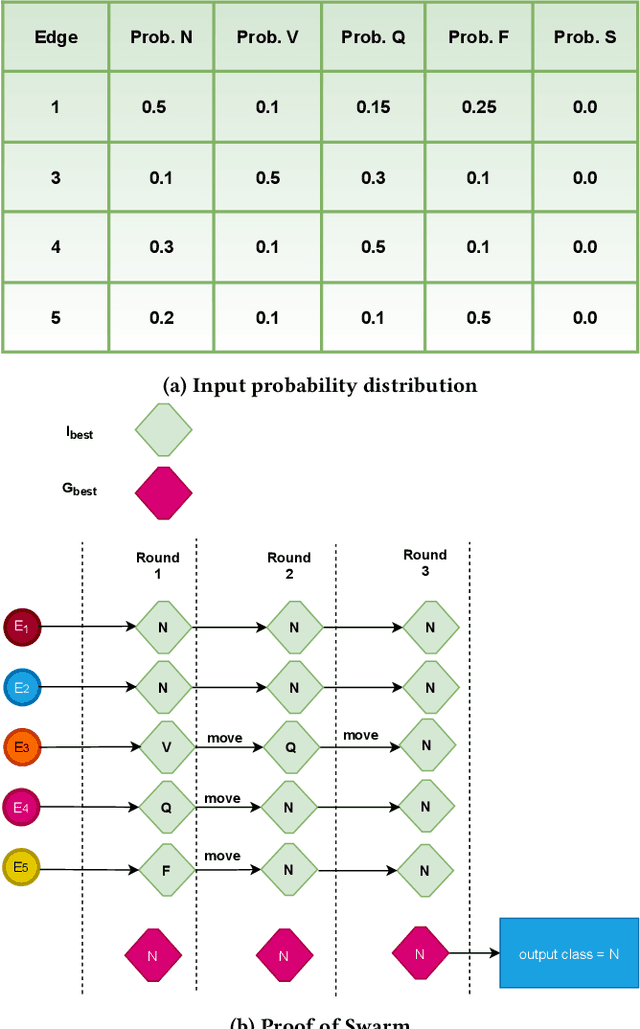
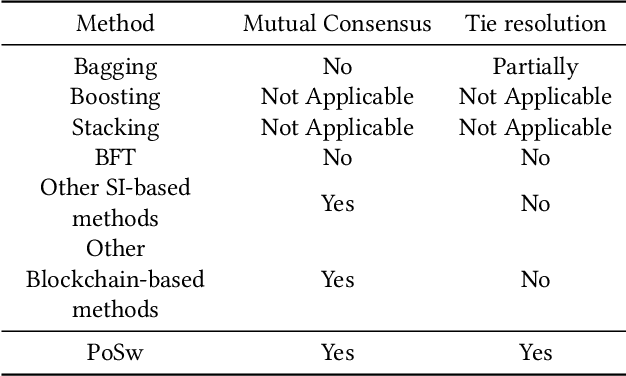
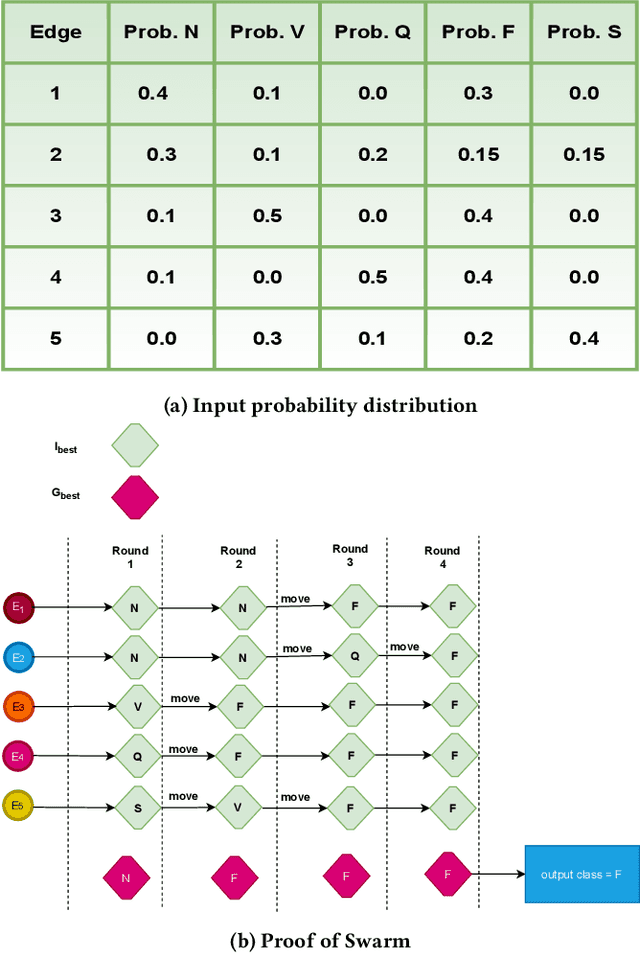
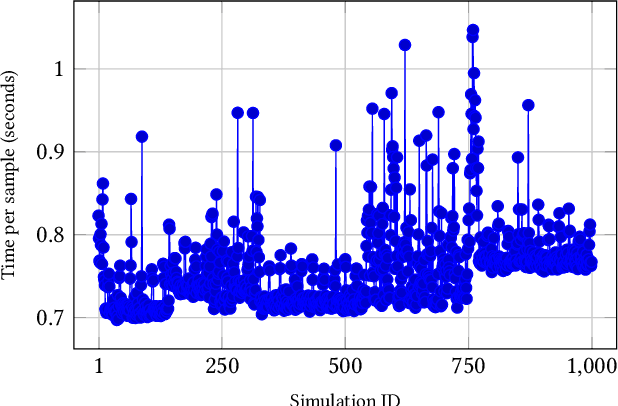
Ensemble learning combines results from multiple machine learning models in order to provide a better and optimised predictive model with reduced bias, variance and improved predictions. However, in federated learning it is not feasible to apply centralised ensemble learning directly due to privacy concerns. Hence, a mechanism is required to combine results of local models to produce a global model. Most distributed consensus algorithms, such as Byzantine fault tolerance (BFT), do not normally perform well in such applications. This is because, in such methods predictions of some of the peers are disregarded, so a majority of peers can win without even considering other peers' decisions. Additionally, the confidence score of the result of each peer is not normally taken into account, although it is an important feature to consider for ensemble learning. Moreover, the problem of a tie event is often left un-addressed by methods such as BFT. To fill these research gaps, we propose PoSw (Proof of Swarm), a novel distributed consensus algorithm for ensemble learning in a federated setting, which was inspired by particle swarm based algorithms for solving optimisation problems. The proposed algorithm is theoretically proved to always converge in a relatively small number of steps and has mechanisms to resolve tie events while trying to achieve sub-optimum solutions. We experimentally validated the performance of the proposed algorithm using ECG classification as an example application in healthcare, showing that the ensemble learning model outperformed all local models and even the FL-based global model. To the best of our knowledge, the proposed algorithm is the first attempt to make consensus over the output results of distributed models trained using federated learning.
Lightweight Transformer in Federated Setting for Human Activity Recognition
Oct 01, 2021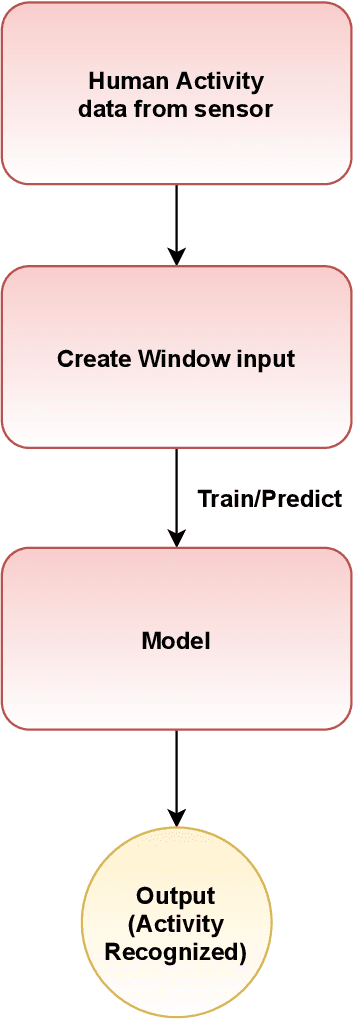
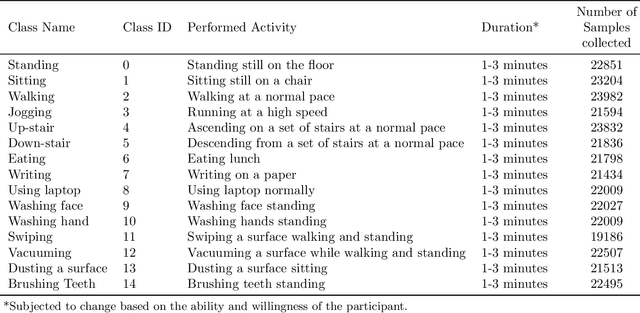

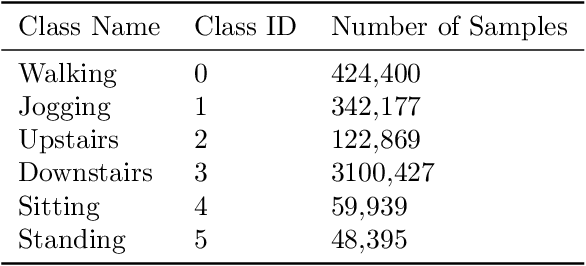
Human Activity Recognition (HAR) has been a challenging problem yet it needs to be solved. It will mainly be used for eldercare and healthcare as an assistive technology when ensemble with other technologies like Internet of Things(IoT). HAR can be achieved with the help of sensors, smartphones or images. Deep neural network techniques like artificial neural networks, convolutional neural networks and recurrent neural networks have been used in HAR, both in centralized and federated setting. However, these techniques have certain limitations. RNNs have limitation of parallelization, CNNS have the limitation of sequence length and they are computationally expensive. In this paper, to address the state of art challenges, we present a inertial sensors-based novel one patch transformer which gives the best of both RNNs and CNNs for Human activity recognition. We also design a testbed to collect real-time human activity data. The data collected is further used to train and test the proposed transformer. With the help of experiments, we show that the proposed transformer outperforms the state of art CNN and RNN based classifiers, both in federated and centralized setting. Moreover, the proposed transformer is computationally inexpensive as it uses very few parameter compared to the existing state of art CNN and RNN based classifier. Thus its more suitable for federated learning as it provides less communication and computational cost.
Designing ECG Monitoring Healthcare System with Federated Transfer Learning and Explainable AI
May 26, 2021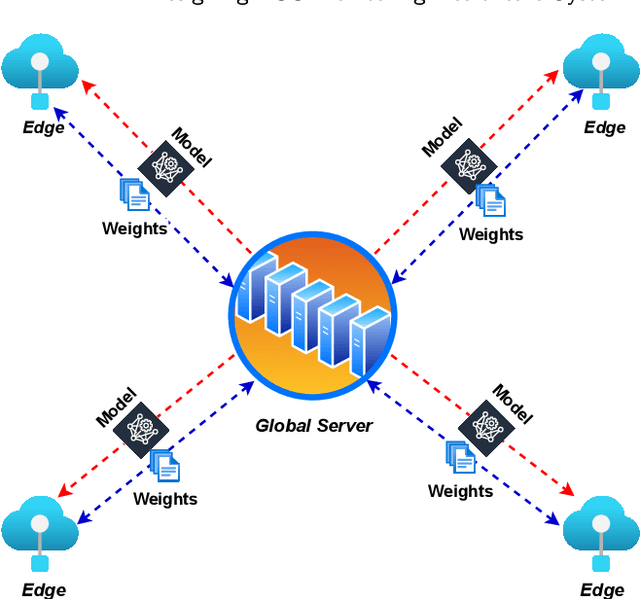
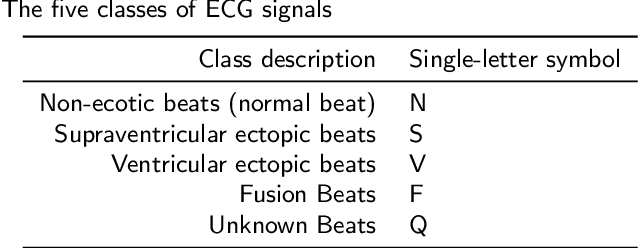
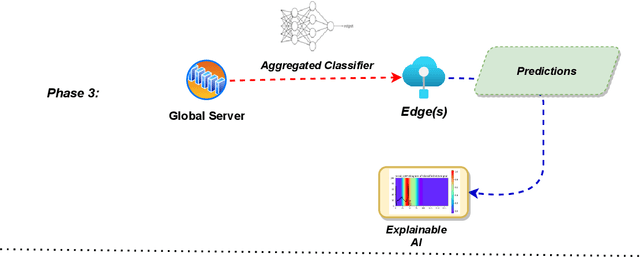
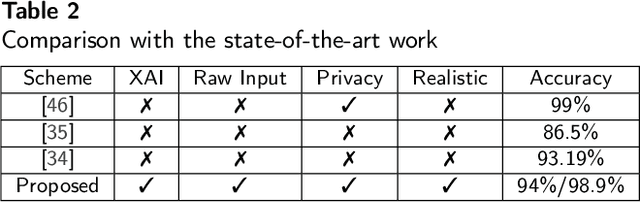
Deep learning play a vital role in classifying different arrhythmias using the electrocardiography (ECG) data. Nevertheless, training deep learning models normally requires a large amount of data and it can lead to privacy concerns. Unfortunately, a large amount of healthcare data cannot be easily collected from a single silo. Additionally, deep learning models are like black-box, with no explainability of the predicted results, which is often required in clinical healthcare. This limits the application of deep learning in real-world health systems. In this paper, we design a new explainable artificial intelligence (XAI) based deep learning framework in a federated setting for ECG-based healthcare applications. The federated setting is used to solve issues such as data availability and privacy concerns. Furthermore, the proposed framework setting effectively classifies arrhythmia's using an autoencoder and a classifier, both based on a convolutional neural network (CNN). Additionally, we propose an XAI-based module on top of the proposed classifier to explain the classification results, which help clinical practitioners make quick and reliable decisions. The proposed framework was trained and tested using the MIT-BIH Arrhythmia database. The classifier achieved accuracy up to 94% and 98% for arrhythmia detection using noisy and clean data, respectively, with five-fold cross-validation.
A Deep Reinforcement Learning Based Multi-Criteria Decision Support System for Textile Manufacturing Process Optimization
Dec 29, 2020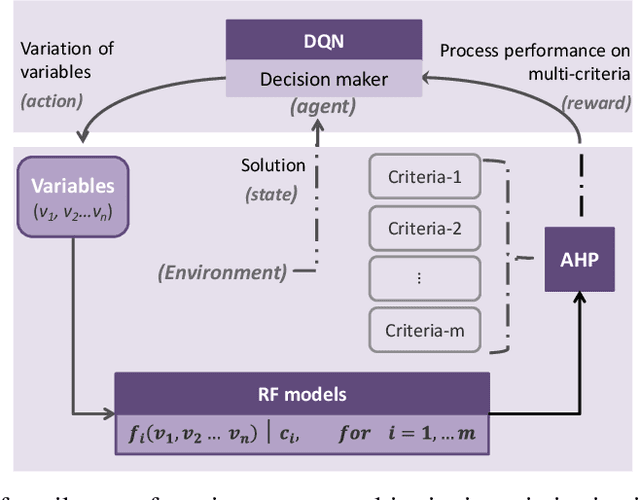
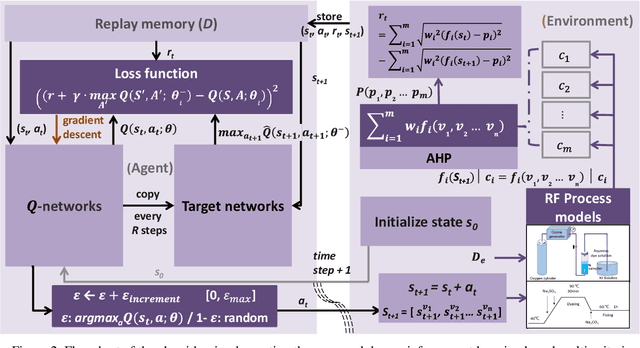
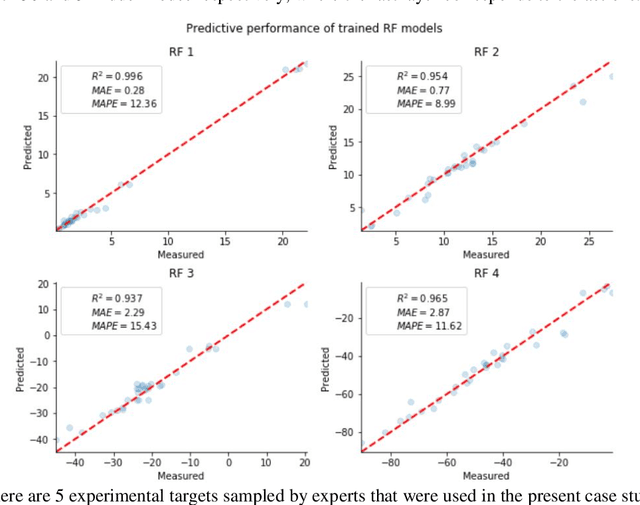
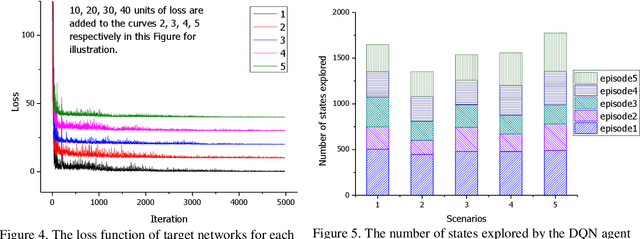
Textile manufacturing is a typical traditional industry involving high complexity in interconnected processes with limited capacity on the application of modern technologies. Decision-making in this domain generally takes multiple criteria into consideration, which usually arouses more complexity. To address this issue, the present paper proposes a decision support system that combines the intelligent data-based random forest (RF) models and a human knowledge based analytical hierarchical process (AHP) multi-criteria structure in accordance to the objective and the subjective factors of the textile manufacturing process. More importantly, the textile manufacturing process is described as the Markov decision process (MDP) paradigm, and a deep reinforcement learning scheme, the Deep Q-networks (DQN), is employed to optimize it. The effectiveness of this system has been validated in a case study of optimizing a textile ozonation process, showing that it can better master the challenging decision-making tasks in textile manufacturing processes.
* arXiv admin note: text overlap with arXiv:2012.01101
Multi-Objective Optimization of the Textile Manufacturing Process Using Deep-Q-Network Based Multi-Agent Reinforcement Learning
Dec 02, 2020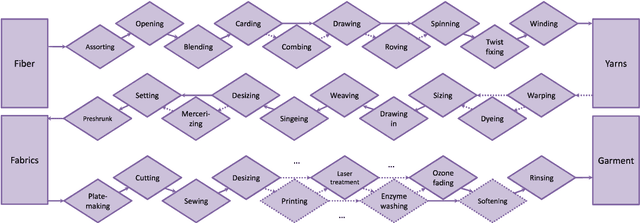
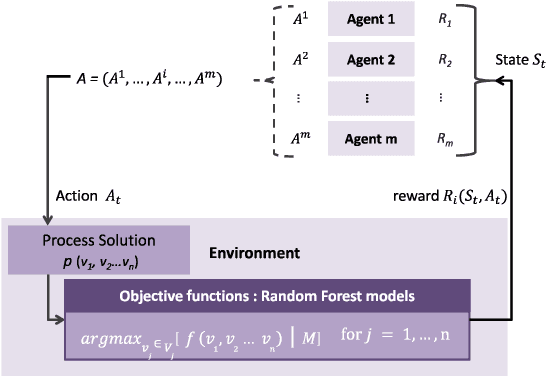
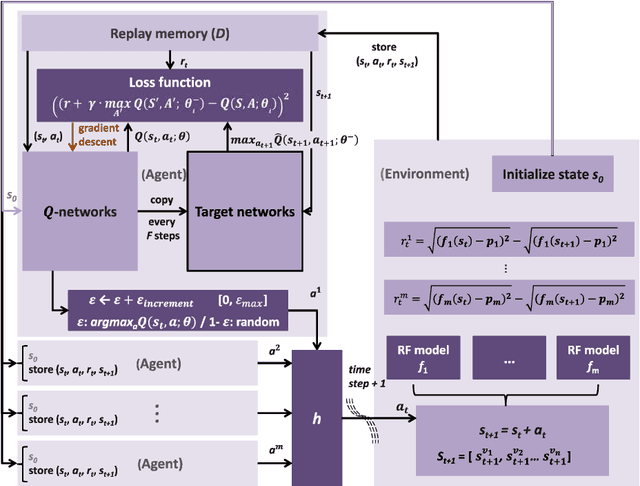
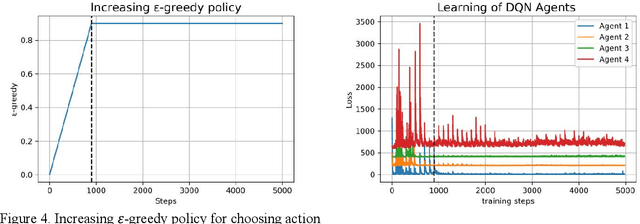
Multi-objective optimization of the textile manufacturing process is an increasing challenge because of the growing complexity involved in the development of the textile industry. The use of intelligent techniques has been often discussed in this domain, although a significant improvement from certain successful applications has been reported, the traditional methods failed to work with high-as well as human intervention. Upon which, this paper proposed a multi-agent reinforcement learning (MARL) framework to transform the optimization process into a stochastic game and introduced the deep Q-networks algorithm to train the multiple agents. A utilitarian selection mechanism was employed in the stochastic game, which (-greedy policy) in each state to avoid the interruption of multiple equilibria and achieve the correlated equilibrium optimal solutions of the optimizing process. The case study result reflects that the proposed MARL system is possible to achieve the optimal solutions for the textile ozonation process and it performs better than the traditional approaches.
A reinforcement learning based decision support system in textile manufacturing process
May 20, 2020This paper introduced a reinforcement learning based decision support system in textile manufacturing process. A solution optimization problem of color fading ozonation is discussed and set up as a Markov Decision Process (MDP) in terms of tuple {S, A, P, R}. Q-learning is used to train an agent in the interaction with the setup environment by accumulating the reward R. According to the application result, it is found that the proposed MDP model has well expressed the optimization problem of textile manufacturing process discussed in this paper, therefore the use of reinforcement learning to support decision making in this sector is conducted and proven that is applicable with promising prospects.