 Add to Chrome
 Add to Firefox
 Add to Edge
Neural dynamical systems on ferroelectric compute-in-memory for real-time forecasting
Jun 15, 2026
Neural dynamical systems are expressive temporal predictors that capture continuous-time dynamics through fine-grained state updates. However, this sequential structure maps poorly onto digital hardware optimized for dense matrix operations, a mismatch that analog neuromorphic computing, with its native continuous-time dynamics, can resolve. We introduce FerroNDS, a neuromorphic system built from two analog primitives: an integrator for temporal accumulation and an oscillator for frequency-selective filtering. We map this system onto compute-in-memory hardware based on multi-bit ferrodiodes. A 128-neuron instance of FerroNDS computes short-time Fourier transform and forecasts a 500-ms horizon for periodic, quasi-periodic, and chaotic signals. The system achieves sub-watt real-time operation with per-neuron per-inference energy of 1.64 $μ$J (200 Hz) and 0.29 $μ$J (10 kHz), 25-40$\times$ area reduction over SRAM-based digital systems, and per-layer latency of 3.18 ms (200 Hz) and 63.87 $μ$s (10 kHz). To our knowledge, this is the first end-to-end integration of a ferrodiode into a neuromorphic computational framework, establishing ferroelectric compute-in-memory as a practical substrate for analog neural dynamical systems.

Neuromorphic Computing for Low-Power Artificial Intelligence
Apr 06, 2026Classical computing is beginning to encounter fundamental limits of energy efficiency. This presents a challenge that can no longer be solved by strategies such as increasing circuit density or refining standard semiconductor processes. The growing computational and memory demands of artificial intelligence (AI) require disruptive innovation in how information is represented, stored, communicated, and processed. By leveraging novel device modalities and compute-in-memory (CIM), in addition to analog dynamics and sparse communication inspired by the brain, neuromorphic computing offers a promising path toward improvements in the energy efficiency and scalability of current AI systems. But realizing this potential is not a matter of replacing one chip with another; rather, it requires a co-design effort, spanning new materials and non-volatile device structures, novel mixed-signal circuits and architectures, and learning algorithms tailored to the physics of these substrates. This article surveys the key limitations of classical complementary metal-oxide-semiconductor (CMOS) technology and outlines how such cross-layer neuromorphic approaches may overcome them.
Accelerate & Actualize: Can 2D Materials Bridge the Gap Between Neuromorphic Hardware and the Human Brain?
Jan 24, 2023Two-dimensional (2D) materials present an exciting opportunity for devices and systems beyond the von Neumann computing architecture paradigm due to their diversity of electronic structure, physical properties, and atomically-thin, van der Waals structures that enable ease of integration with conventional electronic materials and silicon-based hardware. All major classes of non-volatile memory (NVM) devices have been demonstrated using 2D materials, including their operation as synaptic devices for applications in neuromorphic computing hardware. Their atomically-thin structure, superior physical properties, i.e., mechanical strength, electrical and thermal conductivity, as well as gate-tunable electronic properties provide performance advantages and novel functionality in NVM devices and systems. However, device performance and variability as compared to incumbent materials and technology remain major concerns for real applications. Ultimately, the progress of 2D materials as a novel class of electronic materials and specifically their application in the area of neuromorphic electronics will depend on their scalable synthesis in thin-film form with desired crystal quality, defect density, and phase purity.
MammoDL: Mammographic Breast Density Estimation using Federated Learning
Jun 11, 2022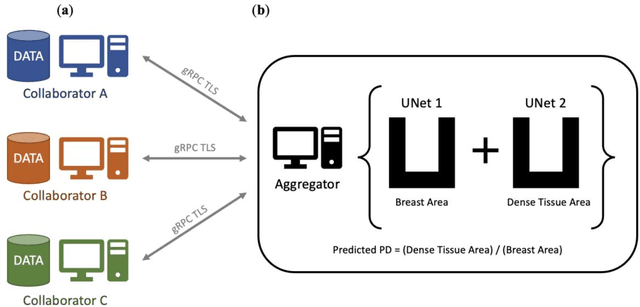
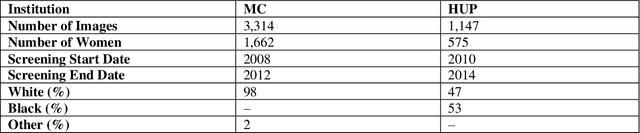
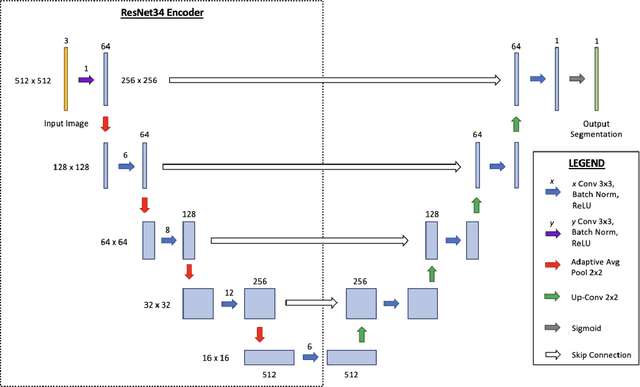

Assessing breast cancer risk from imaging remains a subjective process, in which radiologists employ computer aided detection (CAD) systems or qualitative visual assessment to estimate breast percent density (PD). More advanced machine learning (ML) models have become the most promising way to quantify breast cancer risk for early, accurate, and equitable diagnoses, but training such models in medical research is often restricted to small, single-institution data. Since patient demographics and imaging characteristics may vary considerably across imaging sites, models trained on single-institution data tend not to generalize well. In response to this problem, MammoDL is proposed, an open-source software tool that leverages UNet architecture to accurately estimate breast PD and complexity from digital mammography (DM). With the Open Federated Learning (OpenFL) library, this solution enables secure training on datasets across multiple institutions. MammoDL is a leaner, more flexible model than its predecessors, boasting improved generalization due to federation-enabled training on larger, more representative datasets.