 Add to Chrome
 Add to Firefox
 Add to Edge
Agents unlock new capabilities through Switching LoRA Adapters as a Tool (SLAaaT)
Aug 17, 2026
Post-training can unlock new capabilities and improve performance on specialized tasks, but sometimes at the cost of catastrophic forgetting in other domains. This poses a problem in long agent trajectories that compose different capabilities. We reject this tradeoff by giving an agent a tool to switch between specialized LoRA adapters mid-trace. To test its effectiveness, we compose two synthetic coding tasks that are logically simple but require specialization. We find that this allows the model to solve problems it previously could not, that the model is able to switch autonomously (and find a new strategy that beats our human heuristic baseline on one task), and that this incurs an up to an 18x reduction in capability tax compared to an agent using only one specialized adapter. Our approach also substantially outperforms spawning subagents in both task capabilities and token usage.

ClayBuddy: A Framework, Evaluation, & Mitigation of Coding Agent Failures
Jun 23, 2026Software engineering and deployment are increasingly delegated to AI coding agents. The scale of their adoption is surfacing rare, but highly destructive, failure modes. In this paper, we study these failure modes as stemming from three distinct mechanisms: underspecification, where default model behavior is unsafe; capability errors, where the safe action is available but the model does not adhere to it due to bias or capability limitations; and agent harness errors, where the model fails to execute the safe action through the harness. We assess these across 8 different evaluations, each inspired by real-life deployment failures, totaling 20 coding environments and 59 synthetic transcript templates. These evaluations act as controlled stress tests for isolating our failure mechanisms. Based on this evaluation, we propose ClayBuddy, a harness modification that molds to user preferences and can be modified by the model in-session, to mitigate these errors. By adding tools for the agent to edit its own context, an extended system prompt, a customizable command classifier, and deterministic guardrails, we show that ClayBuddy is safer across a statistically significant number of samples. Thus, we suggest concrete mitigations for current coding agents and a design philosophy for future agent harness features.
AgentArmor: A Framework, Evaluation, \& Mitigation of Coding Agent Failures
Jun 13, 2026Software engineering and deployment are increasingly being delegated to AI coding agents. The scale of their adoption is surfacing rare, but highly destructive, failure modes. In this paper, we study these failure modes as stemming from three distinct mechanisms: underspecification, where default model behavior is unsafe; capability errors, where the safe action is available but the model does not adhere to it due to bias or capability limitations; and agent harness errors, where the model fails to execute the safe action through the harness. We evaluate these across 8 different evaluations, each inspired by real-life deployment failures, totaling 20 coding environments and 59 synthetic transcript templates. Based on this evaluation, we propose AgentArmor, an agent harness modification, to mitigate these errors. By adding an extended system prompt, a separate command classifier, a ``3 strikes'' policy, deterministic guardrails, and tools for the agent to edit its own context, we show that AgentArmor is safer across a statistically significant number of samples. Thus, we suggest concrete mitigations for current coding agents and a design philosophy for future agent harness features.
Achieving Domain-Independent Certified Robustness via Knowledge Continuity
Nov 03, 2024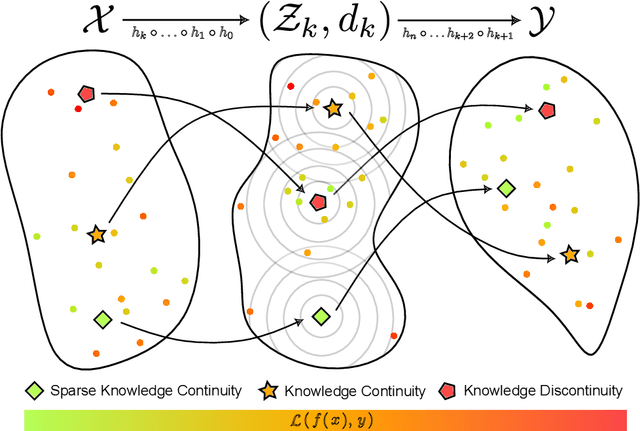
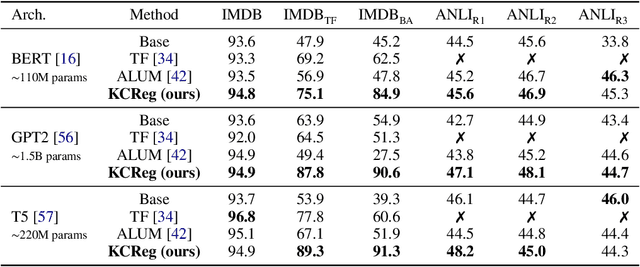
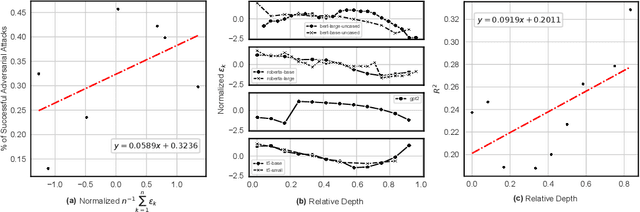
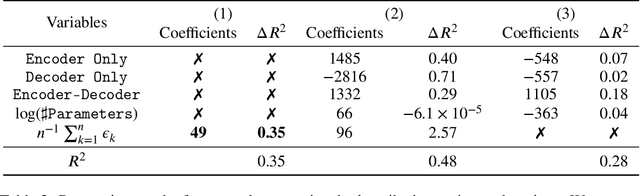
We present knowledge continuity, a novel definition inspired by Lipschitz continuity which aims to certify the robustness of neural networks across input domains (such as continuous and discrete domains in vision and language, respectively). Most existing approaches that seek to certify robustness, especially Lipschitz continuity, lie within the continuous domain with norm and distribution-dependent guarantees. In contrast, our proposed definition yields certification guarantees that depend only on the loss function and the intermediate learned metric spaces of the neural network. These bounds are independent of domain modality, norms, and distribution. We further demonstrate that the expressiveness of a model class is not at odds with its knowledge continuity. This implies that achieving robustness by maximizing knowledge continuity should not theoretically hinder inferential performance. Finally, to complement our theoretical results, we present several applications of knowledge continuity such as regularization, a certification algorithm, and show that knowledge continuity can be used to localize vulnerable components of a neural network.
$\textit{lucie}$: An Improved Python Package for Loading Datasets from the UCI Machine Learning Repository
Oct 10, 2024The University of California--Irvine (UCI) Machine Learning (ML) Repository (UCIMLR) is consistently cited as one of the most popular dataset repositories, hosting hundreds of high-impact datasets. However, a significant portion, including 28.4% of the top 250, cannot be imported via the $\textit{ucimlrepo}$ package that is provided and recommended by the UCIMLR website. Instead, they are hosted as .zip files, containing nonstandard formats that are difficult to import without additional ad hoc processing. To address this issue, here we present $\textit{lucie}$ -- $\underline{l}oad$ $\underline{U}niversity$ $\underline{C}alifornia$ $\underline{I}rvine$ $\underline{e}xamples$ -- a utility that automatically determines the data format and imports many of these previously non-importable datasets, while preserving as much of a tabular data structure as possible. $\textit{lucie}$ was designed using the top 100 most popular datasets and benchmarked on the next 130, where it resulted in a success rate of 95.4% vs. 73.1% for $\textit{ucimlrepo}$. $\textit{lucie}$ is available as a Python package on PyPI with 98% code coverage.