 Add to Chrome
 Add to Firefox
 Add to Edge
Federated generative event models for tokenized electronic health records
Aug 03, 2026
Electronic health record foundation models are limited by institutionally siloed data and substantial performance degradation under cross-site transfer. We evaluated federated training of tokenized generative event models (GEMs) across 122,251 intensive care hospitalizations from three independent health systems harmonized to the Common Longitudinal ICU Data Format. Models were assessed on 12 post-24-hour clinical prediction tasks using within-site, cross-site, centralized, and federated training configurations. GEMs achieved the highest mean within-site and cross-site ROC-AUC and were substantially more transportable than conventional supervised models: their average cross-site penalties were 0.025 ROC-AUC and 0.027 PR-AUC, compared with 0.079 and 0.089 for LightGBM. Federated Learning (FedAvg and FedAvgM) approached the performance of centralized GEM training, with most gains obtained within 5-10 communication rounds. However, centralized multi-site training provided only modest improvements over complete local training. Multi-site models were most useful when local training data were limited, with their advantage narrowing as institutional data accumulated. These findings show that federated GEM training is technically feasible and preserves most centralized performance, but that the main open challenge is learning transportable representations to translate larger, but heterogeneous data from multiple health systems into a reliable target-site benefit.

Foundation models for electronic health records: representation dynamics and transferability
Apr 14, 2025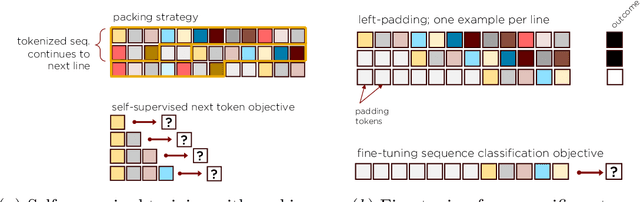
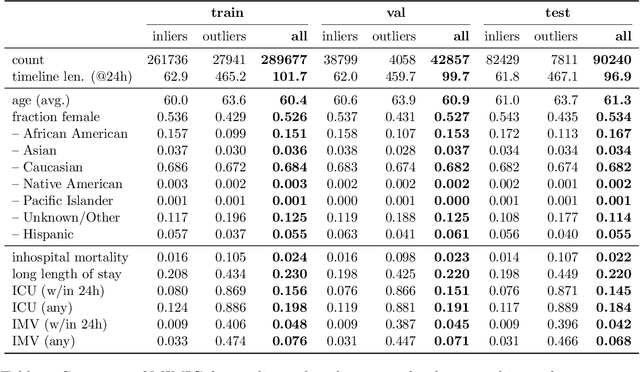
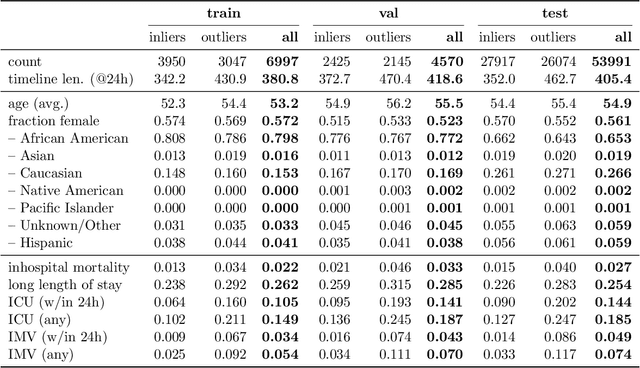
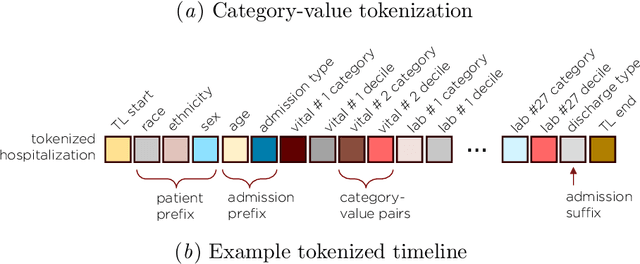
Foundation models (FMs) trained on electronic health records (EHRs) have shown strong performance on a range of clinical prediction tasks. However, adapting these models to local health systems remains challenging due to limited data availability and resource constraints. In this study, we investigated what these models learn and evaluated the transferability of an FM trained on MIMIC-IV to an institutional EHR dataset at the University of Chicago Medical Center. We assessed their ability to identify outlier patients and examined representation-space patient trajectories in relation to future clinical outcomes. We also evaluated the performance of supervised fine-tuned classifiers on both source and target datasets. Our findings offer insights into the adaptability of FMs across different healthcare systems, highlight considerations for their effective implementation, and provide an empirical analysis of the underlying factors that contribute to their predictive performance.