 Add to Chrome
 Add to Firefox
 Add to Edge
SectEval: Evaluating the Latent Sectarian Preferences of Large Language Models
Mar 13, 2026
As Large Language Models (LLMs) becomes a popular source for religious knowledge, it is important to know if it treats different groups fairly. This study is the first to measure how LLMs handle the differences between the two main sects of Islam: Sunni and Shia. We present a test called SectEval, available in both English and Hindi, consisting of 88 questions, to check the bias-ness of 15 top LLM models, both proprietary and open-weights. Our results show a major inconsistency based on language. In English, many powerful models DeepSeek-v3 and GPT-4o often favored Shia answers. However, when asked the exact same questions in Hindi, these models switched to favoring Sunni answers. This means a user could get completely different religious advice just by changing languages. We also looked at how models react to location. Advanced models Claude-3.5 changed their answers to match the user's country-giving Shia answers to a user from Iran and Sunni answers to a user from Saudi Arabia. In contrast, smaller models (especially in Hindi) ignored the user's location and stuck to a Sunni viewpoint. These findings show that AI is not neutral; its religious ``truth'' changes depending on the language you speak and the country you claim to be from. The data set is available at https://github.com/secteval/SectEval/

Photometric identification of compact galaxies, stars and quasars using multiple neural networks
Nov 15, 2022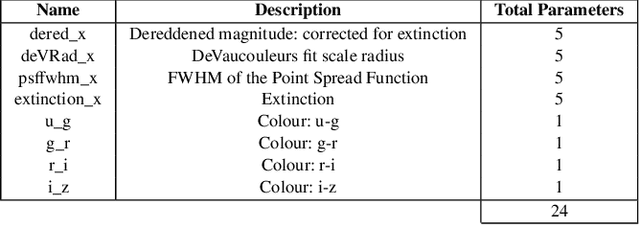
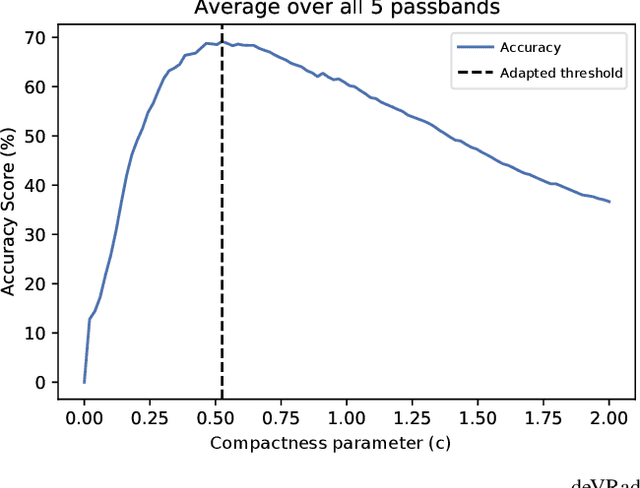
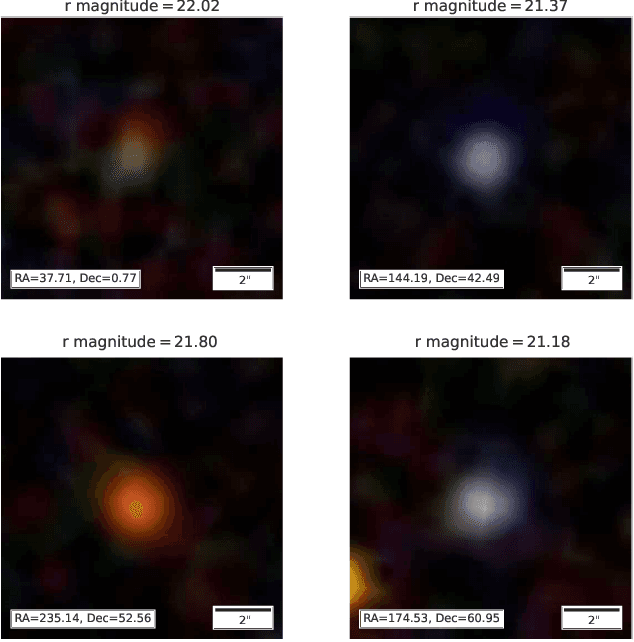
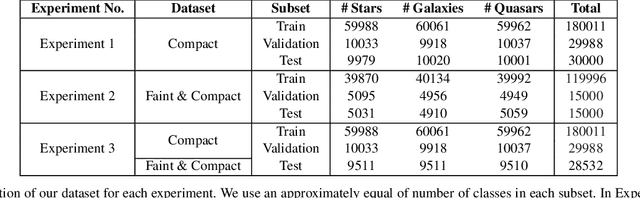
We present MargNet, a deep learning-based classifier for identifying stars, quasars and compact galaxies using photometric parameters and images from the Sloan Digital Sky Survey (SDSS) Data Release 16 (DR16) catalogue. MargNet consists of a combination of Convolutional Neural Network (CNN) and Artificial Neural Network (ANN) architectures. Using a carefully curated dataset consisting of 240,000 compact objects and an additional 150,000 faint objects, the machine learns classification directly from the data, minimising the need for human intervention. MargNet is the first classifier focusing exclusively on compact galaxies and performs better than other methods to classify compact galaxies from stars and quasars, even at fainter magnitudes. This model and feature engineering in such deep learning architectures will provide greater success in identifying objects in the ongoing and upcoming surveys, such as Dark Energy Survey (DES) and images from the Vera C. Rubin Observatory.