 Add to Chrome
 Add to Firefox
 Add to Edge
Beyond Conditional Computation: Retrieval-Augmented Genomic Foundation Models with Gengram
Jan 29, 2026
Current genomic foundation models (GFMs) rely on extensive neural computation to implicitly approximate conserved biological motifs from single-nucleotide inputs. We propose Gengram, a conditional memory module that introduces an explicit and highly efficient lookup primitive for multi-base motifs via a genomic-specific hashing scheme, establishing genomic "syntax". Integrated into the backbone of state-of-the-art GFMs, Gengram achieves substantial gains (up to 14%) across several functional genomics tasks. The module demonstrates robust architectural generalization, while further inspection of Gengram's latent space reveals the emergence of meaningful representations that align closely with fundamental biological knowledge. By establishing structured motif memory as a modeling primitive, Gengram simultaneously boosts empirical performance and mechanistic interpretability, providing a scalable and biology-aligned pathway for the next generation of GFMs. The code is available at https://github.com/zhejianglab/Genos, and the model checkpoint is available at https://huggingface.co/ZhejiangLab/Gengram.

The CausalBench challenge: A machine learning contest for gene network inference from single-cell perturbation data
Aug 29, 2023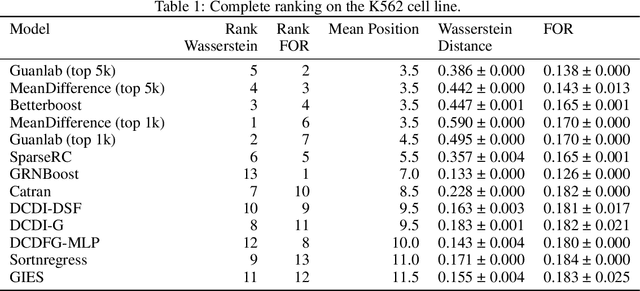

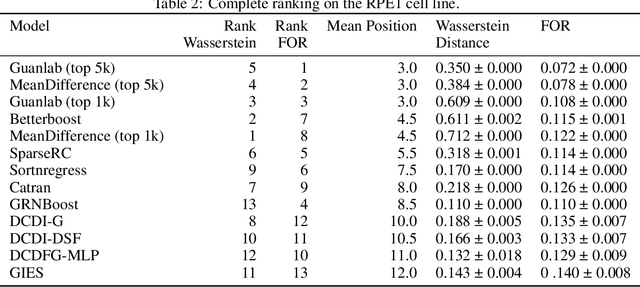
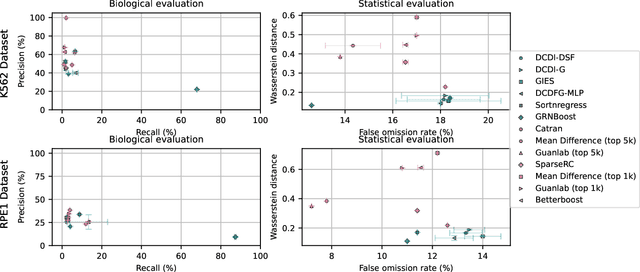
In drug discovery, mapping interactions between genes within cellular systems is a crucial early step. This helps formulate hypotheses regarding molecular mechanisms that could potentially be targeted by future medicines. The CausalBench Challenge was an initiative to invite the machine learning community to advance the state of the art in constructing gene-gene interaction networks. These networks, derived from large-scale, real-world datasets of single cells under various perturbations, are crucial for understanding the causal mechanisms underlying disease biology. Using the framework provided by the CausalBench benchmark, participants were tasked with enhancing the capacity of the state of the art methods to leverage large-scale genetic perturbation data. This report provides an analysis and summary of the methods submitted during the challenge to give a partial image of the state of the art at the time of the challenge. The winning solutions significantly improved performance compared to previous baselines, establishing a new state of the art for this critical task in biology and medicine.