 Add to Chrome
 Add to Firefox
 Add to Edge
SG-CoT: An Ambiguity-Aware Robotic Planning Framework using Scene Graph Representations
Mar 18, 2026
Ambiguity poses a major challenge to large language models (LLMs) used as robotic planners. In this letter, we present Scene Graph-Chain-of-Thought (SG-CoT), a two-stage framework where LLMs iteratively query a scene graph representation of the environment to detect and clarify ambiguities. First, a structured scene graph representation of the environment is constructed from input observations, capturing objects, their attributes, and relationships with other objects. Second, the LLM is equipped with retrieval functions to query portions of the scene graph that are relevant to the provided instruction. This grounds the reasoning process of the LLM in the observation, increasing the reliability of robotic planners under ambiguous situations. SG-CoT also allows the LLM to identify the source of ambiguity and pose a relevant disambiguation question to the user or another robot. Extensive experimentation demonstrates that SG-CoT consistently outperforms prior methods, with a minimum of 10% improvement in question accuracy and a minimum success rate increase of 4% in single-agent and 15% in multi-agent environments, validating its effectiveness for more generalizable robot planning.

SEMI-FND: Stacked Ensemble Based Multimodal Inference For Faster Fake News Detection
May 17, 2022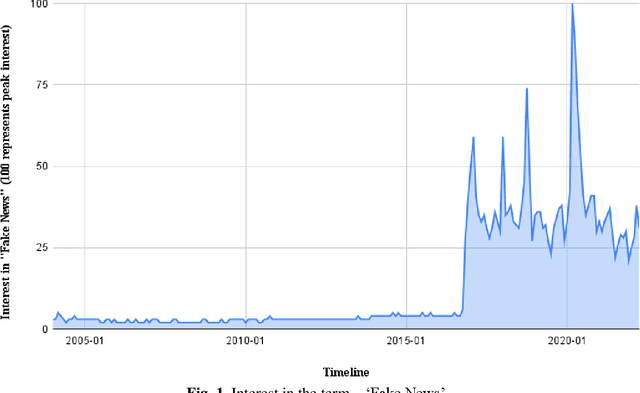


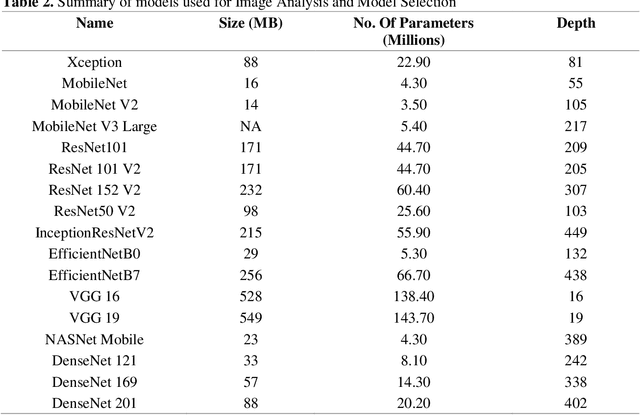
Fake News Detection (FND) is an essential field in natural language processing that aims to identify and check the truthfulness of major claims in a news article to decide the news veracity. FND finds its uses in preventing social, political and national damage caused due to misrepresentation of facts which may harm a certain section of society. Further, with the explosive rise in fake news dissemination over social media, including images and text, it has become imperative to identify fake news faster and more accurately. To solve this problem, this work investigates a novel multimodal stacked ensemble-based approach (SEMIFND) to fake news detection. Focus is also kept on ensuring faster performance with fewer parameters. Moreover, to improve multimodal performance, a deep unimodal analysis is done on the image modality to identify NasNet Mobile as the most appropriate model for the task. For text, an ensemble of BERT and ELECTRA is used. The approach was evaluated on two datasets: Twitter MediaEval and Weibo Corpus. The suggested framework offered accuracies of 85.80% and 86.83% on the Twitter and Weibo datasets respectively. These reported metrics are found to be superior when compared to similar recent works. Further, we also report a reduction in the number of parameters used in training when compared to recent relevant works. SEMI-FND offers an overall parameter reduction of at least 20% with unimodal parametric reduction on text being 60%. Therefore, based on the investigations presented, it is concluded that the application of a stacked ensembling significantly improves FND over other approaches while also improving speed.