 Add to Chrome
 Add to Firefox
 Add to Edge
Iterative Learning Control-Informed Reinforcement Learning for Batch Process Control
Mar 16, 2026
A significant limitation of Deep Reinforcement Learning (DRL) is the stochastic uncertainty in actions generated during exploration-exploitation, which poses substantial safety risks during both training and deployment. In industrial process control, the lack of formal stability and convergence guarantees further inhibits adoption of DRL methods by practitioners. Conversely, Iterative Learning Control (ILC) represents a well-established autonomous control methodology for repetitive systems, particularly in batch process optimization. ILC achieves desired control performance through iterative refinement of control laws, either between consecutive batches or within individual batches, to compensate for both repetitive and non-repetitive disturbances. This study introduces an Iterative Learning Control-Informed Reinforcement Learning (IL-CIRL) framework for training DRL controllers in dual-layer batch-to-batch and within-batch control architectures for batch processes. The proposed method incorporates Kalman filter-based state estimation within the iterative learning structure to guide DRL agents toward control policies that satisfy operational constraints and ensure stability guarantees. This approach enables the systematic design of DRL controllers for batch processes operating under multiple disturbance conditions.

Multi-Mode Process Control Using Multi-Task Inverse Reinforcement Learning
May 27, 2025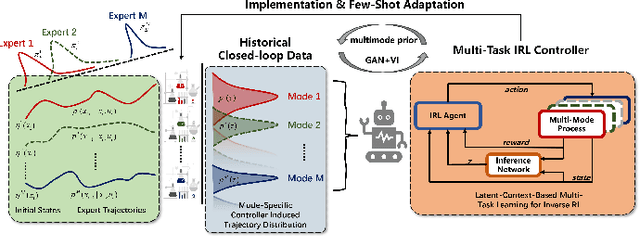
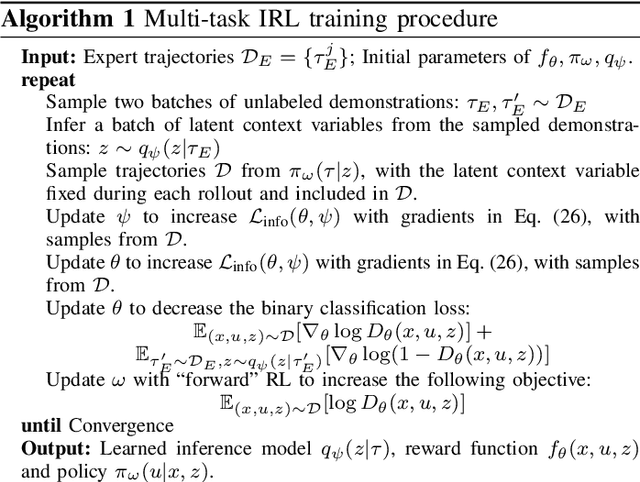
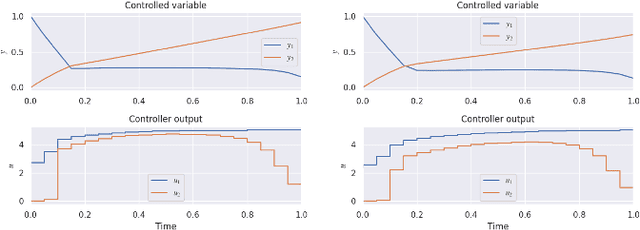
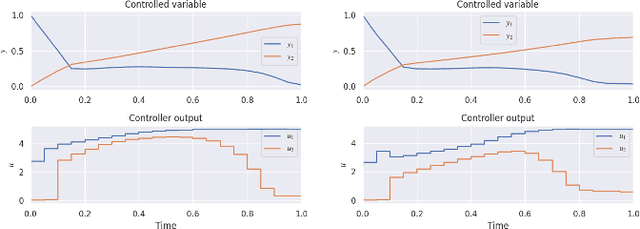
In the era of Industry 4.0 and smart manufacturing, process systems engineering must adapt to digital transformation. While reinforcement learning offers a model-free approach to process control, its applications are limited by the dependence on accurate digital twins and well-designed reward functions. To address these limitations, this paper introduces a novel framework that integrates inverse reinforcement learning (IRL) with multi-task learning for data-driven, multi-mode control design. Using historical closed-loop data as expert demonstrations, IRL extracts optimal reward functions and control policies. A latent-context variable is incorporated to distinguish modes, enabling the training of mode-specific controllers. Case studies on a continuous stirred tank reactor and a fed-batch bioreactor validate the effectiveness of this framework in handling multi-mode data and training adaptable controllers.
Facilitating Reinforcement Learning for Process Control Using Transfer Learning: Perspectives
Mar 30, 2024This paper provides insights into deep reinforcement learning (DRL) for process control from the perspective of transfer learning. We analyze the challenges of applying DRL in the field of process industries and the necessity of introducing transfer learning. Furthermore, recommendations and prospects are provided for future research directions on how transfer learning can be integrated with DRL to empower process control.
Surrogate Empowered Sim2Real Transfer of Deep Reinforcement Learning for ORC Superheat Control
Aug 05, 2023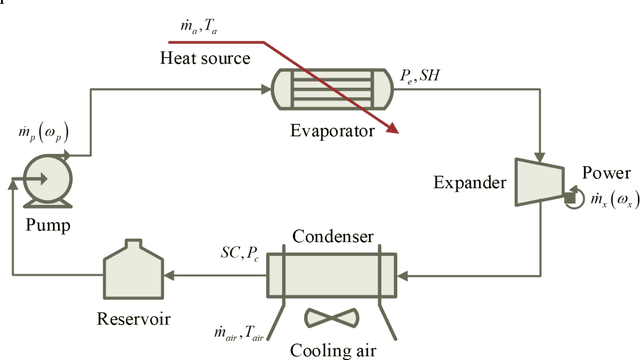

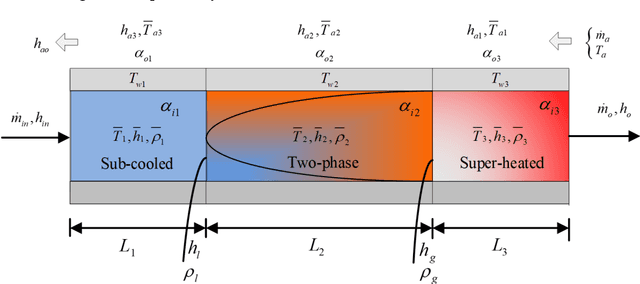
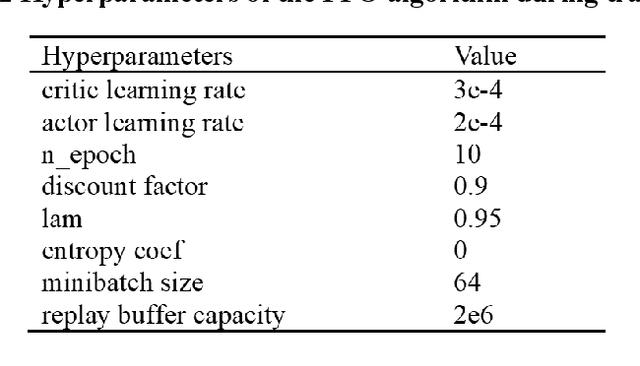
The Organic Rankine Cycle (ORC) is widely used in industrial waste heat recovery due to its simple structure and easy maintenance. However, in the context of smart manufacturing in the process industry, traditional model-based optimization control methods are unable to adapt to the varying operating conditions of the ORC system or sudden changes in operating modes. Deep reinforcement learning (DRL) has significant advantages in situations with uncertainty as it directly achieves control objectives by interacting with the environment without requiring an explicit model of the controlled plant. Nevertheless, direct application of DRL to physical ORC systems presents unacceptable safety risks, and its generalization performance under model-plant mismatch is insufficient to support ORC control requirements. Therefore, this paper proposes a Sim2Real transfer learning-based DRL control method for ORC superheat control, which aims to provide a new simple, feasible, and user-friendly solution for energy system optimization control. Experimental results show that the proposed method greatly improves the training speed of DRL in ORC control problems and solves the generalization performance issue of the agent under multiple operating conditions through Sim2Real transfer.