 Add to Chrome
 Add to Firefox
 Add to Edge
Quantifying Laziness, Decoding Suboptimality, and Context Degradation in Large Language Models
Dec 19, 2025
Large Language Models (LLMs) often exhibit behavioral artifacts such as laziness (premature truncation of responses or partial compliance with multi-part requests), decoding suboptimality (failure to select higher-quality sequences due to myopic decoding), and context degradation (forgetting or ignoring core instructions over long conversations). We conducted three controlled experiments (A, B, and C) to quantify these phenomena across several advanced LLMs (OpenAI GPT-4 variant, DeepSeek). Our results indicate widespread laziness in satisfying complex multi-part instructions: models frequently omitted required sections or failed to meet length requirements despite explicit prompting. However, we found limited evidence of decoding suboptimality in a simple reasoning task (the models' greedy answers appeared to align with their highest-confidence solution), and we observed surprising robustness against context degradation in a 200-turn chaotic conversation test - the models maintained key facts and instructions far better than expected. These findings suggest that while compliance with detailed instructions remains an open challenge, modern LLMs may internally mitigate some hypothesized failure modes (such as context forgetting) in straightforward retrieval scenarios. We discuss implications for reliability, relate our findings to prior work on instruction-following and long-context processing, and recommend strategies (such as self-refinement and dynamic prompting) to reduce laziness and bolster multi-instruction compliance.

Free Agent in Agent-Based Mixture-of-Experts Generative AI Framework
Jan 29, 2025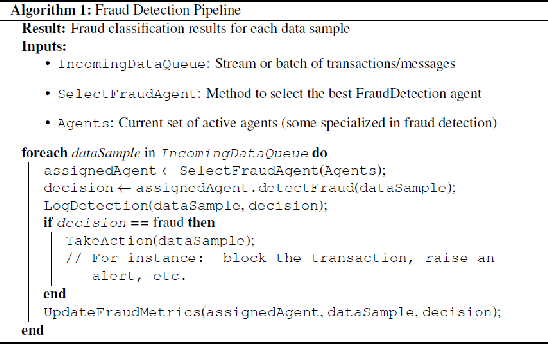
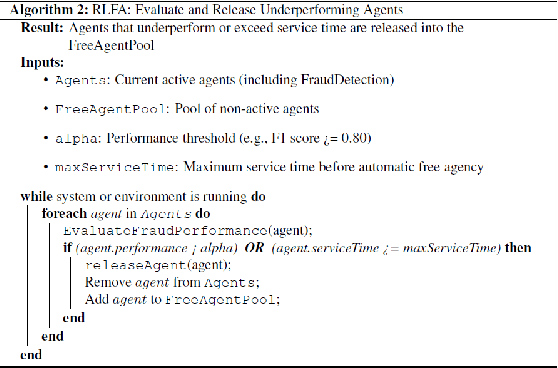
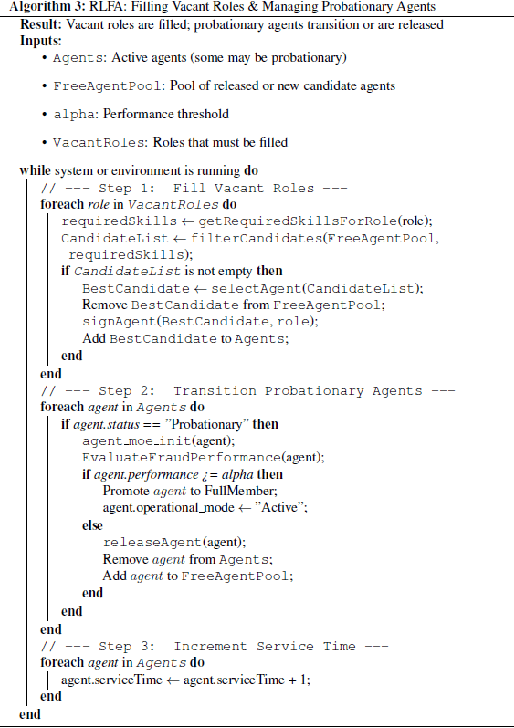
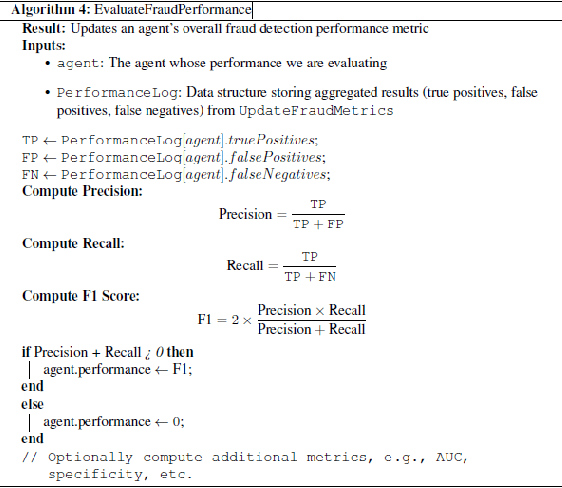
Multi-agent systems commonly distribute tasks among specialized, autonomous agents, yet they often lack mechanisms to replace or reassign underperforming agents in real time. Inspired by the free-agency model of Major League Baseball, the Reinforcement Learning Free Agent (RLFA) algorithm introduces a reward-based mechanism to detect and remove agents exhibiting persistent underperformance and seamlessly insert more capable ones. Each agent internally uses a mixture-of-experts (MoE) approach, delegating incoming tasks to specialized sub-models under the guidance of a gating function. A primary use case is fraud detection, where RLFA promptly swaps out an agent whose detection accuracy dips below a preset threshold. A new agent is tested in a probationary mode, and upon demonstrating superior performance, fully replaces the underperformer. This dynamic, free-agency cycle ensures sustained accuracy, quicker adaptation to emerging threats, and minimal disruption to ongoing operations. By continually refreshing its roster of agents, the system fosters ongoing improvements and more resilient collaboration in multi-agent Generative AI environments.