 Add to Chrome
 Add to Firefox
 Add to Edge
Beyond wheelchairs and blindfolds: Investigating disability stereotypes in T2I models with INCLUDE-BENCH
Jul 09, 2026
Text-to-image (T2I) models have been shown to exhibit social biases. Prior work has mainly focused on gender, skin tone, and cultural representation within restricted occupational associations, and emerging benchmarks increasingly incorporate these dimensions. However, disability remains systematically underexplored. Current evaluation practices often fail to align with sociologically grounded definitions of stereotyping, limiting principled assessment of representational harms toward people with disabilities (PWD). To address this, we introduce INCLUDE-BENCH, the first large-scale benchmark for evaluating disability-related bias in T2I models. INCLUDE-BENCH comprises 119K generated images based on prompt design across multiple bias dimensions and both static and dynamic contexts. We evaluate 15 open-source and 2 closed-source models. Our key findings reveal that: (1) mobility-impaired and default disability prompts predominantly yield wheelchair depictions across all models; (2) disability-conditioned generations consistently exhibit less diversity; (3) stereotypical portrayals demonstrate stronger disability-text alignment; and (4) we introduce the Stereotype Content Model (SCM) Score, demonstrating that T2I models reflect real-world stereotypical associations.

Bias Discovery in Machine Learning Models for Mental Health
May 24, 2022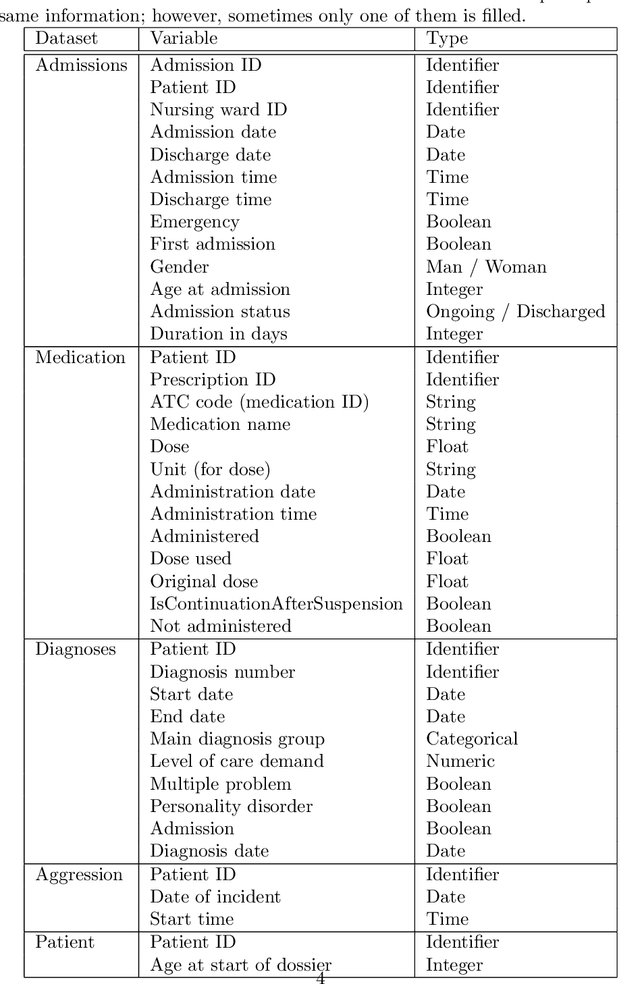
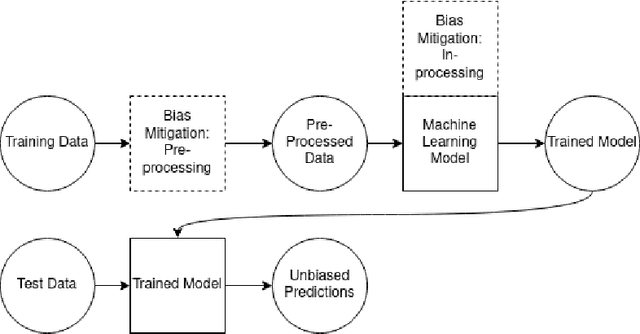
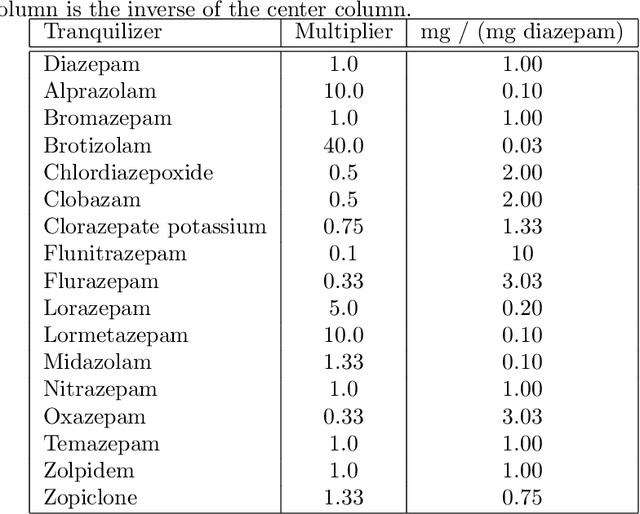
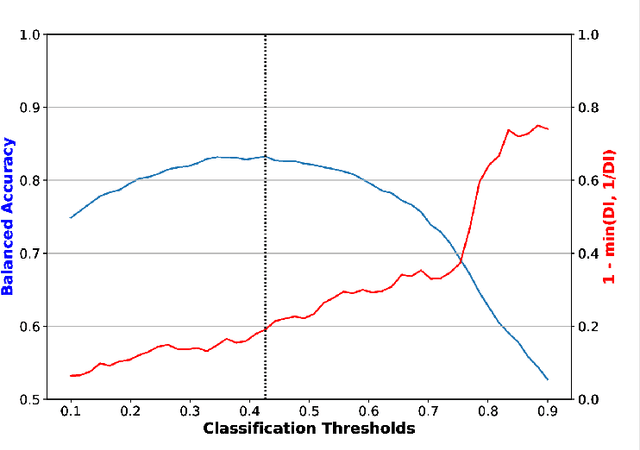
Fairness and bias are crucial concepts in artificial intelligence, yet they are relatively ignored in machine learning applications in clinical psychiatry. We computed fairness metrics and present bias mitigation strategies using a model trained on clinical mental health data. We collected structured data related to the admission, diagnosis, and treatment of patients in the psychiatry department of the University Medical Center Utrecht. We trained a machine learning model to predict future administrations of benzodiazepines on the basis of past data. We found that gender plays an unexpected role in the predictions-this constitutes bias. Using the AI Fairness 360 package, we implemented reweighing and discrimination-aware regularization as bias mitigation strategies, and we explored their implications for model performance. This is the first application of bias exploration and mitigation in a machine learning model trained on real clinical psychiatry data.