 Add to Chrome
 Add to Firefox
 Add to Edge
Multimodal Sensing for Robot-Assisted Sub-Tissue Feature Detection in Physiotherapy Palpation
Dec 24, 2025
Robotic palpation relies on force sensing, but force signals in soft-tissue environments are variable and cannot reliably reveal subtle subsurface features. We present a compact multimodal sensor that integrates high-resolution vision-based tactile imaging with a 6-axis force-torque sensor. In experiments on silicone phantoms with diverse subsurface tendon geometries, force signals alone frequently produce ambiguous responses, while tactile images reveal clear structural differences in presence, diameter, depth, crossings, and multiplicity. Yet accurate force tracking remains essential for maintaining safe, consistent contact during physiotherapeutic interaction. Preliminary results show that combining tactile and force modalities enables robust subsurface feature detection and controlled robotic palpation.

Strategies to Counter Artificial Intelligence in Law Enforcement: Cross-Country Comparison of Citizens in Greece, Italy and Spain
May 30, 2024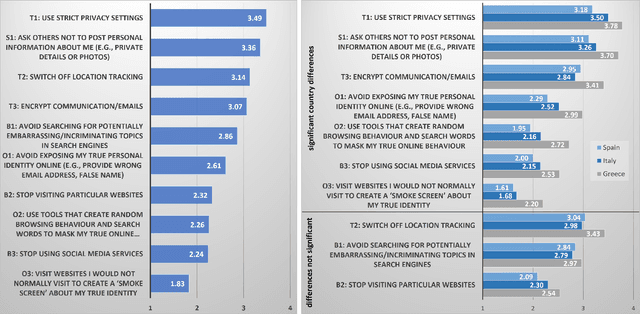
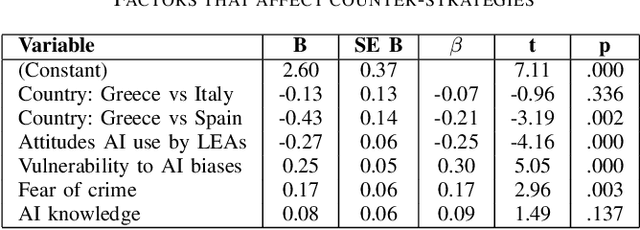
This paper investigates citizens' counter-strategies to the use of Artificial Intelligence (AI) by law enforcement agencies (LEAs). Based on information from three countries (Greece, Italy and Spain) we demonstrate disparities in the likelihood of ten specific counter-strategies. We further identified factors that increase the propensity for counter-strategies. Our study provides an important new perspective to societal impacts of security-focused AI applications by illustrating the conscious, strategic choices by citizens when confronted with AI capabilities for LEAs.