 Add to Chrome
 Add to Firefox
 Add to Edge
eLasmobranc Dataset: An Image Dataset for Elasmobranch Species Recognition and Biodiversity Monitoring
Mar 11, 2026
Elasmobranch populations are experiencing significant global declines, and several species are currently classified as threatened. Reliable monitoring and species-level identification are essential to support conservation and spatial planning initiatives such as Important Shark and Ray Areas (ISRAs). However, existing visual datasets are predominantly detection-oriented, underwater-acquired, or limited to coarse-grained categories, restricting their applicability to fine-grained morphological classification. We present the eLasmobranc Dataset, a curated and publicly available image collection from seven ecologically relevant elasmobranch species inhabiting the eastern Spanish Mediterranean coast, a region where two ISRAs have been identified. Images were obtained through dedicated data collection, including field campaigns and collaborations with local fish markets and projects, as well as from open-access public sources. The dataset was constructed predominantly from images acquired outside the aquatic environment under standardized protocols to ensure clear visualization of diagnostic morphological traits. It integrates expert-validated species annotations, structured spatial and temporal metadata, and complementary species-level information. The eLasmobranc Dataset is specifically designed to support supervised species-level classification, population studies, and the development of artificial intelligence systems for biodiversity monitoring. By combining morphological clarity, taxonomic reliability, and public accessibility, the dataset addresses a critical gap in fine-grained elasmobranch identification and promotes reproducible research in conservation-oriented computer vision. The dataset is publicly available at https://zenodo.org/records/18549737.

RGB-D-based Framework to Acquire, Visualize and Measure the Human Body for Dietetic Treatments
Jul 02, 2020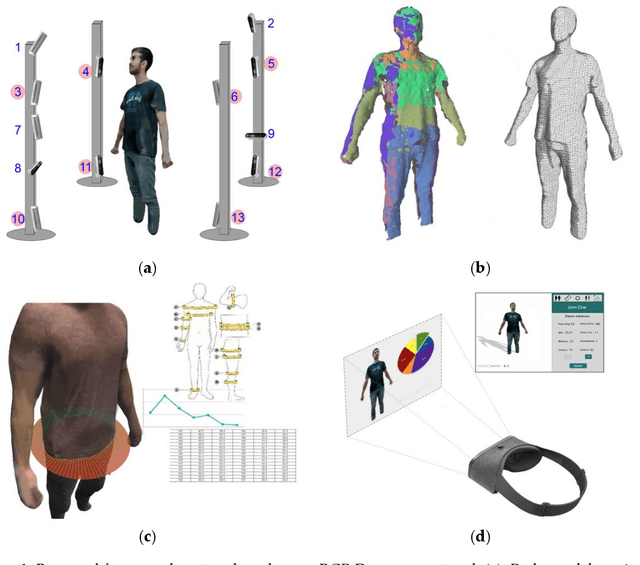
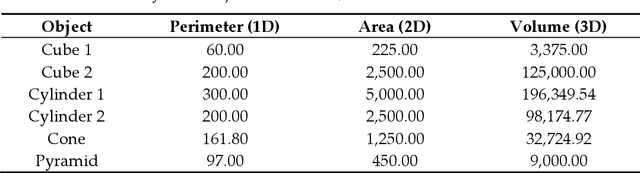
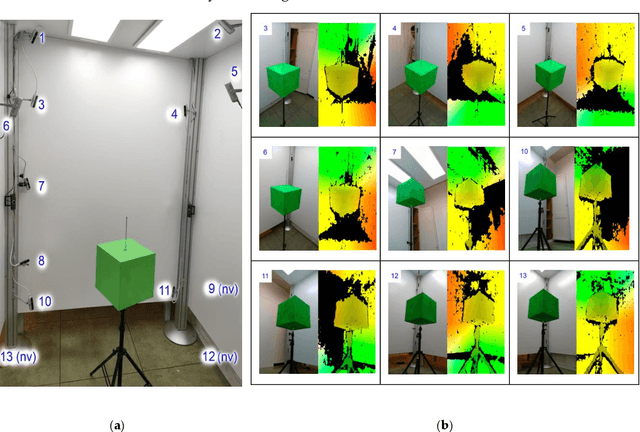
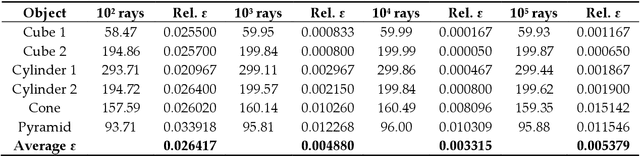
This research aims to improve dietetic-nutritional treatment using state-of-the-art RGB-D sensors and virtual reality (VR) technology. Recent studies show that adherence to treatment can be improved using multimedia technologies. However, there are few studies using 3D data and VR technologies for this purpose. On the other hand, obtaining 3D measurements of the human body and analyzing them over time (4D) in patients undergoing dietary treatment is a challenging field. The main contribution of the work is to provide a framework to study the effect of 4D body model visualization on adherence to obesity treatment. The system can obtain a complete 3D model of a body using low-cost technology, allowing future straightforward transference with sufficient accuracy and realistic visualization, enabling the analysis of the evolution (4D) of the shape during the treatment of obesity. The 3D body models will be used for studying the effect of visualization on adherence to obesity treatment using 2D and VR devices. Moreover, we will use the acquired 3D models to obtain measurements of the body. An analysis of the accuracy of the proposed methods for obtaining measurements with both synthetic and real objects has been carried out.