 Add to Chrome
 Add to Firefox
 Add to Edge
Full-Self Diagnostics (FSD): Physics-Grounded Visual Biomarker Inference from Smartphone Video via Inverse Problems and Operator Learning
Jun 11, 2026
We present Full-Self Diagnostics (FSD), a unified mathematical framework for recovering latent physiological states from unconstrained 9-second facial videos captured by consumer smartphones. The approach integrates five mutually reinforcing components: (1) a physics-based forward model derived from the radiative transfer equation and chromophore absorption that maps camera observables to biomarker concentrations; (2) an information-theoretic observability theory proving that multi-channel visual signals (spectral, pulse, respiratory, micro-expression, and oculomotor) contain strictly increasing mutual information with physiological state; (3) a stable, Tikhonov-regularized inverse problem with domain-uniform identifiability guarantees; (4) an operator-learning formulation that enables generalization across devices, resolutions, and populations; and (5) a supervised learning procedure, interpretable as stochastic variational inference, that continuously refines the model from paired biosensor ground truth with performance improving proportionally to one over the square root of the number of paired observations. Empirical validation on 38812 real-world paired scans across 59 subjects demonstrates practical performance. Self-collected data from the lead author (glucose range 35-550 mg/dL) yields MARD of 29.86 percent with 97.57 percent of predictions in Clarke Error Grid Zones A+B and only 0.27 percent in the dangerous Zone E. A well-managed diabetic participant achieves MARD of 17 percent in the narrower 70-180 mg/dL band. These results confirm that consumer-grade facial video encodes sufficient structured information for clinically relevant, non-invasive biomarker inference under fully unconstrained conditions, with performance scaling predictably as more paired data becomes available.

Sim2real for Reinforcement Learning Driven Next Generation Networks
Jun 08, 2022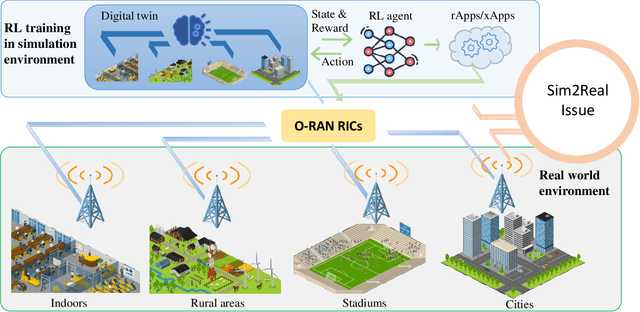
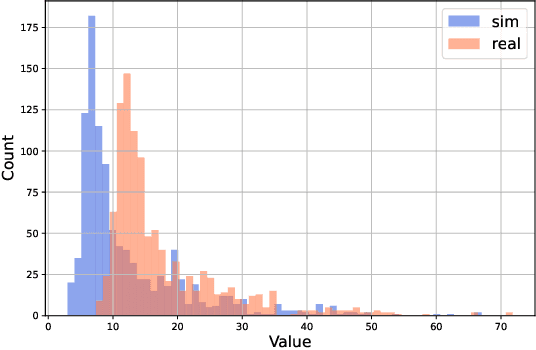
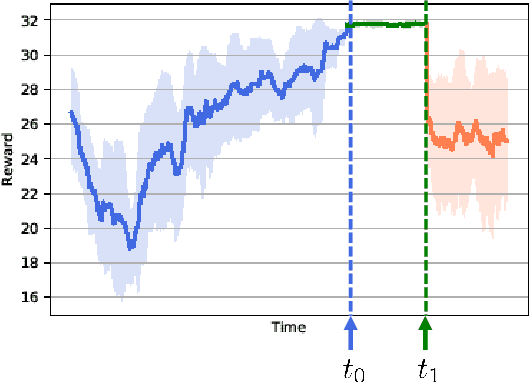

The next generation of networks will actively embrace artificial intelligence (AI) and machine learning (ML) technologies for automation networks and optimal network operation strategies. The emerging network structure represented by Open RAN (O-RAN) conforms to this trend, and the radio intelligent controller (RIC) at the centre of its specification serves as an ML applications host. Various ML models, especially Reinforcement Learning (RL) models, are regarded as the key to solving RAN-related multi-objective optimization problems. However, it should be recognized that most of the current RL successes are confined to abstract and simplified simulation environments, which may not directly translate to high performance in complex real environments. One of the main reasons is the modelling gap between the simulation and the real environment, which could make the RL agent trained by simulation ill-equipped for the real environment. This issue is termed as the sim2real gap. This article brings to the fore the sim2real challenge within the context of O-RAN. Specifically, it emphasizes the characteristics, and benefits that the digital twins (DT) could have as a place for model development and verification. Several use cases are presented to exemplify and demonstrate failure modes of the simulations trained RL model in real environments. The effectiveness of DT in assisting the development of RL algorithms is discussed. Then the current state of the art learning-based methods commonly used to overcome the sim2real challenge are presented. Finally, the development and deployment concerns for the RL applications realisation in O-RAN are discussed from the view of the potential issues like data interaction, environment bottlenecks, and algorithm design.
RLOps: Development Life-cycle of Reinforcement Learning Aided Open RAN
Nov 12, 2021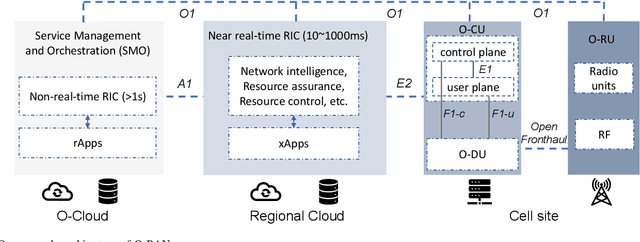
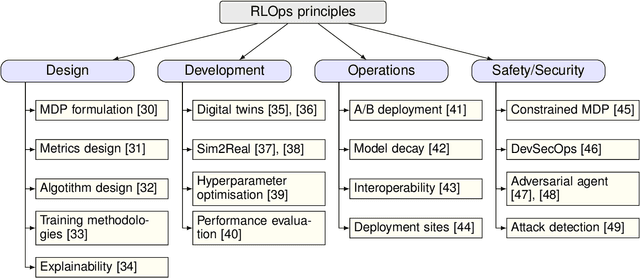
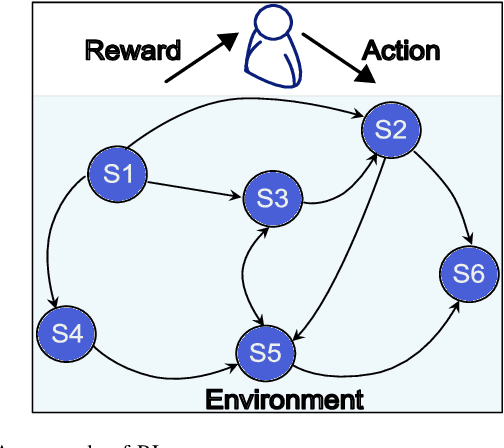
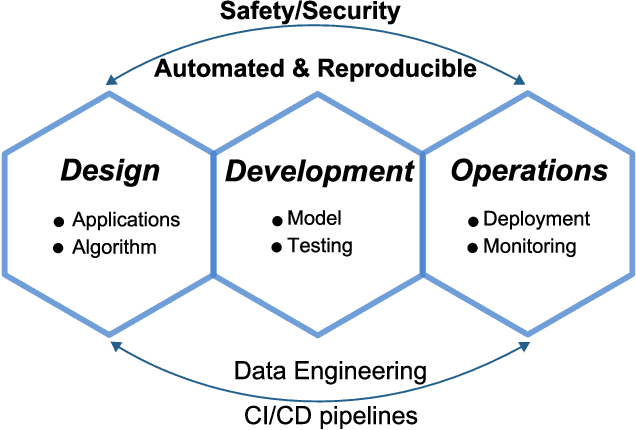
Radio access network (RAN) technologies continue to witness massive growth, with Open RAN gaining the most recent momentum. In the O-RAN specifications, the RAN intelligent controller (RIC) serves as an automation host. This article introduces principles for machine learning (ML), in particular, reinforcement learning (RL) relevant for the O-RAN stack. Furthermore, we review state-of-the-art research in wireless networks and cast it onto the RAN framework and the hierarchy of the O-RAN architecture. We provide a taxonomy of the challenges faced by ML/RL models throughout the development life-cycle: from the system specification to production deployment (data acquisition, model design, testing and management, etc.). To address the challenges, we integrate a set of existing MLOps principles with unique characteristics when RL agents are considered. This paper discusses a systematic life-cycle model development, testing and validation pipeline, termed: RLOps. We discuss all fundamental parts of RLOps, which include: model specification, development and distillation, production environment serving, operations monitoring, safety/security and data engineering platform. Based on these principles, we propose the best practices for RLOps to achieve an automated and reproducible model development process.