 Add to Chrome
 Add to Firefox
 Add to Edge
Descriptor: A Hybrid Indoor and Indoor-Outdoor Positioning Multi-Technology Dataset (HYMN)
Apr 22, 2026
This article introduces the HYMN (HYbrid Multi-technology Navigation) dataset: a multi-system, and time synchronized dataset for localization research based on opportunistic signals collected in an indoor-outdoor scenario. HYMN comprises measurement data collected in an industrial hall setting for five different positioning systems including Ultra-Wideband (UWB), Bluetooth Low Energy (BLE), WiFi, 5G, and Global Navigation Satellite System (GNSS). Unlike existing datasets that focus on single technologies or purely indoor/outdoor scenarios, HYMN combines five positioning technologies with explicit coverage of indoor-outdoor transitions, enabling multi-sensor fusion research for seamless localization. Each instance of data is identified through a unique measurement id and it represents time-stamped observations relevant for each system respectively along with the ground truth information. HYMN is designed to support a wide range of localization tasks including multi-sensor fingerprinting, cross-technology fusion, and seamless indoor-outdoor positioning. The synchronized measurements from GNSS and other terrestrial systems enable researchers to investigate how heterogeneous signals complement each other to overcome individual technology limitations such as GNSS degradation in covered areas or terrestrial system variability in dynamic environments.

Simulation-based Evaluation of Indoor Positioning Systems in Connected Aircraft Cabins
Dec 14, 2023The manuscript discusses the increasing use of location-aware radio communication systems to support operational processes for the demanding aircraft cabin environment. In this context, the challenges for evaluation and integration of radio-based localization systems in the connected cabin are specifically addressed by proposing a hybrid deterministic and stochastic simulation approach, including both model-based ray-tracing and empirical residual simulation. The simulation approach is detailed in the manuscript and a methodology for applying and evaluating localization methods based on obtained geometric relations is conducted. This can also be used as a data generation and validation tool for data-driven localization methods, which further increase the localization accuracy and robustness. The derived location information can in return be used in order to perform operational prediction and optimization for efficient and sustainable passenger handling. A dataset derived from the introduced simulation platform is publicly available.
Potentials of Deterministic Radio Propagation Simulation for AI-Enabled Localization and Sensing
Sep 11, 2023Machine leaning (ML) and artificial intelligence (AI) enable new methods for localization and sensing in next-generation networks to fulfill a wide range of use cases. These approaches rely on learning approaches that require large amounts of training and validation data. This paper addresses the data generation bottleneck to develop and validate such methods by proposing an integrated toolchain based on deterministic channel modeling and radio propagation simulation. The toolchain is demonstrated exemplary for scenario classification to obtain localization-related channel parameters within an aircraft cabin environment.
Enabling Radio Sensing for Multimodal Intelligent Transportation Systems: From Virtual Testing to Immersive Testbeds
Jan 28, 2022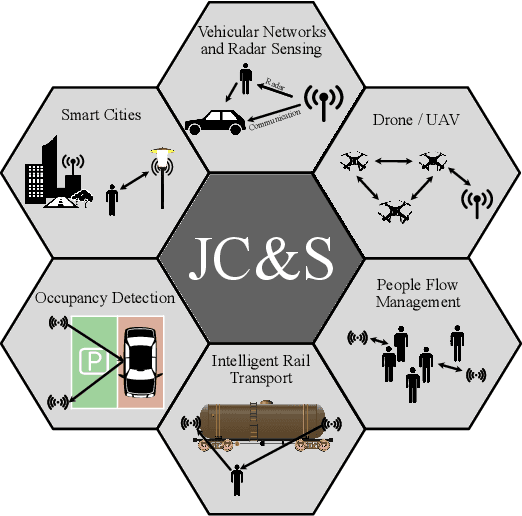
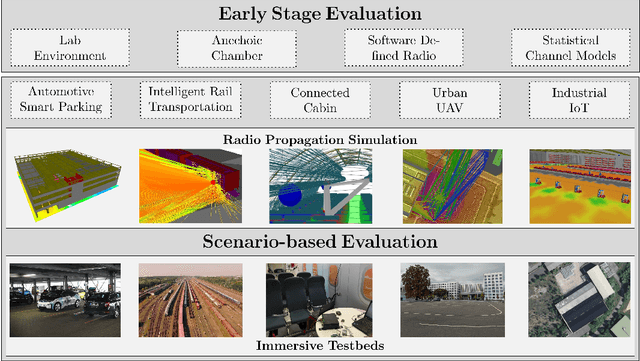
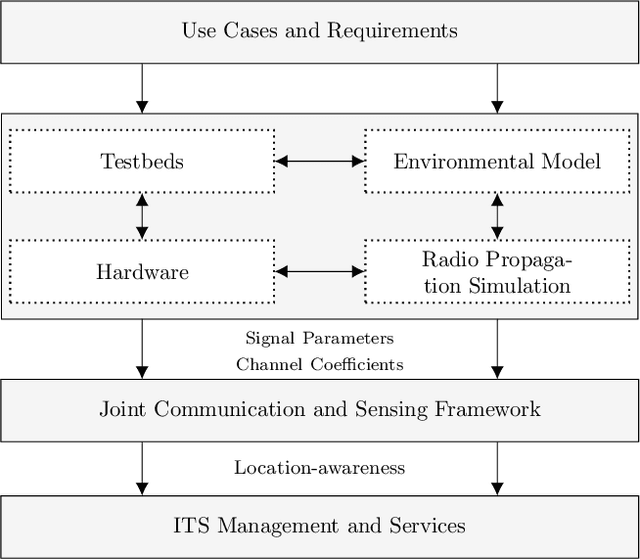
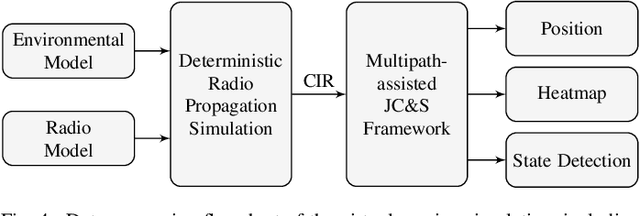
In this paper, the necessity for application-oriented development and evaluation of Joint Communication and Sensing (JC&S) applications, especially in transportation, is addressed. More specifically, an integrative evaluation chain for immersively testing JC&S location capabilities, reaching from early-stage testing, over model- and scenario-enabled ray tracing simulation, to real-world evaluation (laboratory and field testing) is presented. This includes a discussion of both challenges and requirements for location-aware applications in Intelligent Transportation Systems. Within this scope, a reproducible methodology for testing sensing and localization capabilities is derived and application scenarios are presented. This includes a proposal of a scenario-based sensing evaluation using radio propagation simulation. The paper empirically discusses a proof-of-concept of the developed method given a smart parking scenario, in which a passive occupancy detection of vehicles is performed. The conducted findings underline the need for scenario-based JC&S evaluation in both virtual and real-world environments and proposes consecutive research work.
Multipath-assisted Radio Sensing and Occupancy Detection for Smart In-house Parking in ITS
Jan 16, 2022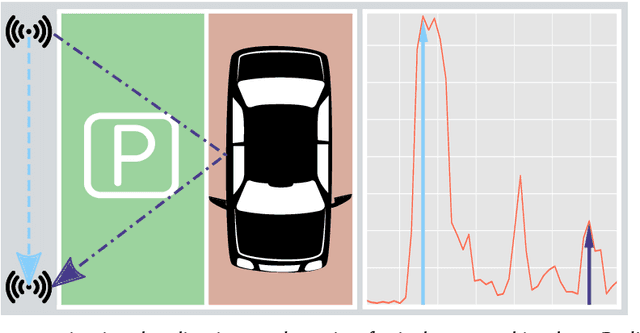
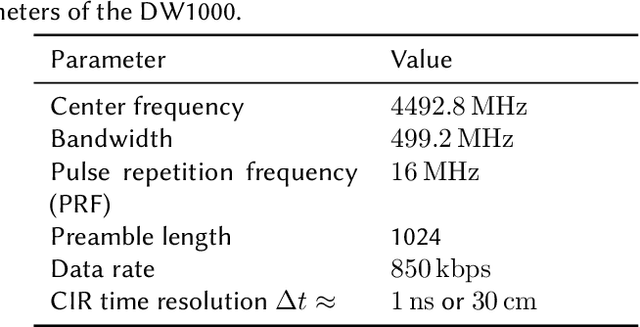
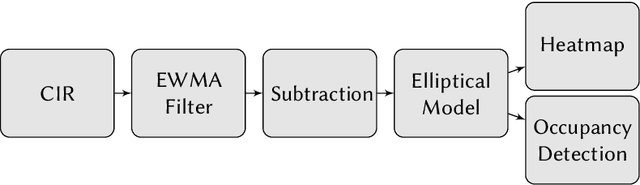
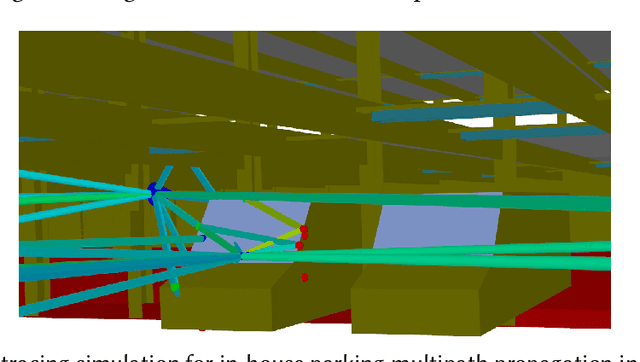
Joint, radio-based communication, localization and sensing is a rapidly emerging research field with various application potentials. Greatly benefiting from these capabilities, smart city, mobility, and logistic concepts are key components for maximizing the efficiency of modern transportation systems. In urban environments, both the search for parking space and freight transport are time- and space-consuming and present the bottlenecks for these transportation chains. Providing location information for these heterogeneous requirement profiles (both active and passive localization of objects), can be realized by using retrofittable wireless sensor networks, which are typically only deployed for active localization. An additional passive detection of objects can be achieved by assessing signal reflections and multipath properties of the transmission channel stored within the Channel Impulse Response (CIR). In this work, a proof-of-concept realization and preliminary experimental results of a CIR-based occupancy detection for parking lots are presented. As the time resolution is dependent on available bandwidth, the CIR of Ultra-wideband transceivers are used. For this, the CIR is smoothed and time-variant changes within it are detected by performing a background subtraction. Finally, the reflecting objects are mapped to individual parking lots. The developed method is tested in an in-house parking garage. The work provided is a foundation for passive occupancy detection, whose capabilities can prospectively be enhanced by exploiting additional physical layers, such as 5G or even 6G.